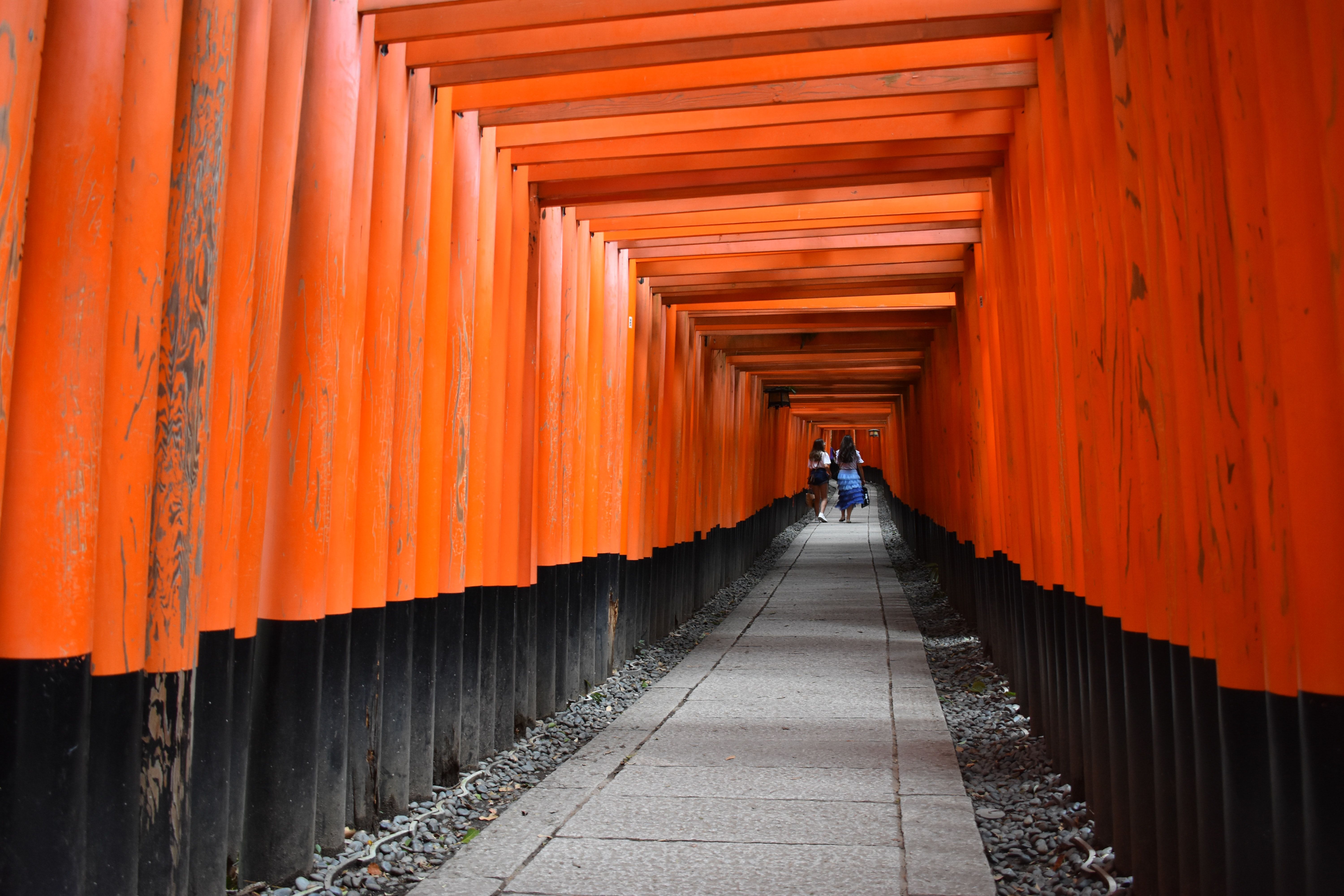
Fushimi Inari Taisha in Kyoto holds one of Japan’s most photographed corridors — but most visitors arrive after 9 AM and walk into a crowd. Show up at 5:30 in the morning and you’ll find something else entirely: vermilion gates glowing in the early haze, stone foxes standing in near-silence, and a mountain path that feels like it belongs only to you.
Best Timing
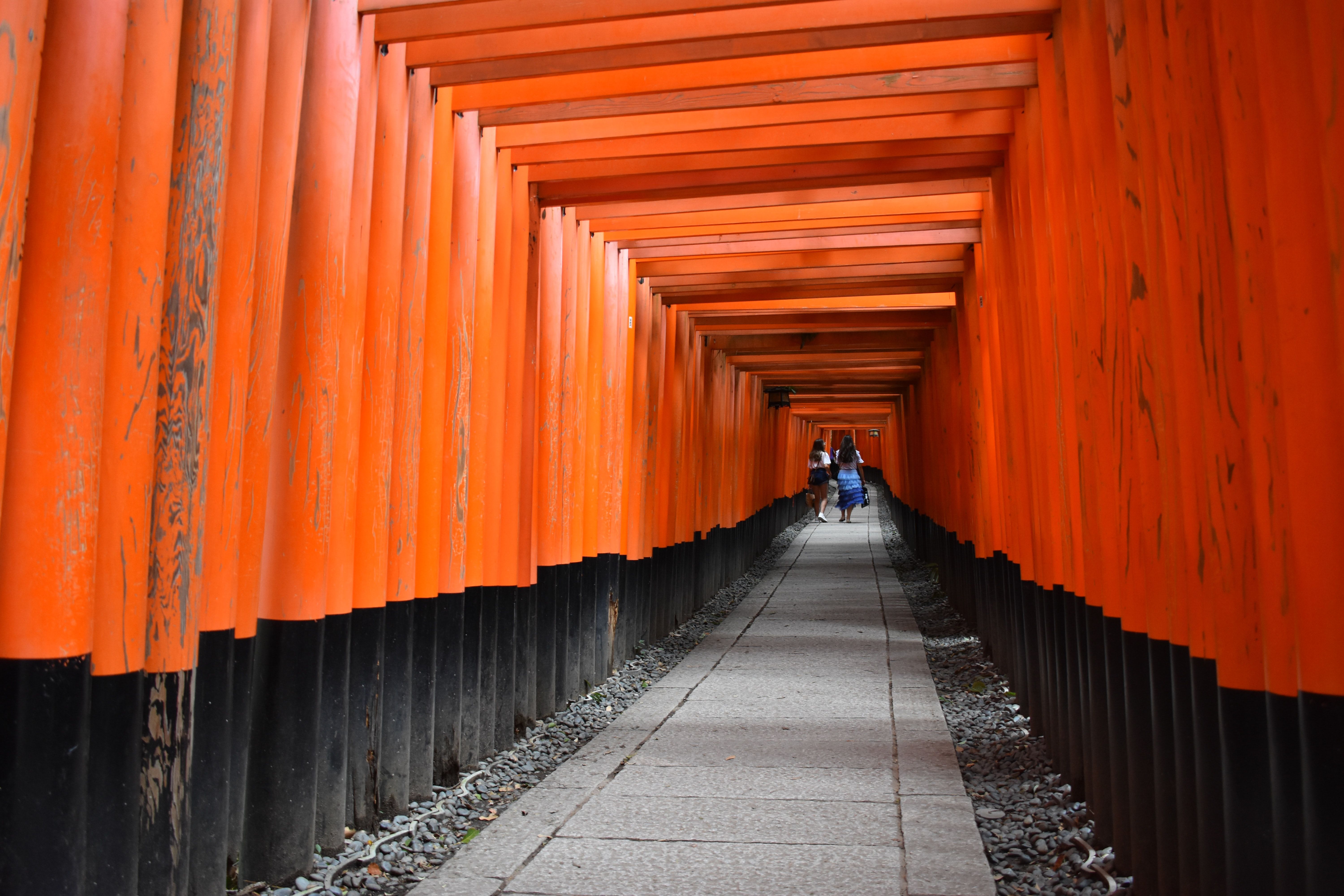
The single best window is 5:00–7:00 AM, year-round. The shrine never closes, which means there is no gate to wait at — just a dark approach road and the first thin light filtering through the cedar canopy. Arriving by 5:30 puts you inside the lower tunnel before the first tour buses from Osaka or Kyoto Station deposit their passengers at the trailhead, which typically happens between 8:00 and 9:00 AM.
Season matters too. Late March and mid-November offer the most dramatic light — cherry blossoms frame the entrance torii in spring, and maple leaves glow amber against the vermilion lacquer in autumn. Summer mornings are misty and quiet but humid by 7 AM; winter mornings (December–February) are the emptiest of all, with frost on the stone lanterns and almost no visitors before 8:00.
Core Experiences
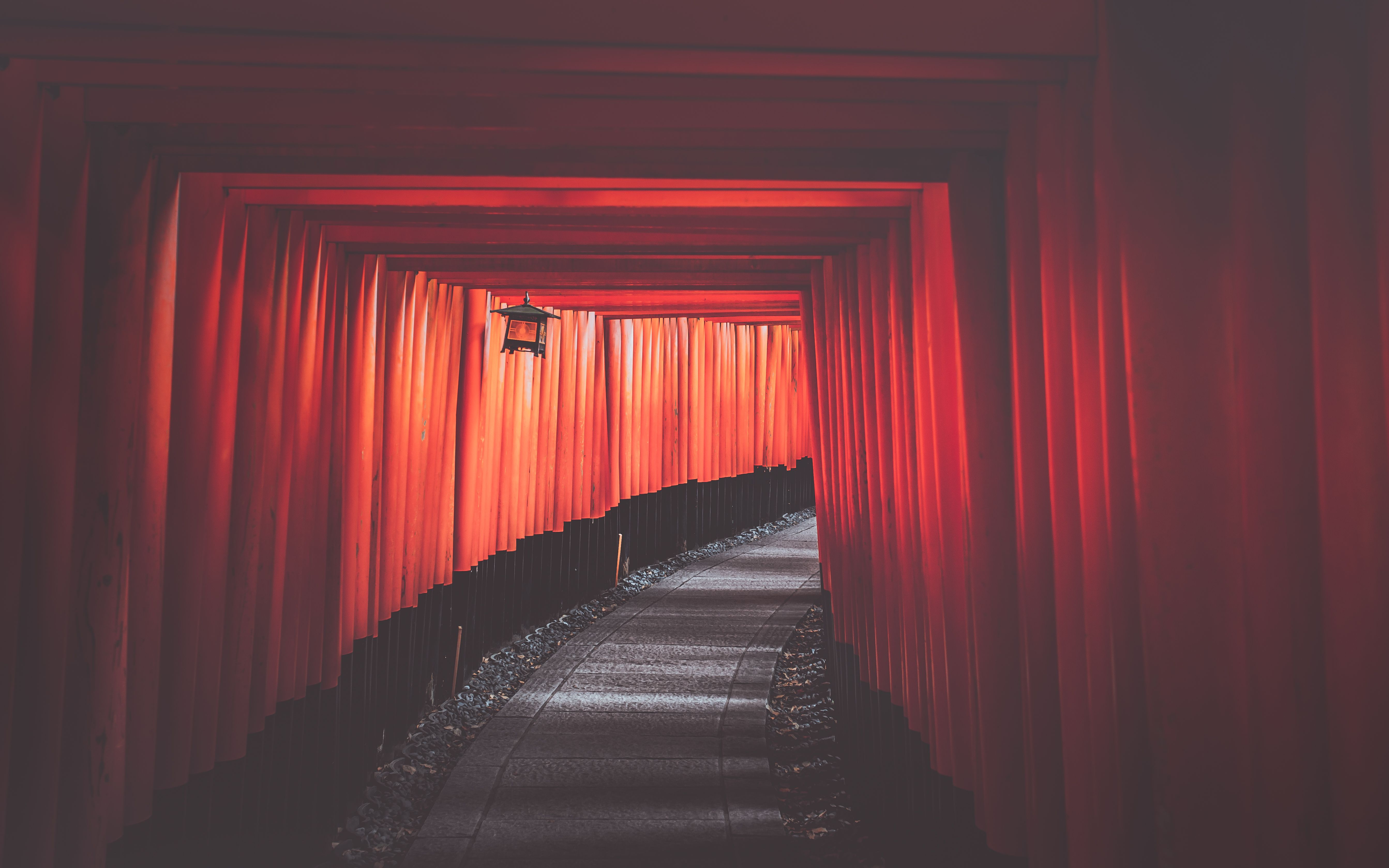
Senbon Torii — The Lower Tunnel
This is the image that defines Fushimi Inari: hundreds of close-set vermilion torii gates running in parallel rows up the lower slope of Mount Inari. At 5:30 AM the tunnel is dim and directional, shafts of early light cutting between the posts and hitting the packed gravel path in narrow gold strips. The usual selfie bottleneck simply does not exist. The atmosphere is closer to a forest ritual than a tourist attraction — slow, reverent, almost acoustically sealed.
- 📍 Fushimi Inari Taisha, 68 Fukakusa Yabunouchicho, Fushimi-ku, Kyoto · 💰 Free · ⏰ Open 24 hours · ⭐ 4.8
- Local tip: Walk the right-hand corridor on the way up — it tends to stay in shadow slightly longer and is marginally quieter even when crowds arrive.
Ōkami-ga-take Viewpoint (Yotsutsuji Intersection)
About 30–40 minutes up the main trail from the entrance sits the Yotsutsuji intersection, where the path splits and a wooden railing opens onto a partial view of southern Kyoto spreading out below. At dawn the city is still half-lit, a grey-orange grid under low cloud. It’s not a sweeping panorama — trees partially block it — but in the early morning light it reads as something private and unscripted. Most visitors who arrive at 5:30 AM will have this bench entirely to themselves.
- 📍 Approx. 40 min on foot from main entrance (elevation ~230 m) · 💰 Free · ⏰ Always accessible · ⭐ 4.6
- Local tip: This is a natural turnaround for most dawn visitors who don’t intend to summit. Pack a small thermos — there’s a vending machine just below this point that sells hot canned coffee, a peculiarly satisfying purchase at 6 AM.
Inariyama Summit (Mount Inari Peak)
Few travel videos mention the actual summit because it takes commitment: roughly 2–2.5 hours round-trip from the main entrance, with a significant elevation gain of around 230 meters. But the peak — marked by a small shrine cluster and a stone torii at 233 meters — offers a genuine sense of arrival. The forest up here is darker and older, the torii more weathered, the foxes more moss-covered. At dawn in high season, reaching the top by 7:30 AM is realistic and means descending while the lower crowds are just forming.
- 📍 Inariyama Summit, ~2.5 km from main entrance gate · 💰 Free · ⏰ Always accessible · ⭐ 4.5
- Local tip: The trail is well-marked but uneven in places. Wear proper walking shoes — not sandals. The path is lit by stone lanterns at intervals but bring a small flashlight for the pre-dawn ascent.
Mitsurugi-sha and the Stone Fox Shrines
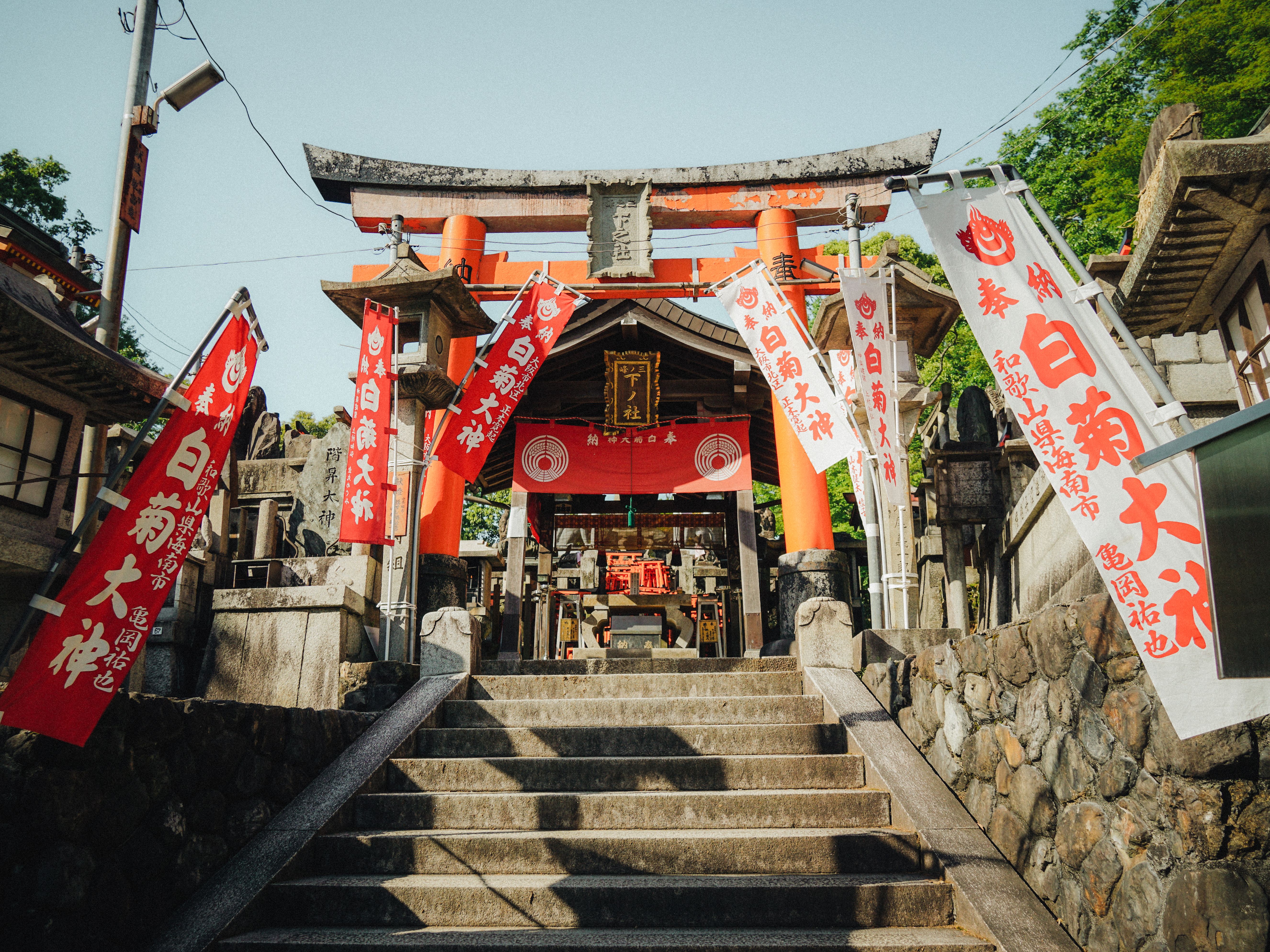
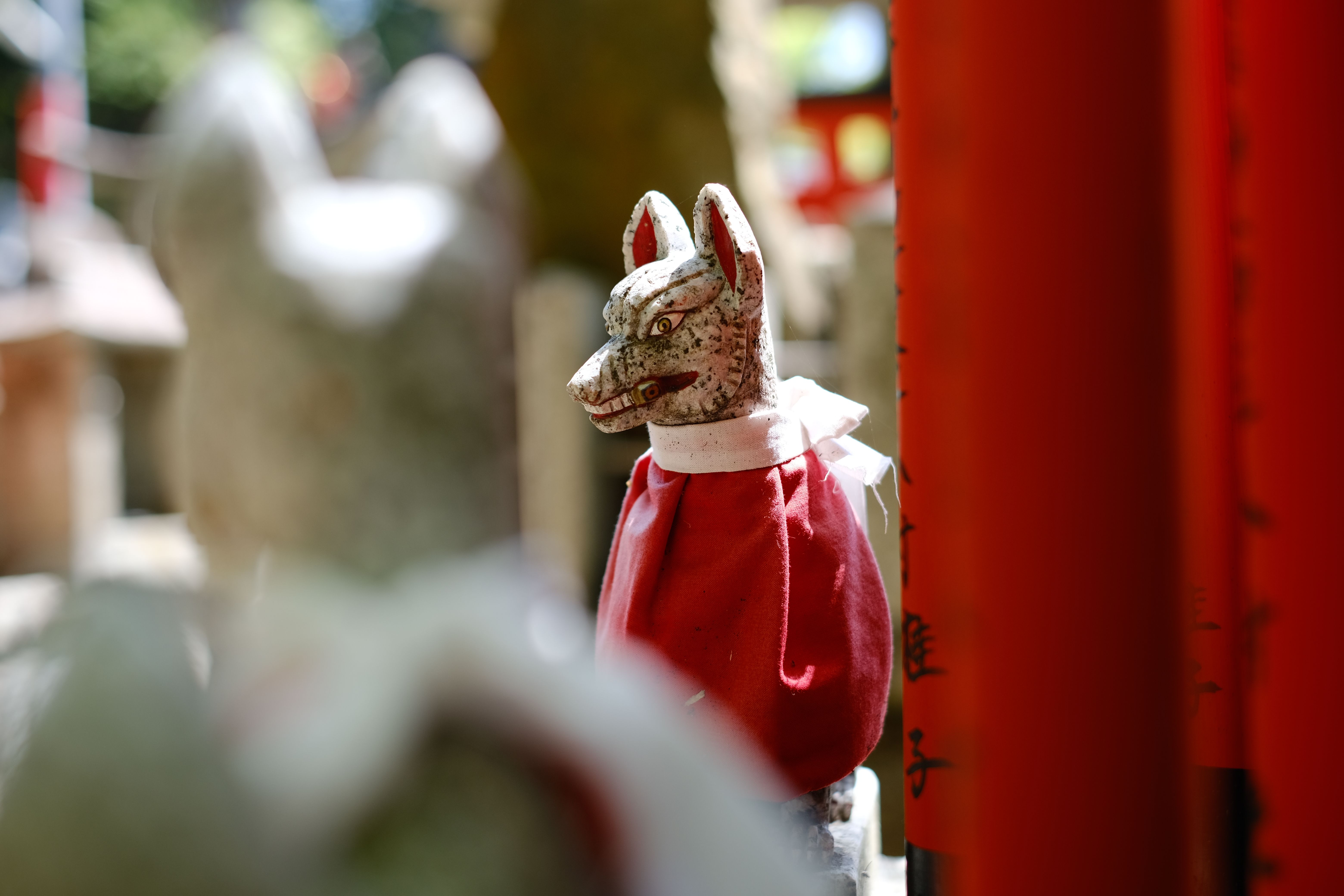
Scattered along the mid-mountain trail are smaller subsidiary shrines — Mitsurugi-sha being among the most striking — each guarded by pairs of kitsune (fox) statues in varied poses: one holds a scroll in its mouth, another a key, another a jewel. These are the messengers of Inari, the deity of rice, sake, and prosperity. In the low light before 7 AM the statues are frequently draped in the shadow of the gate corridor and read as genuinely ancient, stripped of the postcard quality they acquire in bright afternoon sun.
- 📍 Various points along the main ascent trail · 💰 Free · ⏰ Always accessible · ⭐ 4.7
- Local tip: Small red bibs tied on the fox statues are placed by devotees — resist the instinct to reposition them for a photo. It’s considered disrespectful.
Fushimi Inari Main Worship Hall (Honden)
The Honden, the main inner hall at the base of the mountain, predates most of the torii tunnel by centuries. At 5:30 AM the compound is nearly silent; the hanging lanterns are still electric-lit against the dark sky. A small number of local worshippers may arrive for early prayers — a routine morning ritual that has been happening here for over 1,300 years. This is the appropriate place to observe quietly, not to linger for photography. The architectural detail — the curved rooflines, the layered gate structures, the offering hall — rewards slow attention.
- 📍 Fushimi Inari Taisha main compound, Fushimi-ku, Kyoto · 💰 Free · ⏰ Open 24 hours · ⭐ 4.9
- Local tip: The main hall faces east — the light hits it directly around 6:15–6:30 AM in summer. Time an arrival back at the base for this window after descending from the tunnel.
Recommended Route
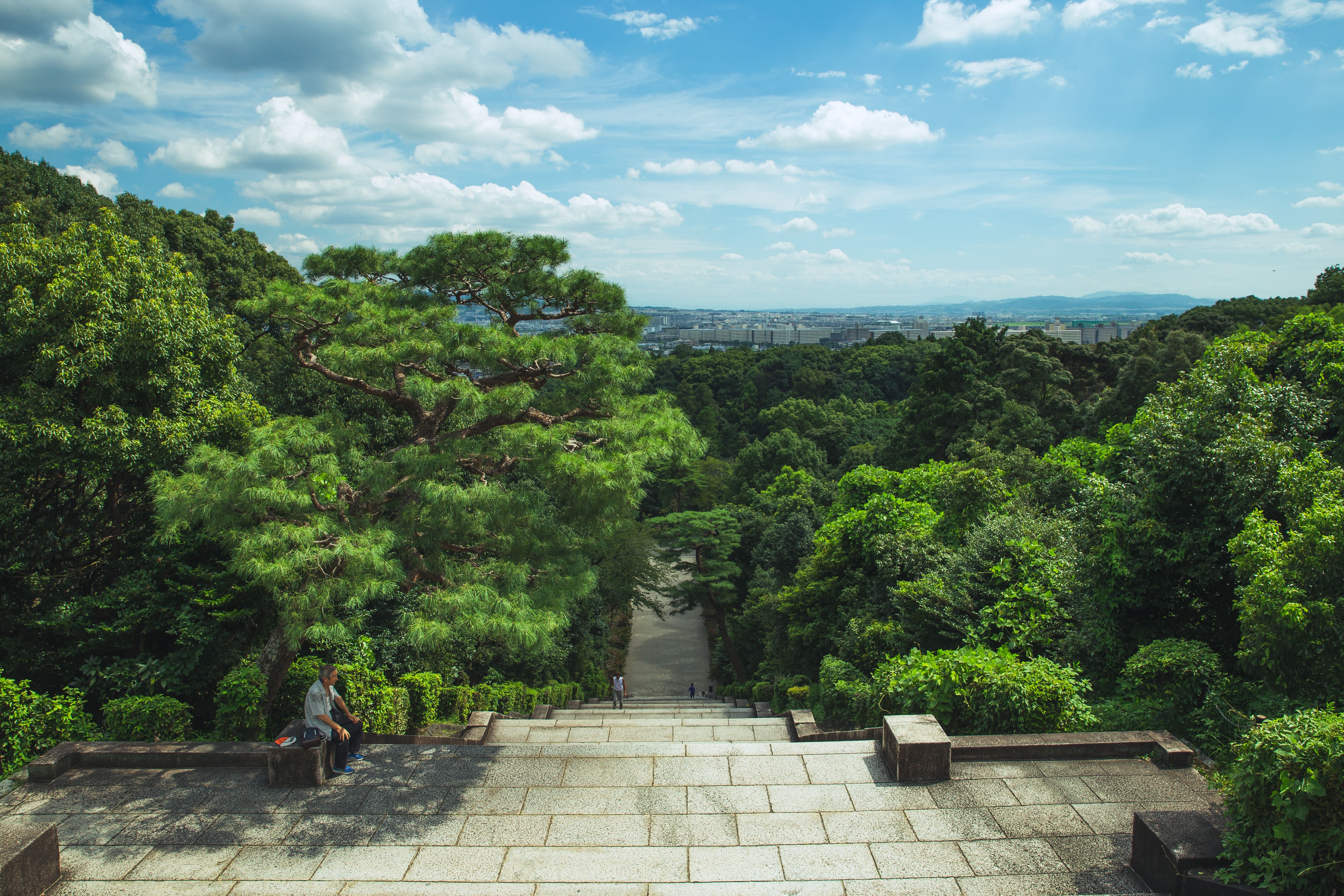
This is a half-day dawn walk. No booking required. Just show up.
- 05:15 — Arrive at Fushimi Inari Station (JR Nara Line from Kyoto Station, 5 min). Walk to shrine entrance: 5 min on foot.
- 05:30 — Enter the Honden compound. Spend 10–15 min in the main hall area before the tunnel.
- 05:45 — Enter Senbon Torii lower tunnel. Walk slowly — 20–25 min through to the first shrine cluster.
- 06:10 — Pause at Mitsurugi-sha and the stone fox subsidiary shrines. 15–20 min.
- 06:30 — Continue up to Yotsutsuji intersection (Ōkami-ga-take viewpoint). 30–35 min walk. Rest, take in the city view, hot coffee from the vending machine.
- 07:15 — Optional: continue to Inariyama Summit (add 60–70 min return). Or turn back here.
- 08:00–08:30 — Descend and return to the main compound. By now early crowds are beginning to form at the tunnel entrance.
- 08:30 — Exit and walk 5 min to nearby Inari Taishamae Station or back to JR Fushimi Inari for onward travel.
Total active time: approximately 2.5–3 hours for tunnel + viewpoint; 3.5–4 hours for full summit.
Budget · Transport · Booking
Entrance: Free. Fushimi Inari Taisha charges no admission at any hour.
Getting there:
- 🚇 JR Nara Line from Kyoto Station → JR Fushimi Inari Station: 5 minutes, ¥150 (~$1.00). Trains begin running around 5:00 AM.
- 🚇 Keihan Main Line to Fushimi Inari Station: 2-min walk to shrine (slightly longer route from central Kyoto).
- 🚕 Taxi from central Kyoto:
¥1,500–2,000 ($10–13) if trains feel uncertain at that hour.
Food: No vendors operate before 8 AM at the shrine. Bring your own snacks and water. The vending machine at Yotsutsuji sells drinks (¥130–180). After the walk, Udon Yoshimura near the base opens at 9:00 AM and does a straightforward kitsune udon (¥780, ~$5) that pairs well with the theme.
Total realistic day budget: ¥1,500–3,000 ($10–20) including transport, drinks, and a post-walk meal. No advance booking of any kind is needed.
Must-Know Tips
- ⏰ 5:30 AM is the threshold — arriving by 5:45 still works; by 7:00 the lower tunnel starts filling. On weekends in peak season (late March, early November), add 30 minutes earlier.
- 👟 Footwear matters — the upper trail is uneven stone and gravel. Running shoes or light hiking shoes; not sandals or dress shoes.
- 📷 Photography rules — no restrictions on personal photography, but avoid photographing active worshippers at the Honden without their awareness. Tripods are technically permitted on the trail but create bottlenecks; a small gorilla-pod on a fence works better.
- 💴 Cash only at most small nearby shops and vending machines. The shrine itself charges nothing, but carry ¥1,000–2,000 in coins and small bills.
- 🌧️ Rain is not a reason to skip — a drizzle at dawn turns the tunnel into something atmospheric and fog-softened. Bring a compact umbrella; the gates provide partial shelter.
- 📵 Keep noise down — early morning worshippers are present. Silence phone ringers, keep voices low in the main compound especially before 7 AM.
Closing
There is a specific quality to Fushimi Inari before the world catches up to it — the way the vermilion reads almost orange in low dawn light, the way the stone foxes look less like decorations and more like residents. It’s a version of one of Japan’s most visited sites that most visitors simply never schedule for, because it requires an alarm and an early train. That’s exactly what makes it worth it.
Set the alarm for 4:45 AM, catch the first Nara Line train, and be standing inside the Senbon Torii by 5:30. The crowds will come. Just don’t be part of them.
🏨 Where to Stay
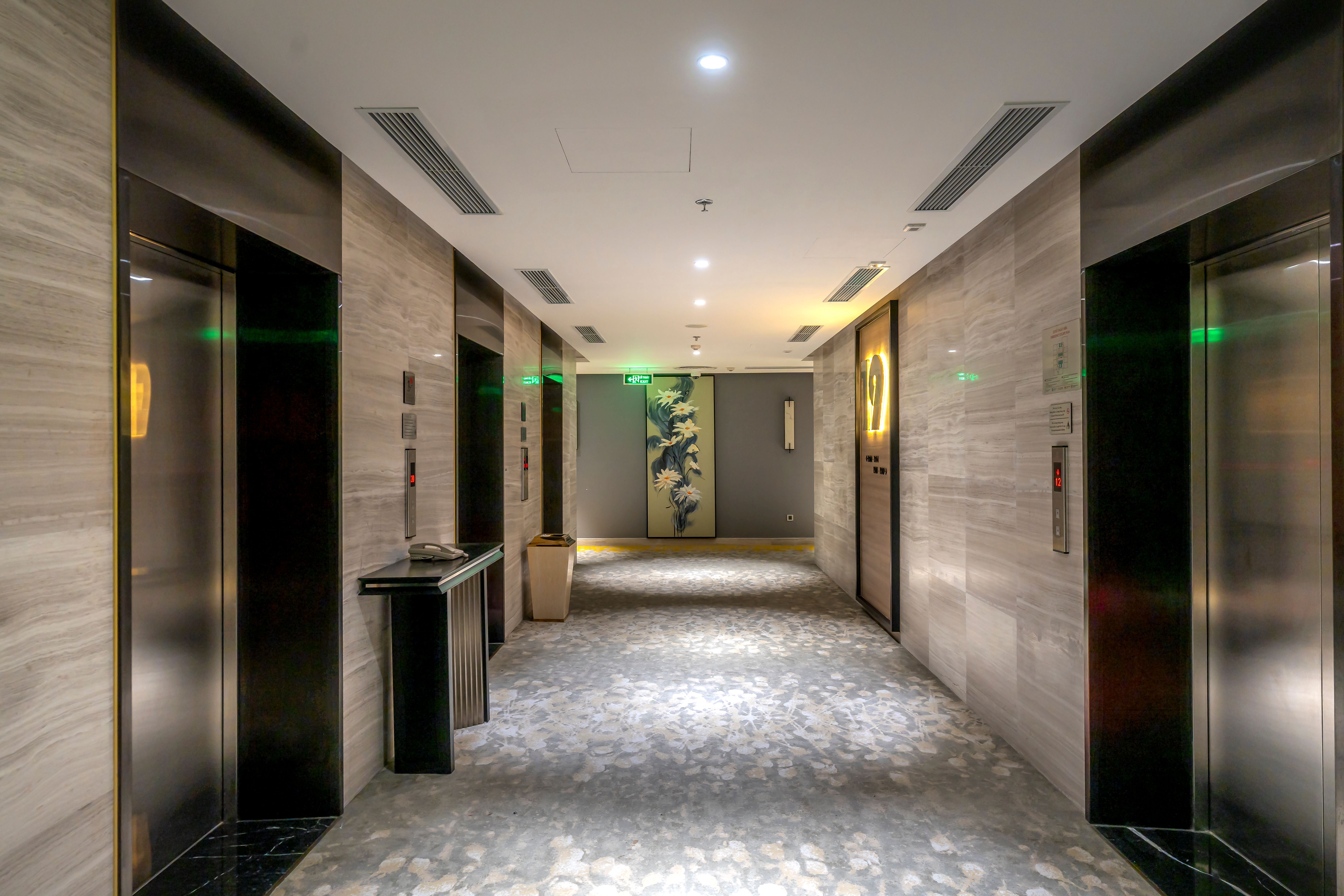 Sakura Terrace -Adult Only-⭐ 4.0 · 8.6/10 (16,356) · $48 /night
 Urban Hotel Kyoto⭐ 3.0 · 7.8/10 (6,638) · $38 /night
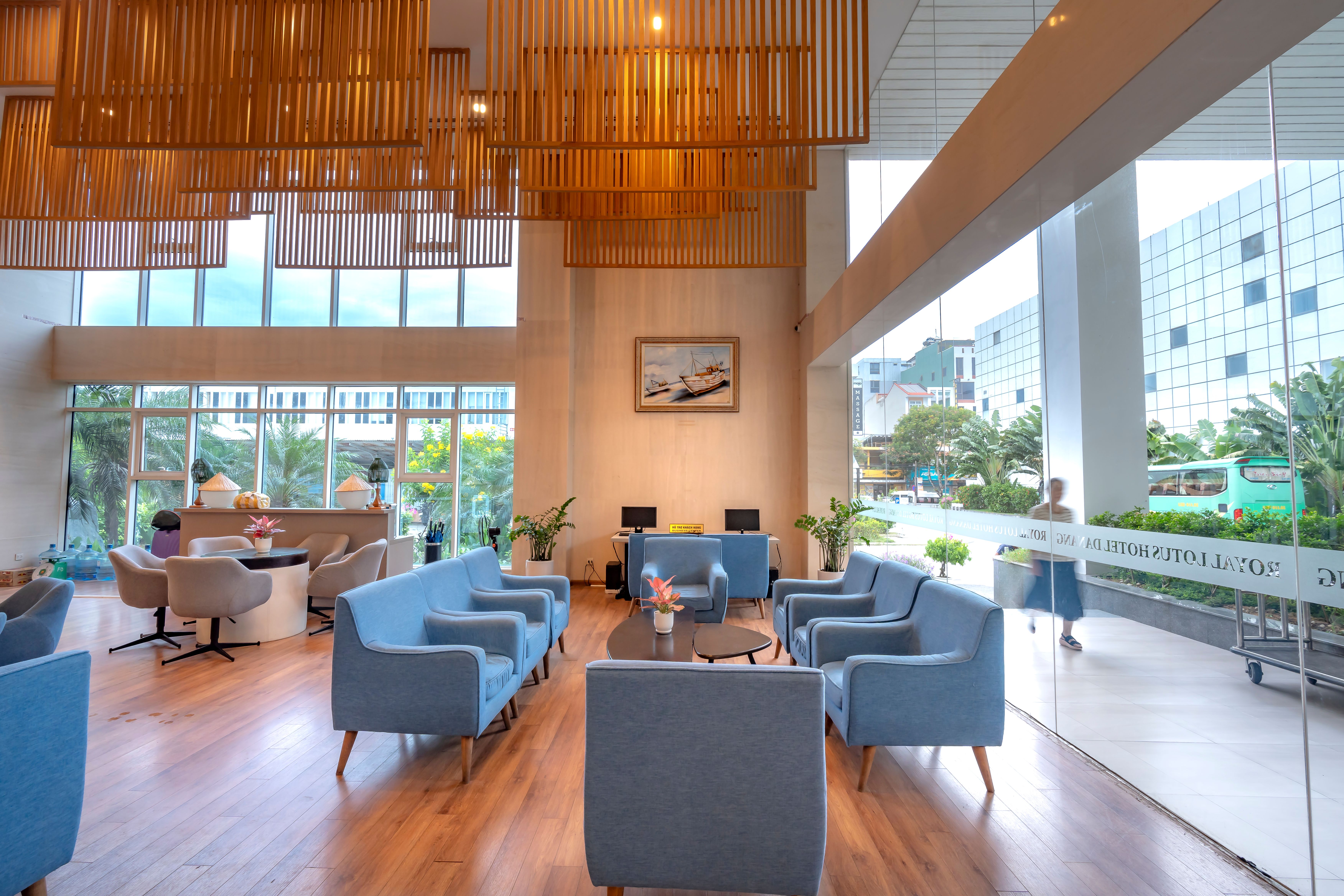 Hotel Alfa Kyoto (Adult Only)⭐ 3.0 · 7.6/10 (623) · $34 /night
Agoda affiliate link — clicks go to the price-comparison page.