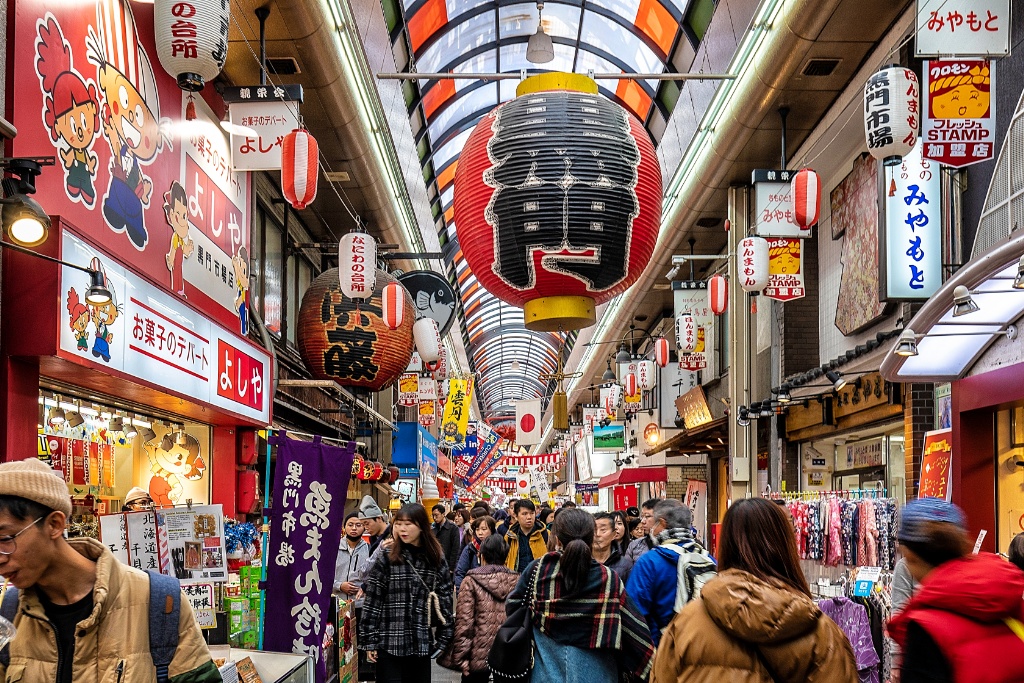
Kuromon Ichiba has fed Osaka for 170 years — but most visitors only see the market after the tour buses arrive. Step inside before 7 AM and you catch something else entirely: fishmongers stacking trays of sea urchin under fluorescent light, the first curl of yakitori smoke, and an unhurried rhythm that disappears the moment the crowds do.
Best Timing
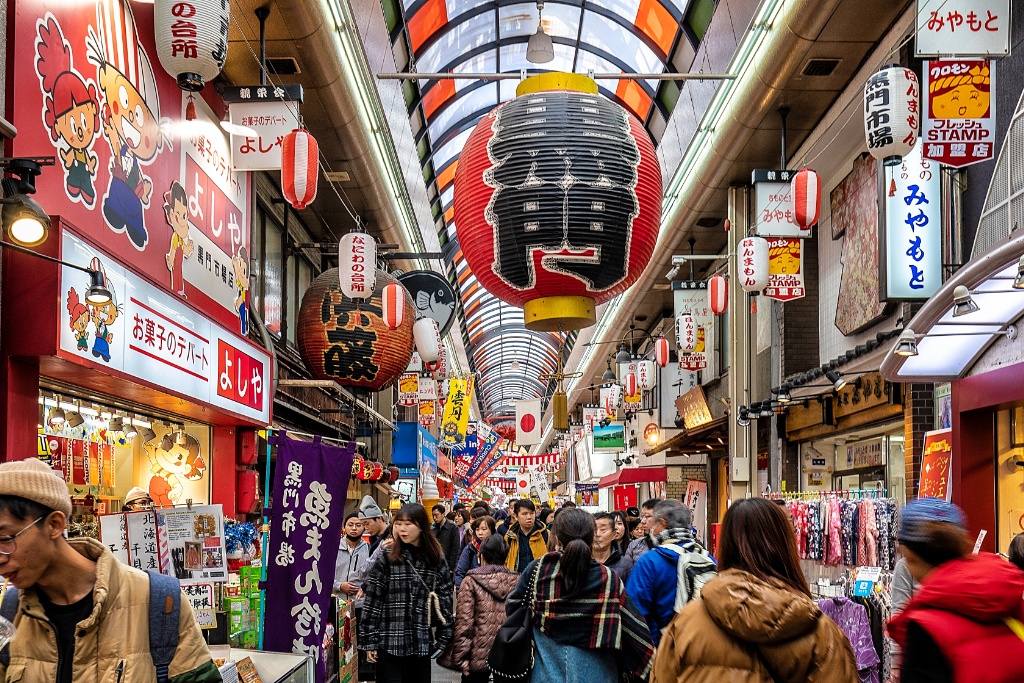
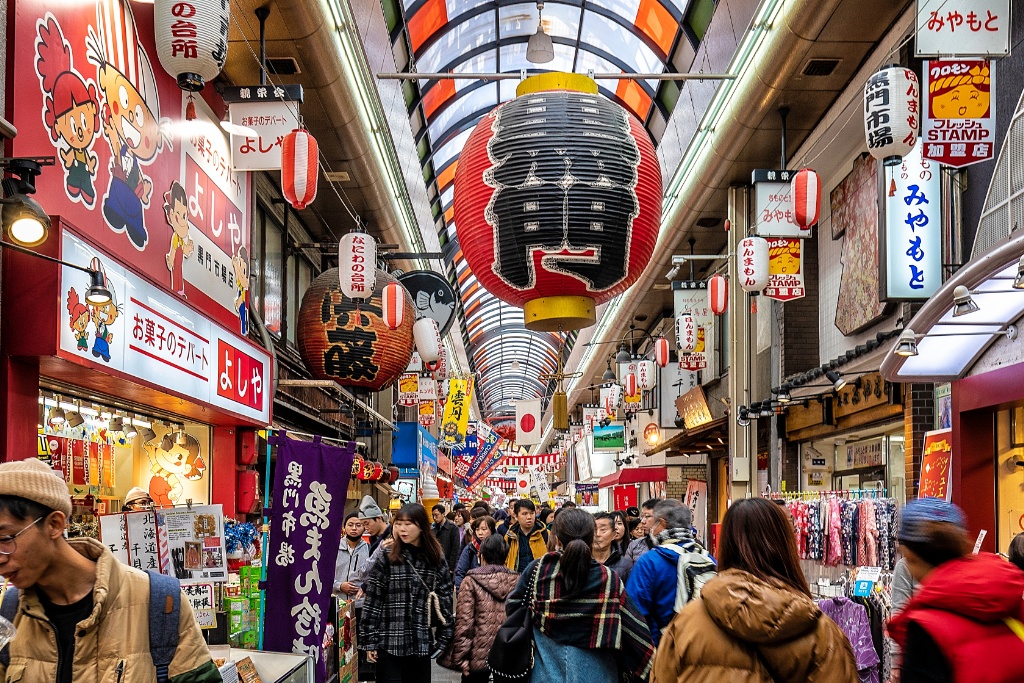
The window is narrow and worth protecting. Between 6:00 and 8:00 AM, Kuromon belongs to the vendors and the neighborhood regulars who’ve been shopping here for decades. Stalls that serve fresh fish and grilled shellfish typically open between 5:30 and 6:30 AM, well before the market’s official 9 AM tourist peak. Outside those two hours, the 580-foot covered arcade fills fast — by 9:30 AM on weekends, the central lane is shoulder-to-shoulder.
The best months to visit are October through March, when cooler mornings make the warm grilled-seafood stalls even more appealing and the produce displays aren’t wilting in Osaka’s summer humidity. Spring (late March to April) works too, but the market gets busier with domestic travelers during cherry-blossom season. Avoid Golden Week (late April to early May) unless you genuinely enjoy crowds at capacity.
Core Experiences
Yamachō Seafood Stall
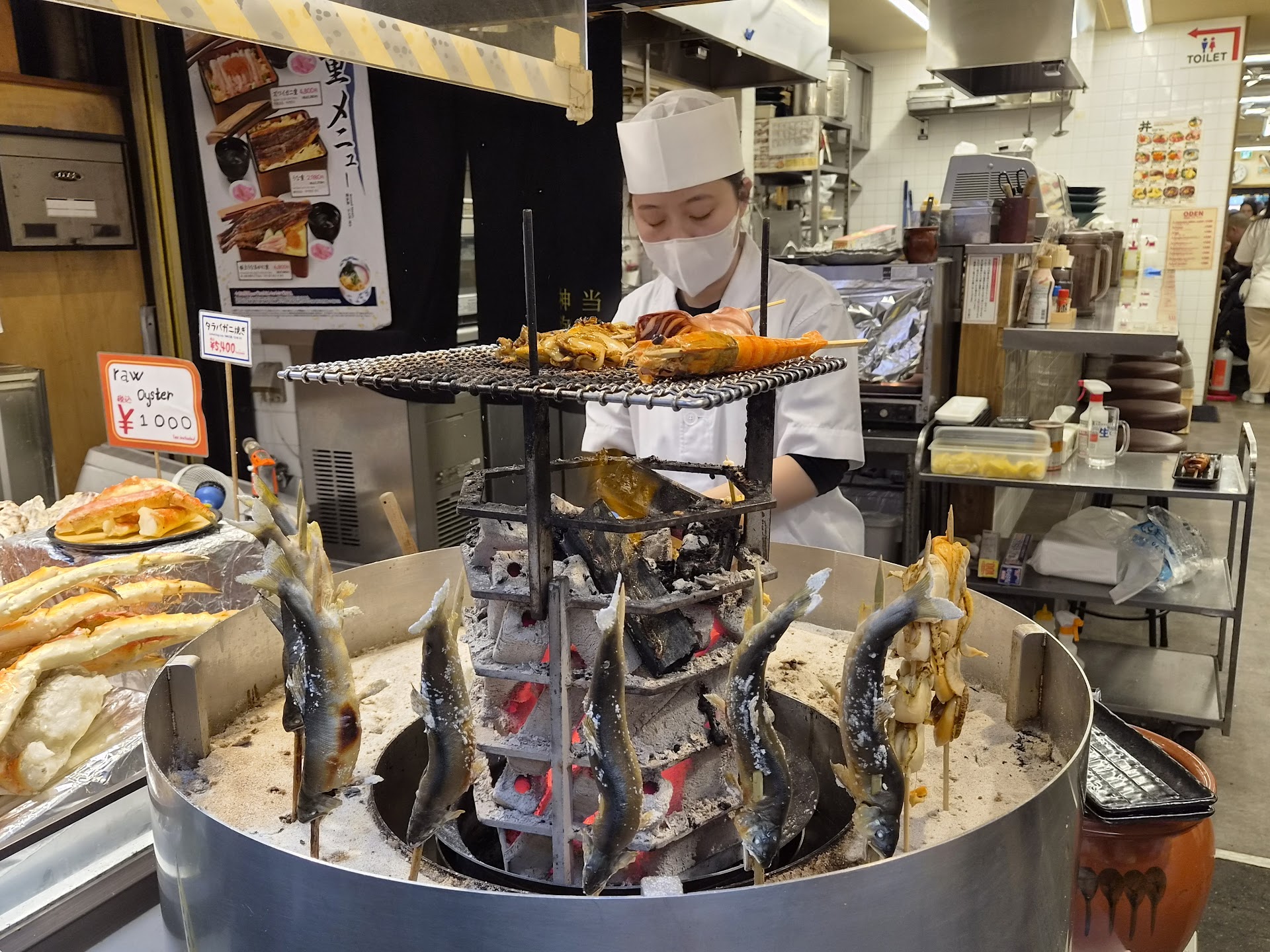
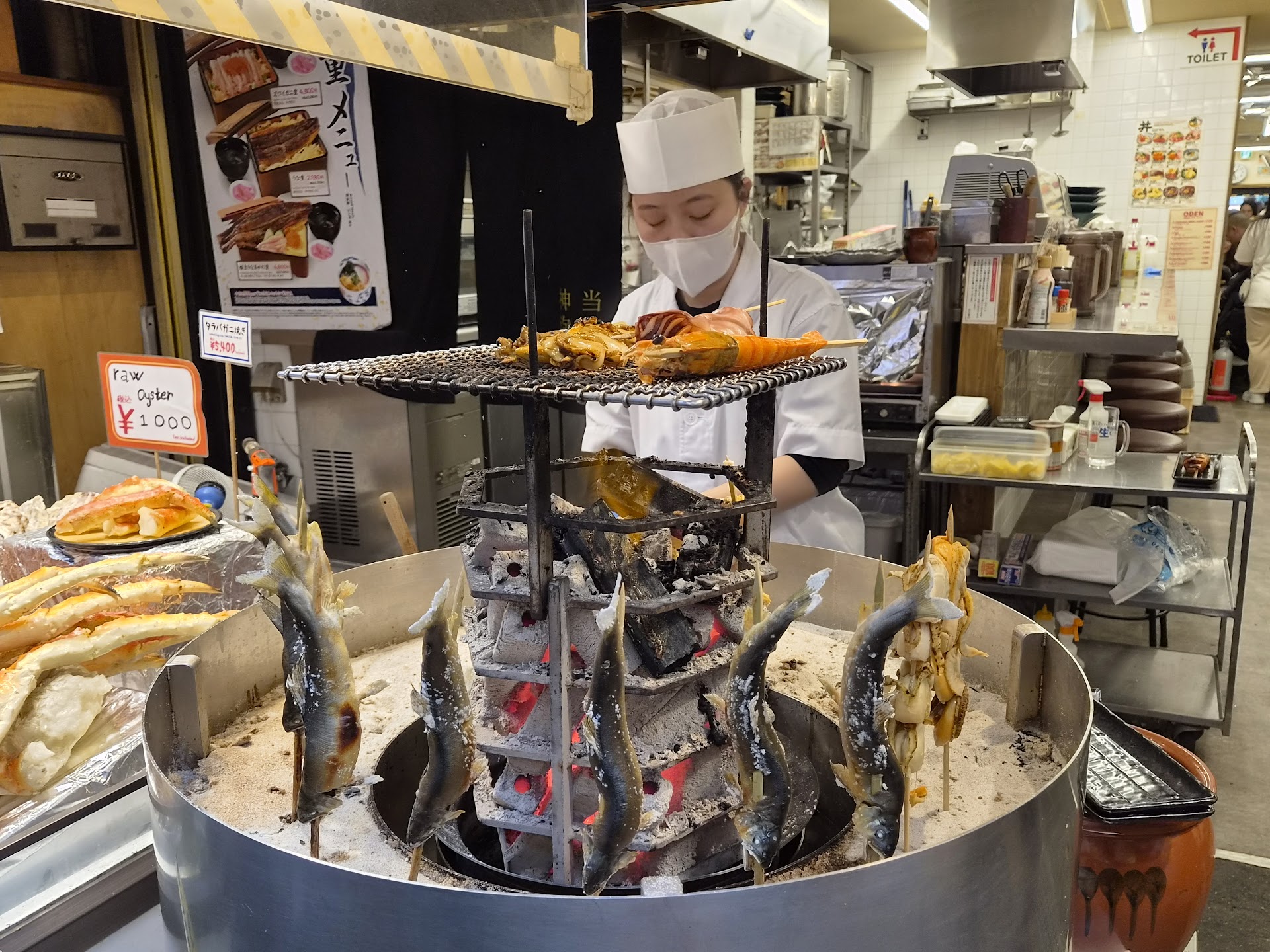
Yamachō is the first stall that regulars make a beeline for. Positioned near the Nippombashi entrance, it opens around 5:45 AM and stacks its display counter with whole crabs, live oysters, and seasonal uni (sea urchin) flown in from Hokkaido. The grilling starts almost immediately — crab claws hit the charcoal grill and the smell alone stops people mid-stride. The vendor works fast and quiet, turning shellfish with tongs while a small handwritten chalkboard lists the morning catch by weight. For breakfast by Japanese market standards, this is as honest as it gets.
- 📍 Kuromon Ichiba, near Nippombashi-suji entrance · 💰 Grilled crab claws ¥600–¥900 per piece · ⏰ Opens ~5:45 AM, closed Sundays · ⭐ 4.7
- What locals know: Point at the whole crab on the display tray, not the pre-cut pieces — the vendor will grill it fresh, and the wait is about four minutes.
Okamoto Seafood’s Uni Station
Fresh sea urchin on a half-shell, eaten standing at the counter — this is Kuromon’s most photographed moment, but before 8 AM there’s no queue. Okamoto’s tiny counter operates more like a sushi bar than a street stall: the roe is scooped to order from wooden trays, lightly dressed with a drop of soy, and handed over on a shell with a small wooden pick. The uni sourced here rotates between Hokkaido and Kyushu depending on the season, and the quality gap versus the tourist-facing stalls that open later is noticeable. Creamy, clean, no bitterness.
- 📍 Center arcade, mid-market section · 💰 ¥800–¥1,500 per portion depending on grade · ⏰ Opens 6:00 AM · ⭐ 4.8
- What locals know: Ask for murasaki uni (purple sea urchin) over bafun uni if you want the sweeter, less briny variety — the staff always know which is in that morning.
Takasho Tamagoyaki Corner
Not everything at Kuromon is raw or grilled over charcoal. Takasho’s rolled-egg counter draws a quiet but loyal morning crowd — vendors fold thick, lightly sweet Japanese omelets (dashi tamagoyaki) in copper pans while the first light filters through the arcade’s translucent roof panels. The tamagoyaki here are cut thick and served skewered on a stick: golden outside, custardy in the center, with a clean dashi flavor that doesn’t compete with the seafood you’ve already been eating. A full skewer runs two pieces and takes about ninety seconds to prepare. It’s Osaka-style breakfast without the production.
- 📍 West side of arcade, near the Matsuyamachi entrance · 💰 ¥200–¥300 per skewer · ⏰ Opens 6:30 AM · ⭐ 4.5
- What locals know: Arrive in the first thirty minutes it opens and the tamagoyaki comes off a freshly seasoned pan — the flavor is noticeably cleaner than the later batches.
Nakagawa Fish Market Display
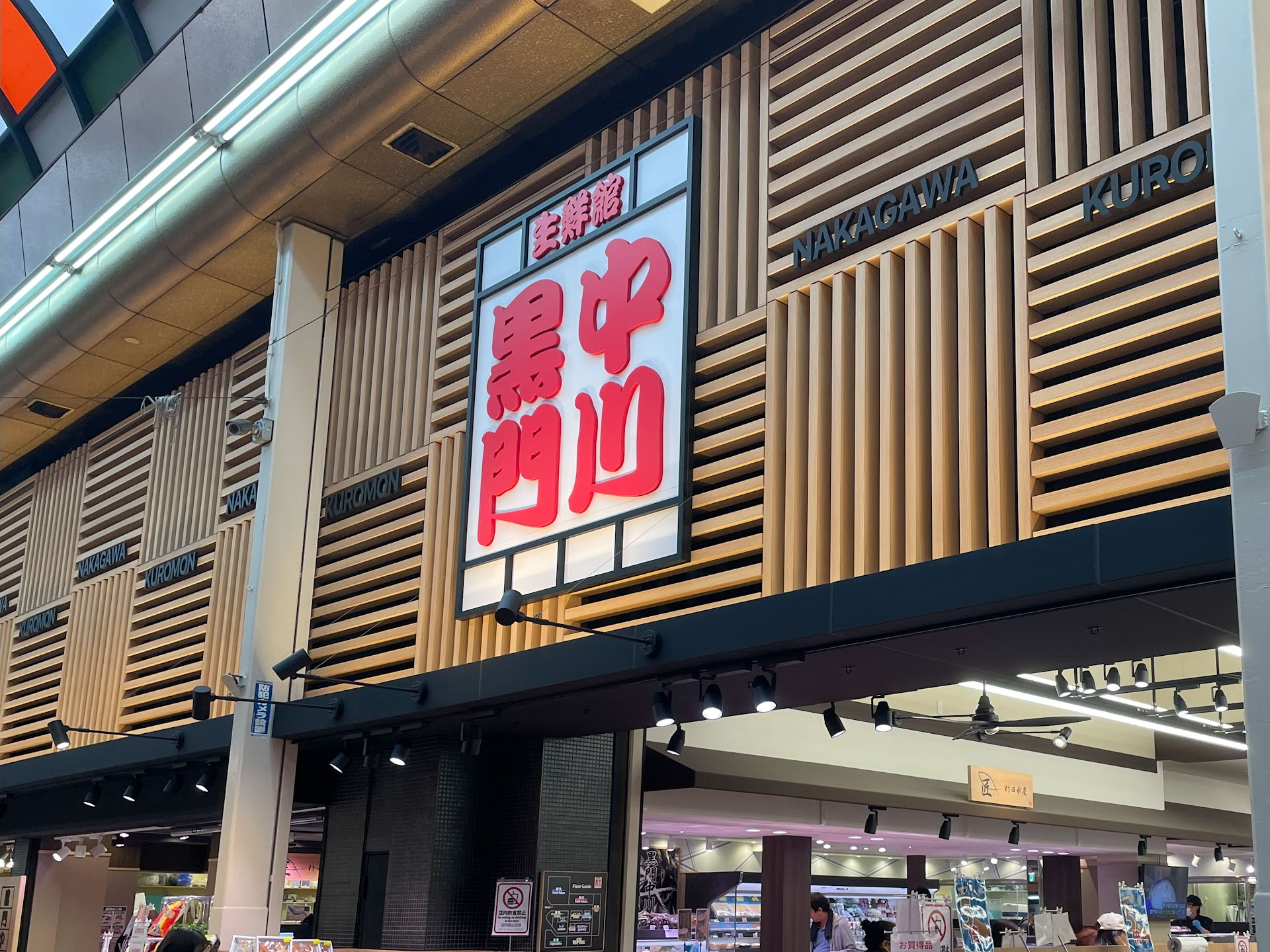
This isn’t a stall where you eat — it’s where the market reveals its actual scale. Nakagawa operates as a wholesale and retail hybrid, and its open front counter is stacked by 6 AM with whole fish, bivalves, and deep-sea catches that don’t appear on any tourist map of the market. The displays change by the week: in autumn, you’ll see Pacific saury (sanma) lined up in rows; in winter, monkfish (anko) and yellowtail (buri). Even without buying, spending five minutes watching the sorting, wrapping, and pricing process tells you more about Osaka’s relationship with the ocean than any food hall exhibit. For photographers, the ice-and-scale textures under morning fluorescent light are genuinely striking.
- 📍 North section of the arcade, opposite the Sennichimae crossing · 💰 Retail prices vary widely by catch; looking is free · ⏰ Operating by 5:30 AM · ⭐ 4.6
- What locals know: The vendors here speak almost no tourist English, but pointing at any fish and asking ikura desu ka? (how much is this?) almost always gets a friendly, detailed answer — and often a tasting.
Kuromon Morning Oyster Bar
By 7 AM, the oyster bar near the market’s center lane has its first customers — regulars who show up specifically for this, standing at a waist-high counter with a small paper tray of shucked oysters from Hiroshima or Hyogo. The raw oysters are large, cold, and served with a squeeze of citrus and a side of ponzu. There’s no seating. You eat standing, watching the market wake up around you, and that framing is exactly the point. For those who prefer their oysters grilled, the same counter offers a single-shell version on a small gas burner, topped with a pat of butter and a splash of soy that caramelizes in about three minutes.
- 📍 Center lane, roughly 150m from the Nippombashi entrance · 💰 ¥300–¥500 for raw, ¥400–¥600 for grilled · ⏰ Opens 6:30 AM · ⭐ 4.7
- What locals know: The Hyogo-prefecture oysters (labeled Ako or Aioi) tend to be saltier and more mineral-forward than the Hiroshima ones — worth asking which is on that morning if you have a preference.
Recommended Route
This half-day itinerary assumes you’re arriving from central Osaka (Shinsaibashi or Namba). Block out 6:00 AM to 9:30 AM for the full experience.
6:00 AM — Enter from the Nippombashi-suji side (the less-trafficked entrance). The arcade is already lit and vendors are mid-setup. Don’t rush — walk the full length first to see what’s out before you start eating. (~10 minutes)
6:15 AM — Stop at Yamachō Seafood. Order one grilled crab claw. Stand at the counter, watch the fishmonger work. This is the anchor moment of the morning. (~15 minutes)
6:35 AM — Walk north to Nakagawa Fish Market Display. No purchase necessary — spend five minutes observing the wholesale setup before the retail rush begins. (~10 minutes)
6:50 AM — Head to Okamoto Seafood’s Uni Station. Order one portion of whichever uni grade fits your budget. Eat immediately — it’s meant to be consumed on the spot. (~15 minutes)
7:10 AM — Cross to the west side for Takasho Tamagoyaki. One skewer, eaten while walking the arcade. (~10 minutes)
7:25 AM — Circle back to the center lane for the Kuromon Morning Oyster Bar. By now you’ve covered the full market loop and the oyster bar is just warming up. Take your time here — this is the last stop before the crowd arrives. (~20 minutes)
7:50 AM — The market is starting to fill. Exit toward Sennichimae and walk 8 minutes south to a konbini or Dotonbori for coffee before the rest of your day.
Budget · Transport · Booking
Getting there: The closest station is Nipponbashi (Sennichimae Line or Kintetsu Osaka Line), a 3-minute walk to the market’s south entrance. From Namba, it’s an 8-minute walk east along Sennichimae-dori. No cab or rideshare needed.
Breakfast budget per person:
- Grilled crab claw: ¥700
- Uni (standard grade): ¥1,000
- Tamagoyaki skewer: ¥250
- Oysters ×2 (one raw, one grilled): ¥800
- Total: approximately ¥2,750 (~$18 USD)
For a lighter visit (uni + oysters only), budget ¥1,500–¥2,000. For a full splurge with premium uni and a whole grilled crab: ¥5,000–¥7,000.
Cash vs. card: Bring cash. The majority of early-morning stalls at Kuromon are cash-only. ATMs are available at the 7-Eleven on Sennichimae-dori, a 3-minute walk from the market entrance.
Advance booking: None required or possible for market stalls. No reservations, no tickets, no lines before 8 AM.
Must-Know Tips
- 🕕 Arrive by 6:15 AM on weekdays, 6:00 AM on weekends. The weekend tourist wave starts earlier — by 8:30 AM on Saturdays the main lane is at capacity.
- 💴 Carry ¥3,000–¥5,000 in small bills. Many vendors can’t break a ¥10,000 note at opening; ¥500 and ¥1,000 coins and bills move faster.
- 📷 Ask before photographing vendors at close range. Most early-morning fishmongers are focused and working — a brief shashin ii desu ka? (may I take a photo?) is always appreciated and almost always gets a yes.
- 🗣️ Basic Japanese goes a long way here. Kore wa nan desu ka? (what is this?) and oishii desu ne (this is delicious) open more conversations than you’d expect.
- 🎒 Travel light. The arcade is narrow and stalls have low counters — backpacks larger than a daypack become a problem in tight morning traffic.
- ❄️ Don’t buy fish to take home unless you’ve planned ahead. Vendors will pack in ice, but without a cooler for transport it’s a commitment. If you’re staying in Osaka another night with a kitchen, this is worth the logistics.
Closing
Kuromon at dawn is less a tourist attraction and more a functional fact of Osaka life — 170 years of fish, smoke, and negotiation playing out under a covered roof before most of the city has eaten breakfast. The market that shows up in travel reels is the loud, camera-friendly afternoon version. The one worth the early alarm is quieter, slower, and run by people who are genuinely busy doing something else. That friction is exactly what makes it feel real.
Plan for it the night before: set the alarm, skip the hotel breakfast, and be at the Nippombashi entrance by 6:15 AM. Everything else follows from there.
🏨 Where to Stay
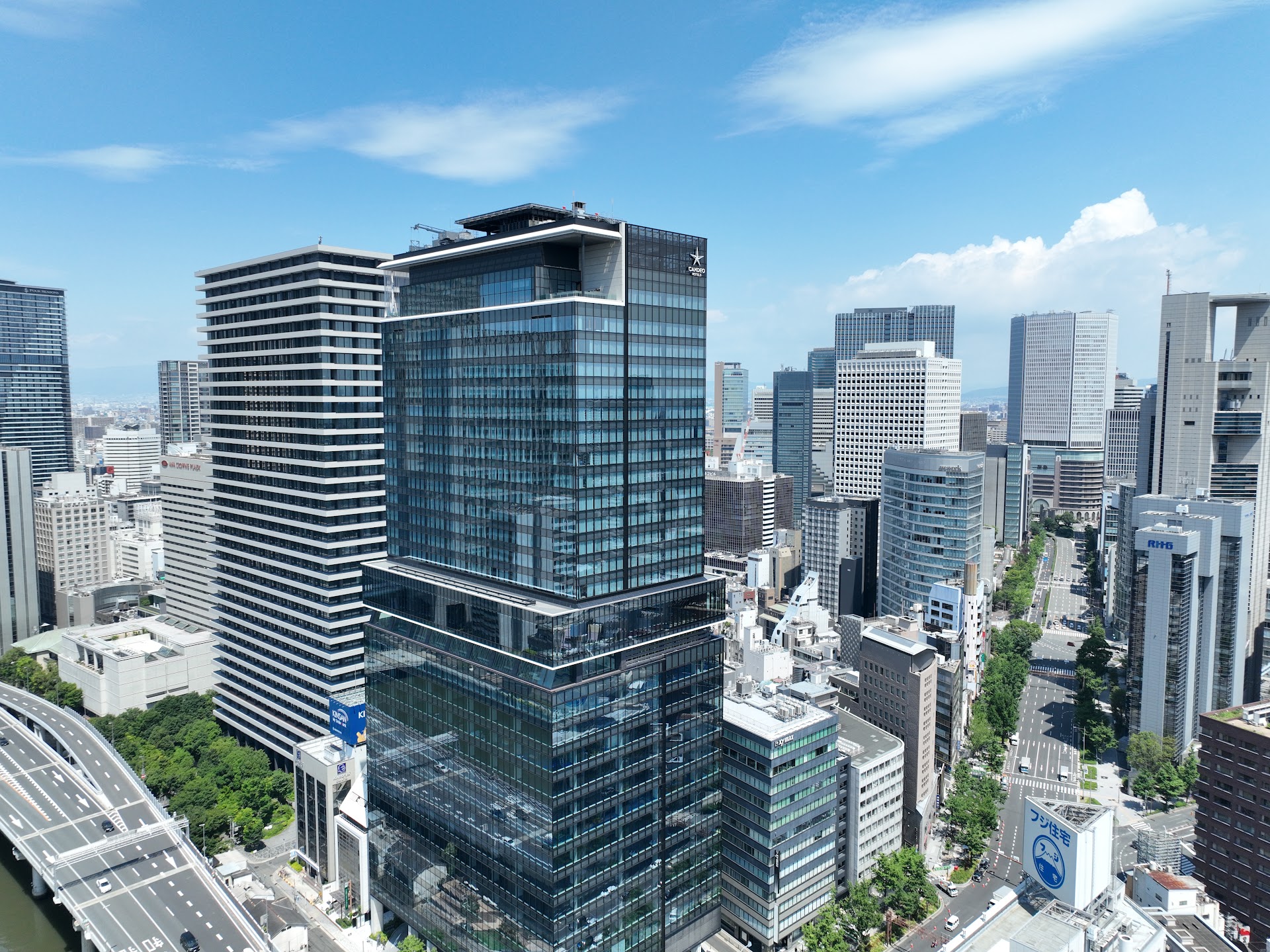
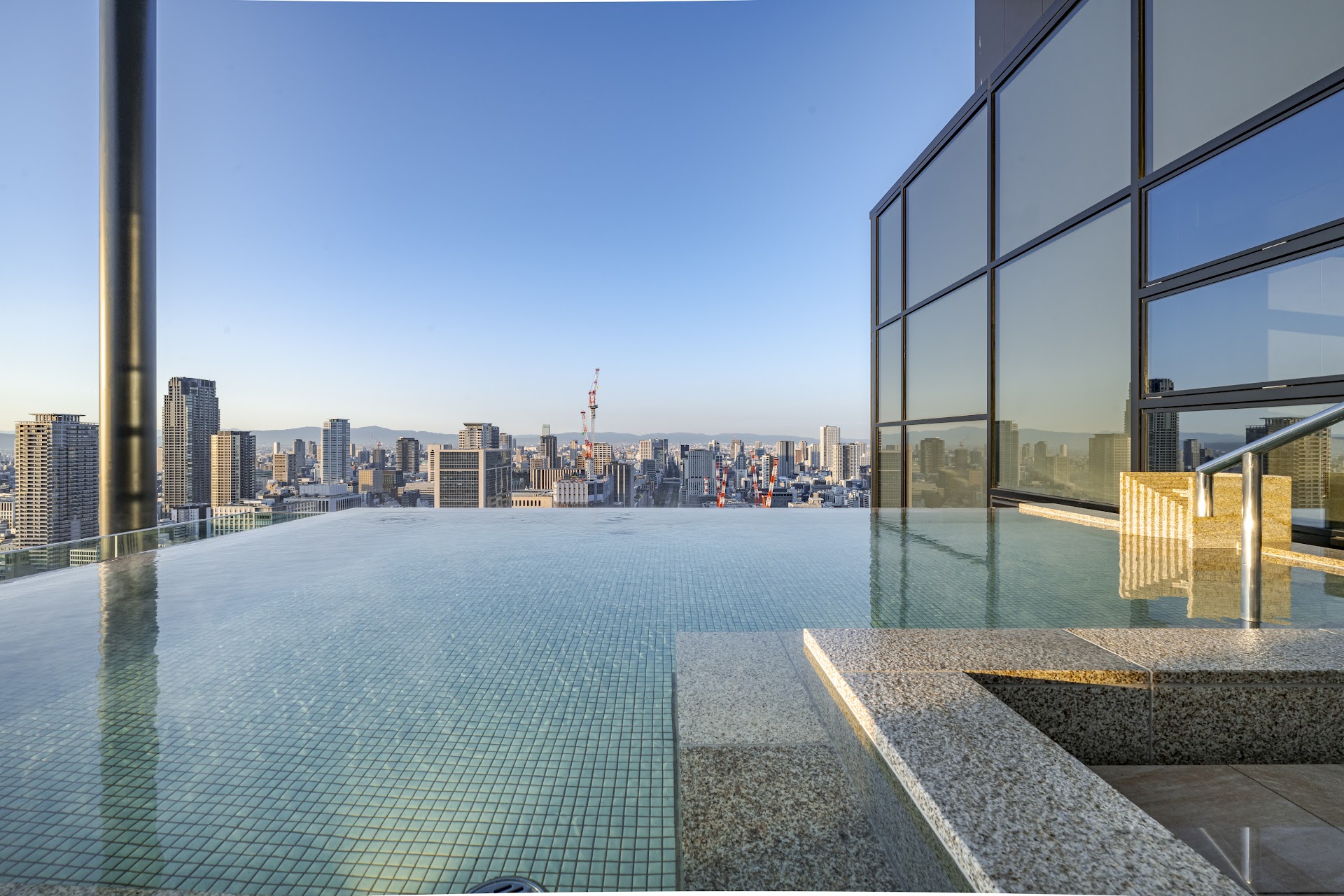 CANDEO HOTELS Osaka The Tower⭐ 5.0 · 8.9/10 (9,416) · $110 /night
 Hotel Hankyu GRAN RESPIRE OSAKA⭐ 5.0 · 8.8/10 (5,024) · $102 /night
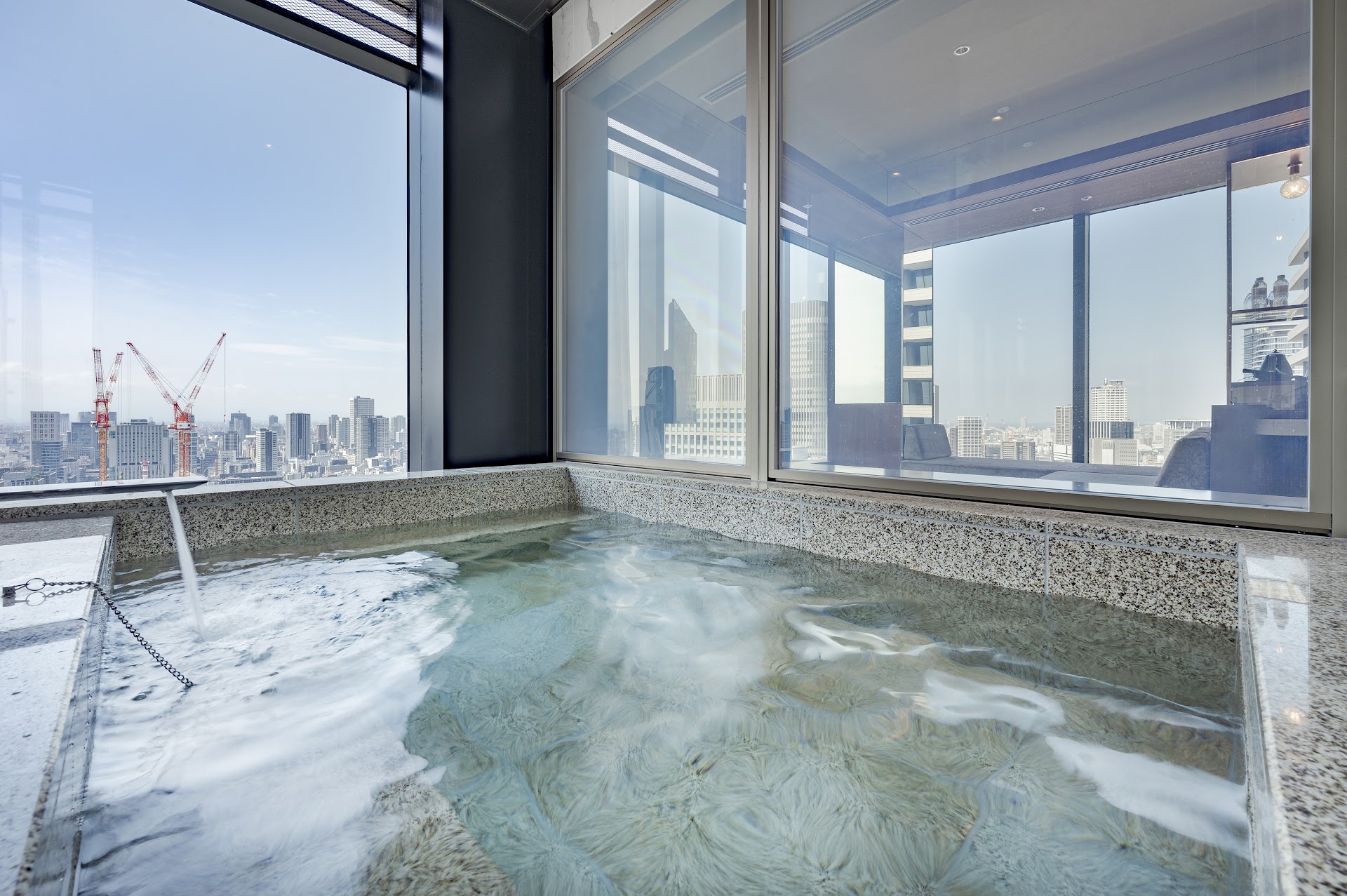 APA Hotel & Resort Osaka Umeda Eki Tower⭐ 3.0 · 8.5/10 (33,396) · $60 /night
Agoda affiliate link — clicks go to the price-comparison page.