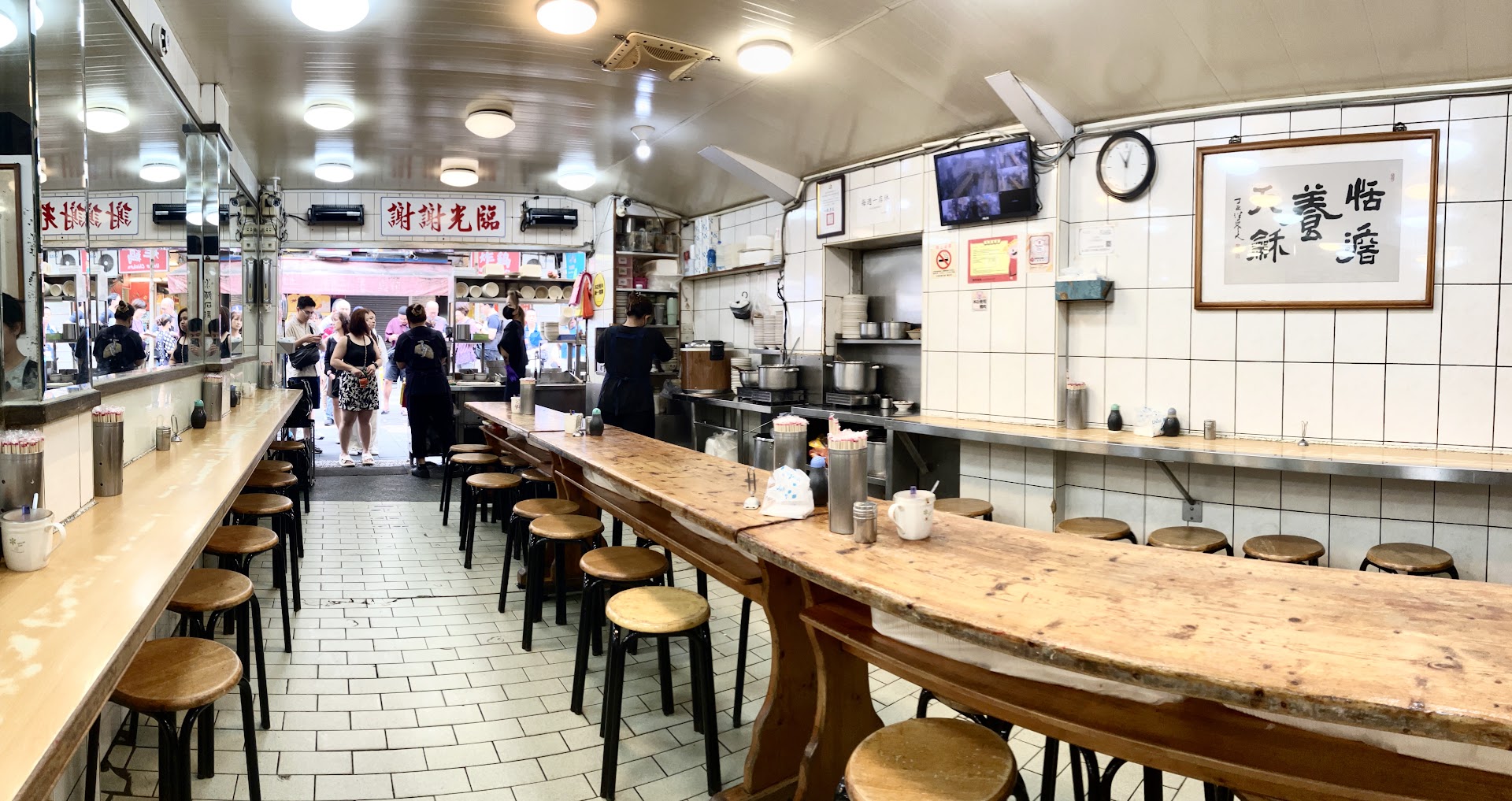
Before the rest of Taipei finishes its first dream, Huaxi Street Market is already alive — just not in the way you’d expect. The neon is off, the crowds are gone, and in their place is the slow, deliberate rhythm of vendors who’ve been here for decades. This is Taiwan’s most misunderstood market, and dawn is the only time it tells the truth.
Best Timing
Huaxi Street Night Market — nicknamed Snake Alley in older travel guides — is known as a nighttime spectacle, but the window between 5:00 AM and 8:00 AM is something else entirely. This is when the braised pork stoves are lit, when the charcoal smoke drifts low and unhurried, and when the vendors who’ve worked the midnight shift sit down for their own breakfast beside the ones just starting the day shift. The atmosphere is not dramatic — it’s quiet in a way that feels almost private.
The best months to visit are October through March, when Taipei’s humidity drops and morning temperatures sit comfortably between 15–22°C (59–72°F). Avoid July and August if possible: typhoon season and thick heat make early mornings muggy rather than cinematic. Come on a weekday if you can — weekends see cleanup crews and early-arriving tourists by 7:30 AM, which interrupts the stillness considerably.
Core Experiences
Tian Xiang Lou Braised Pork Rice Stand
This is the anchor of the dawn experience at Huaxi Street. The proprietor — a woman in her sixties who has run this stall for over thirty years — lights the charcoal burner before 5 AM and begins her slow braise of pork belly and tofu in a soy-based master stock that, by her own account, has been continuously replenished since the 1990s. The smell is unmistakable: sweet-savory, smoky, with a depth that no overnight-marinated shortcut can replicate. By 6:30 AM there’s a small line of taxi drivers, temple workers, and the odd local retiree. The pork rice arrives in a ceramic bowl, lacquered and shining, with a half-soy egg and pickled mustard greens on the side.
- 📍 Huaxi Street, Wanhua District, near the south entrance · 💰 NT$55–80 (~USD $1.70–2.50) · ⏰ Opens ~5:00 AM, sells out by 9:00 AM · ⭐ 4.8
- Locals know: Order the tofu add-on (NT$20). It absorbs the braising liquid more intensely than the pork and is the vendor’s personal recommendation for first-timers.
Huaxi Street Temple Forecourt
Just inside the covered market arcade, the small Fude Temple faces east, and at sunrise the light falls directly through the entrance in a single clean shaft across the incense altar. By 6:00 AM, neighborhood residents — mostly elderly — arrive with fruit offerings and paper money. The incense smoke mingles with the food steam from the nearby stalls, creating a layered, almost impressionistic haze that photographers and videographers find endlessly compelling. It’s not a tourist attraction at this hour; it’s a functional part of the neighborhood’s morning liturgy. Stand quietly at the perimeter and observe.
- 📍 Huaxi Street No. 14, Wanhua District · 💰 Free · ⏰ Open from 5:30 AM · ⭐ 4.5
- Locals know: Bring nothing, touch nothing on the altar. Silence and a slight bow at the entrance are the correct posture — you’ll be welcomed without a word.
Guangzhou Street Shutter Walk
Paralleling Huaxi Street one block east, Guangzhou Street is where the wholesale vendors load in before dawn. Between 5:00 and 7:00 AM, hand-trucks of dried goods, preserved plums, and packaged temple snacks move through an obstacle course of half-raised metal shutters. This is the market’s circulatory system — the part tourists never see because it’s already cleared out by the time night-market crowds arrive at 6 PM. Walking this block slowly, watching the logistics of a traditional market wake up, is one of Taipei’s genuinely unrepeatable urban experiences. The texture here — painted concrete, steel shutters, handwritten price boards in traditional characters — is visual material that no curated market district in the city can replicate.
- 📍 Guangzhou Street between Xichang St. and Wuzhou St., Wanhua · 💰 Free · ⏰ Active 4:30–7:30 AM · ⭐ 4.4
- Locals know: The dried mango and preserved plum vendors on this block sell to restaurants citywide. Prices here are wholesale-adjacent — about 30% cheaper than Dihua Street for the same product.
Old Wanhua Soy Milk Counter
On the northwest corner of Huaxi Street’s main arcade, a three-stool counter has served fresh warm soy milk and you tiao (savory fried dough sticks) since the 1970s. The soy milk is made fresh each morning from whole soybeans, unsweetened by default, with a thin skin that forms on top if you let it sit — a detail that chain soy-milk shops have engineered out of existence. The you tiao arrive straight from the oil, blistered and light, made to be torn and dunked. This is the breakfast Wanhua residents have eaten for two generations. It costs almost nothing. It is very good.
- 📍 Huaxi Street north arcade, corner stall · 💰 NT$35–50 (~USD $1.10–1.60) · ⏰ 5:30 AM – sold out by 9:00 AM · ⭐ 4.7
- Locals know: Ask for “dou jiang” (豆漿) and hold up fingers for the quantity. Sweetened or unsweetened — “tian” (甜) or “wu tang” (無糖). Unsweetened with you tiao is the local move.
Bangka Park Bench Moment
Two minutes’ walk from the market’s north exit, Bangka Park is Wanhua’s neighborhood living room. At dawn it belongs entirely to locals: elderly men doing slow tai chi routines beside the banyan trees, a group of women practicing a fan dance near the far pavilion, and one or two people simply sitting and watching the light change over the low-rise rooflines. After the sensory density of the market — the smoke, the sizzle, the shouted orders — the park’s quietness lands differently. It’s the correct place to end the walk, sit on a bench with your soy milk, and let the morning settle. There is no ticket, no schedule, and no reason to rush.
- 📍 Bangka Park, Kangding Road side, Wanhua District · 💰 Free · ⏰ Always open · ⭐ 4.6
- Locals know: The northeast corner of the park, under the largest banyan tree, is the tai chi congregation point. Arrive by 6:30 AM to see the full group — they wrap up before 7:30 AM.
Recommended Route
This is a 2.5-hour slow walk. No rushing. No checklist ticking.
- 05:00 — Arrive at Huaxi Street south entrance. The braised pork stove at Tian Xiang Lou is already lit. Order and eat slowly. Watch the shift change.
- 05:45 — Walk north through the arcade to the Fude Temple forecourt. The morning offerings begin around 6:00 AM. Allow 20 minutes to observe quietly.
- 06:15 — Cross one block east to Guangzhou Street. Walk the full shutter-roll block north to south. Budget 20–25 minutes to walk slowly and take it in.
- 06:45 — Return to the Huaxi arcade’s northwest corner for soy milk and you tiao at the counter stall. Eat standing or perched on a stool.
- 07:15 — Walk two minutes north to Bangka Park. Find a bench. Sit. The tai chi groups are active until 7:30 AM. This is the end of the route, not a pitstop.
- 07:30–08:00 — The market begins to shift again as day-market vendors arrive. This is a good moment to leave — the quiet is giving way to the city’s ordinary volume.
Total walking distance: roughly 1.2 km. Comfortable at any pace.
Budget · Transport · Booking
No advance booking required for any part of this walk. Everything operates on a first-come basis; the only variable is sell-out timing on the food stalls.
- 🍴 Braised pork rice + egg: NT$75 (~USD $2.30)
- 🍴 Soy milk + you tiao: NT$50 (~USD $1.55)
- 💰 Total food spend: under NT$150 (~USD $4.60)
- 🚇 Transport: MRT to Longshan Temple Station (Exit 1) — 3-minute walk to Huaxi Street. Single-ride fare from central Taipei: NT$25–35.
- 💳 Cash only at all food stalls. There are 7-Eleven ATMs within two blocks.
- 🏨 If staying nearby: Wanhua-area hotels run NT$1,800–3,500/night (~USD $55–110). Staying in this district saves the MRT ride and lets you walk out at 4:45 AM without a commute.
Must-Know Tips
- 🕐 Go before 6:30 AM — the braised pork stall sells out, and the quietness evaporates fast once the 7 AM crowd arrives from the MRT.
- 💵 Bring NT$200 in small bills — vendors can’t break large notes at 5 AM and appreciate the exact change.
- 📷 Photography etiquette at the temple: ask with a gesture before pointing a camera at individuals making offerings. Most people are unbothered, but the ask matters.
- 🌧️ Pack a compact umbrella — October through March mornings can carry a light drizzle that doesn’t show up in the forecast. The arcade is covered, the park is not.
- 👟 Wear comfortable walking shoes with grip — wet market tile at 5 AM is slippery. Street food stalls splash water during setup.
- 🗣️ A little Mandarin goes a long way: “Ni hao” (hello), “xie xie” (thank you), and pointing work fine. Most vendors have zero expectation of English and zero issue with it.
Closing
Huaxi Street at dawn is not a hidden gem in the influencer sense — it’s not undiscovered, it’s just unvisited at this hour, which is an entirely different thing. The vendors aren’t performing for cameras; they’re doing their actual work, in the actual rhythm of the neighborhood, as they have for decades. That’s what makes the early walk feel rare: it’s not a curated experience. It’s just Wanhua, unfiltered, before the city remembers to put its face on.
If you’re in Taipei with even one free early morning, set the alarm. Be at the south entrance of Huaxi Street by 5:00 AM. Eat the braised pork. Watch the smoke rise. The rest of the day will still be there when you get back.
🏨 Where to Stay
 Hotel Metropolitan Premier Taipei⭐ 5.0 · 9.1/10 (13,046) · $187 /night
 Miramar Garden Hotel⭐ 5.0 · 8.7/10 (12,559) · $146 /night
 Capital Hotel Songshan⭐ 4.0 · 8.3/10 (9,960) · $97 /night
Agoda affiliate link — clicks go to the price-comparison page.