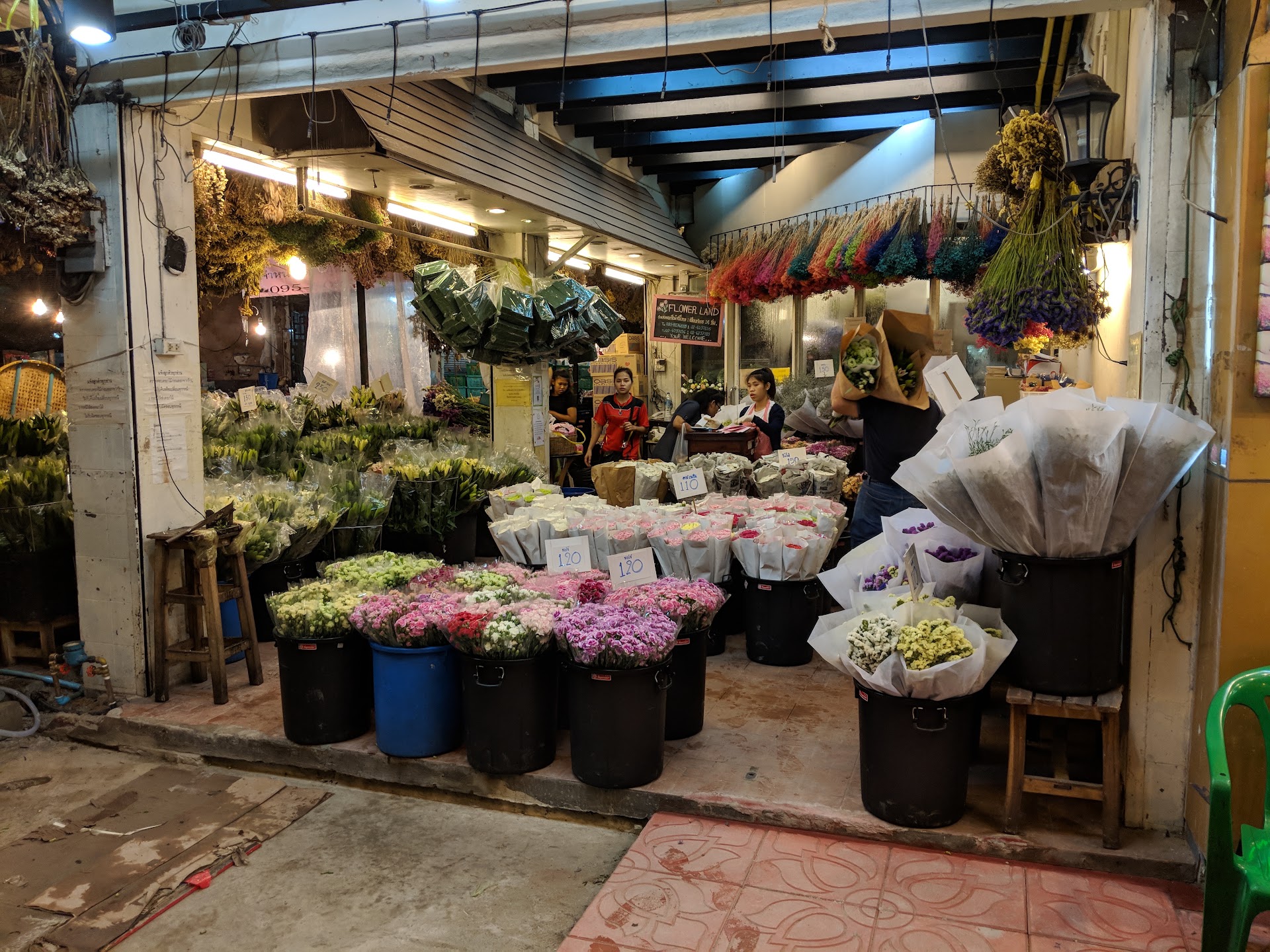
Before dawn breaks over the Chao Phraya River, Bangkok is already at work — and nowhere is that more vivid than Pak Khlong Talat, the city’s legendary wholesale flower market. While most visitors are still asleep in their hotel rooms, this riverside neighborhood hums with a quiet, purposeful energy that has run on its own clock for centuries. Arrive before 4 AM and you’ll walk into something most tourists never see.
Best Timing
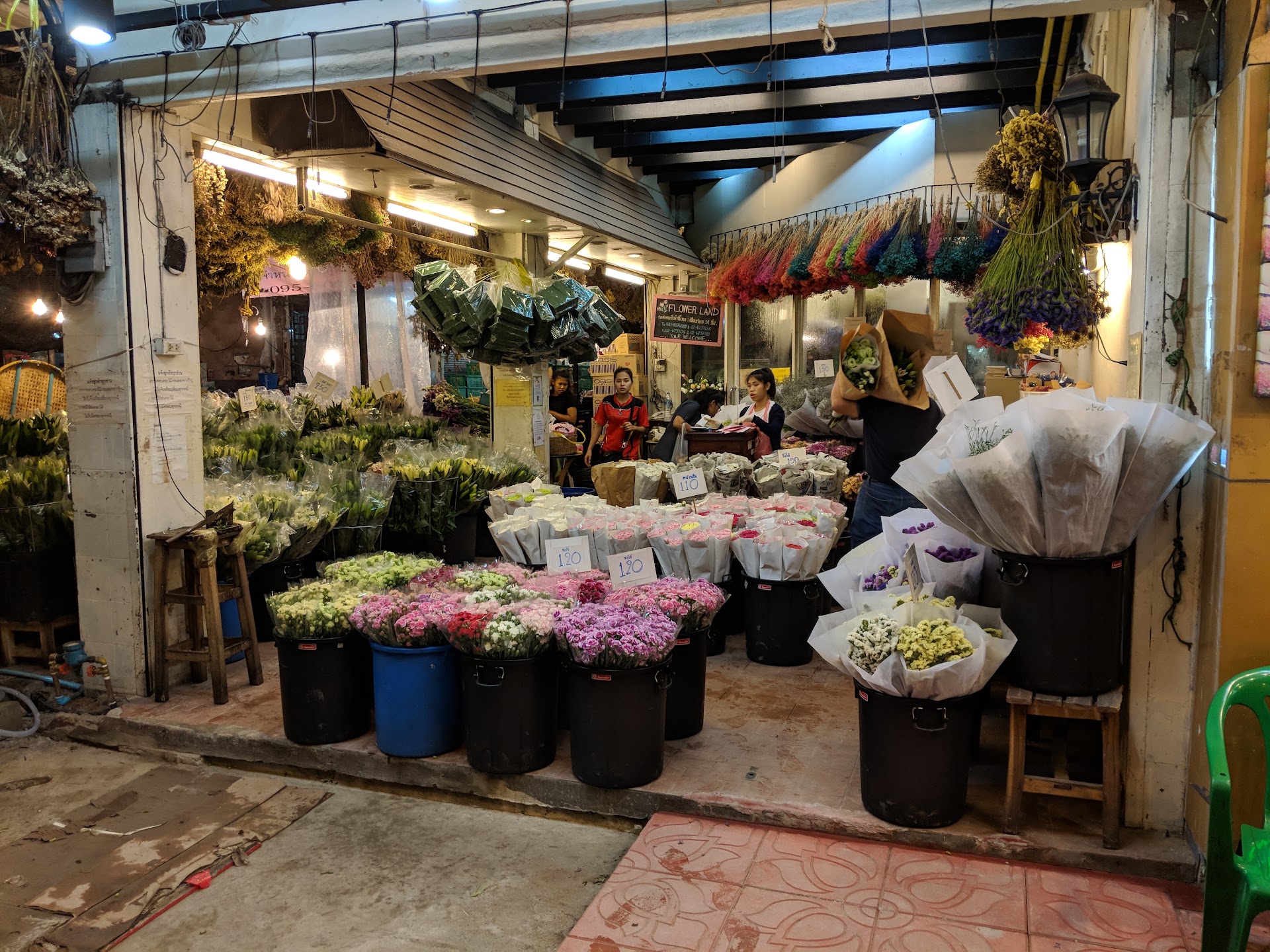
The market technically operates 24 hours, but the magic window is 3:30 AM to 6:30 AM. That’s when wholesale buyers from temples, wedding planners, and street vendors flood the stalls, and the density of blooms — jasmine garlands stacked ceiling-high, marigold towers bright as flame, lotus buds still tightly closed — is at its most overwhelming. By 7 AM, the bulk buyers are gone, the light shifts from artificial warmth to harsh daylight, and much of the atmosphere evaporates.
The best months to visit are November through February, when Bangkok’s cool-season air keeps the flowers fresh longer and the walk along the riverbank doesn’t soak your shirt. During the rainy season (June–October), afternoon flooding near the Chao Phraya can make early-morning access messier, though the market itself stays open. Avoid major Buddhist holidays like Makha Bucha or Visakha Bucha — demand for offerings spikes and the crowds triple.
Core Experiences
The Jasmine Garland Vendors (Malai Stalls)
The first thing that hits you isn’t the color — it’s the scent. Rows of vendors sit cross-legged on low stools, fingers moving with practiced speed, threading jasmine buds onto thin wire to form the malai garlands used as Buddhist offerings across the city. These women (and it’s almost always women) have been doing this since 2 or 3 AM, and by the time you arrive the stall floors are ankle-deep in trimmed stems. A single malai sells wholesale for 5–10 baht; retail garlands for tourists run 20–40 baht and make a fragrant, biodegradable souvenir. Watch quietly — the rhythm is meditative and the vendors rarely pause.
- 📍 Main garland row, Pak Khlong Talat market, Chakkraphet Road · 💰 20–40 THB per garland retail · ⏰ 24 hrs, peak 3–6 AM · ⭐ 4.8
- What locals know: Buy an even number of garlands — odd numbers are reserved for funerals.
Marigold and Dok Dao Display Stalls
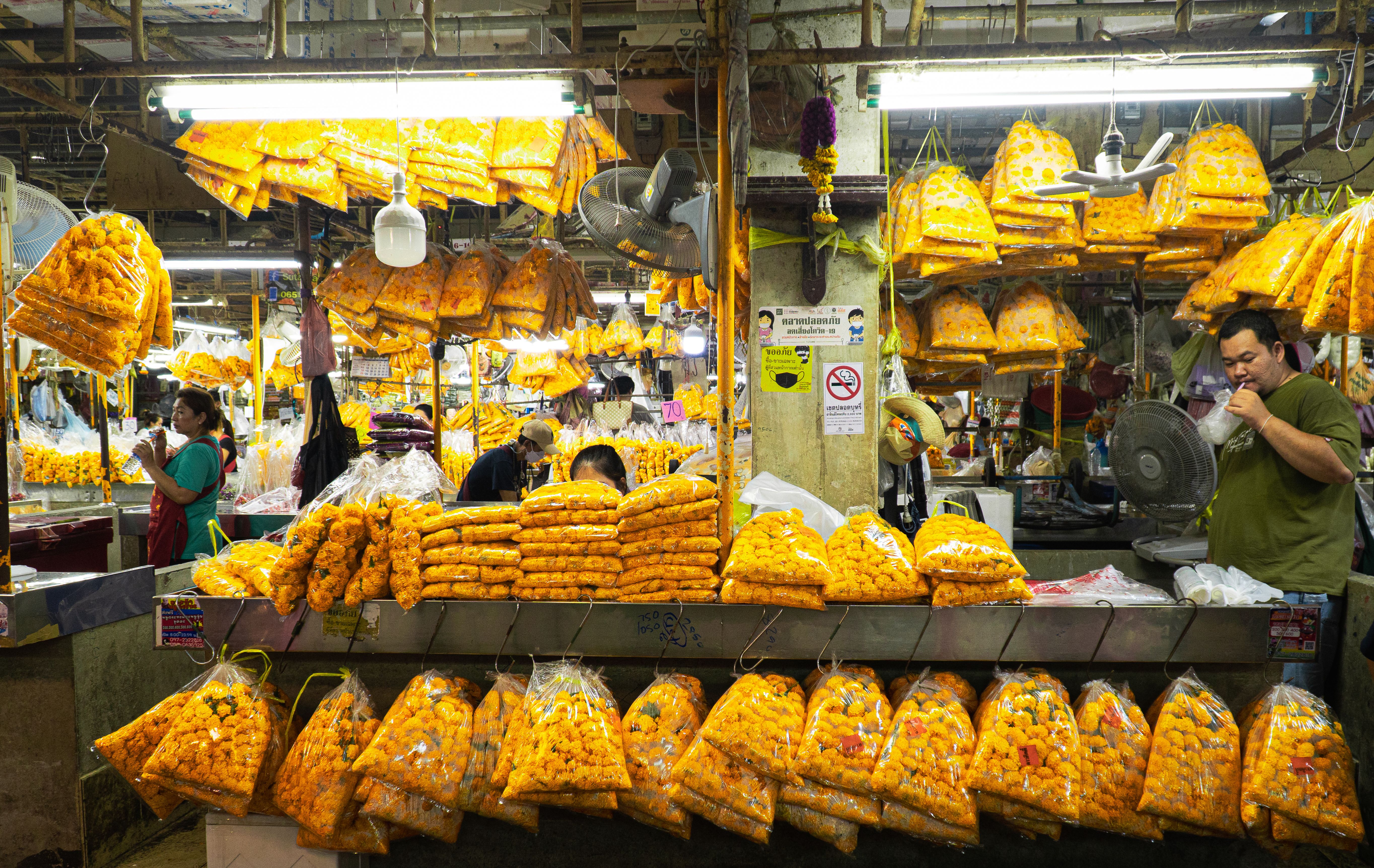
Deep in the covered section of the market, the marigold stalls are a photographer’s obsession — towers of dok dao (marigolds) packed so densely they read as solid orange under the fluorescent lights, shifting to amber and gold when a phone flashlight catches them. These are the same flowers draped over spirit houses and temple altars across Thailand, and they arrive here by the truckload from farms in Chiang Rai and Nakhon Pathom every night. Vendors sell by the kilogram (around 60–100 THB/kg wholesale), and the sheer volume of product stacked floor-to-ceiling in narrow aisles creates a sense of organized abundance unlike anything in a conventional market.
- 📍 Covered interior stalls, Pak Khlong Talat, near the river-facing entrance · 💰 60–100 THB/kg (wholesale reference) · ⏰ Midnight–7 AM busiest · ⭐ 4.7
- What locals know: The middle rows see the most foot traffic — edge stalls near the river wall have the same product and better light for photos.
The Chao Phraya Riverbank Loading Dock
Step through the market’s river-side exit and you reach the working dock where flat-bottomed boats pull up in the dark to unload fresh shipments from upcountry farms. This is the operational heart of Pak Khlong Talat — crates of orchids, lotus stems, and tuberose moving from boat to dolly to stall in a relay that takes maybe 20 minutes per delivery. The mist off the Chao Phraya hangs low at this hour, blurring the temple spires across the water into silhouettes. It smells of river mud, diesel, and cut flowers simultaneously. There’s no admission, no rope line, no tourist infrastructure — just the dock doing its job. Stand back, don’t block the dollies, and watch the city’s supply chain in motion.
- 📍 River-side loading area, behind Pak Khlong Talat market, Pak Khlong Talat Pier · 💰 Free · ⏰ 2–5 AM most active · ⭐ 4.6
- What locals know: The 3:30–4:30 AM window catches the peak unloading rush before the dock clears out.
Pad Kra Pao Cart (Pre-Dawn Street Food)
A handful of street-food carts set up specifically for the market workers who’ve been on their feet since midnight. The standout is a pad kra pao (holy basil stir-fry) cart that parks on Chakkraphet Road just east of the main entrance — it’s recognizable by the wok smoke and the cluster of vendors in rubber boots eating standing up. A plate with a fried egg runs 60–80 THB and arrives in under three minutes. There’s also a cart selling joke (rice porridge) with ginger and century egg for 50 THB — mild, warming, exactly right for 4 AM. These carts don’t have signs or Google Maps listings; they exist because the market exists.
- 📍 Chakkraphet Road, just east of market main entrance (look for wok smoke) · 💰 50–80 THB per dish · ⏰ ~1 AM–7 AM · ⭐ 4.5
- What locals know: Order pad kra pao with kai dao (fried egg) and ask for phet nit noi (a little spicy) — the default version is mild for market workers starting a long shift.
Wat Ratchaburana Dawn View (Memorial Bridge Angle)
A five-minute walk south along the river from the market entrance brings you to Memorial Bridge (Saphan Phut), where at around 5:30 AM the eastern sky begins to lighten behind Wat Arun’s spires. From the bridge’s west rail, you get an unobstructed view of the river bending south with long-tail boats starting their early runs. It’s not a hidden gem in any Instagram sense — locals fish off this bridge at all hours — but the combination of flower-market scent still in your clothes, the first pink light, and the sound of boat engines makes it one of Bangkok’s quieter, more honest early-morning moments. No entrance fee, no queue, no tour group.
- 📍 Memorial Bridge (Saphan Phut), Bangkok Yai / Phra Nakhon districts · 💰 Free · ⏰ Best 5:15–6:00 AM for sunrise light · ⭐ 4.6
- What locals know: The west sidewalk of the bridge faces Thonburi — cross to the east sidewalk for the Wat Arun angle.
Recommended Route
This is a half-day outing that starts in the dark and ends with breakfast and a boat ride home.
- 3:30 AM — Arrive at Pak Khlong Talat via Grab (most reliable at this hour). Enter from the Chakkraphet Road side. Head straight to the jasmine garland row — the scent and the craft work are at full intensity.
- 3:50 AM — Move into the covered marigold stalls. Take your time in the interior aisles. The lighting is electric-warm, great for close-up photography.
- 4:20 AM — Exit river-side to the loading dock. Watch two or three boat unloadings. This is a 15–20 minute stop.
- 4:45 AM — Back through the market to Chakkraphet Road. Find the pad kra pao cart (follow the smoke). Eat standing — that’s the move.
- 5:20 AM — Walk south to Memorial Bridge, ~7 minutes on foot. Position on the bridge for the sunrise window.
- 6:00 AM — Walk back north to Pak Khlong Talat Pier and catch the Chao Phraya Express Boat (orange or yellow flag line) heading north toward Tha Tien or Tha Chang if you want to detour to Wat Pho when it opens at 8 AM.
Total active time: ~2.5 hours. Total distance on foot: under 1.5 km.
Budget · Transport · Booking
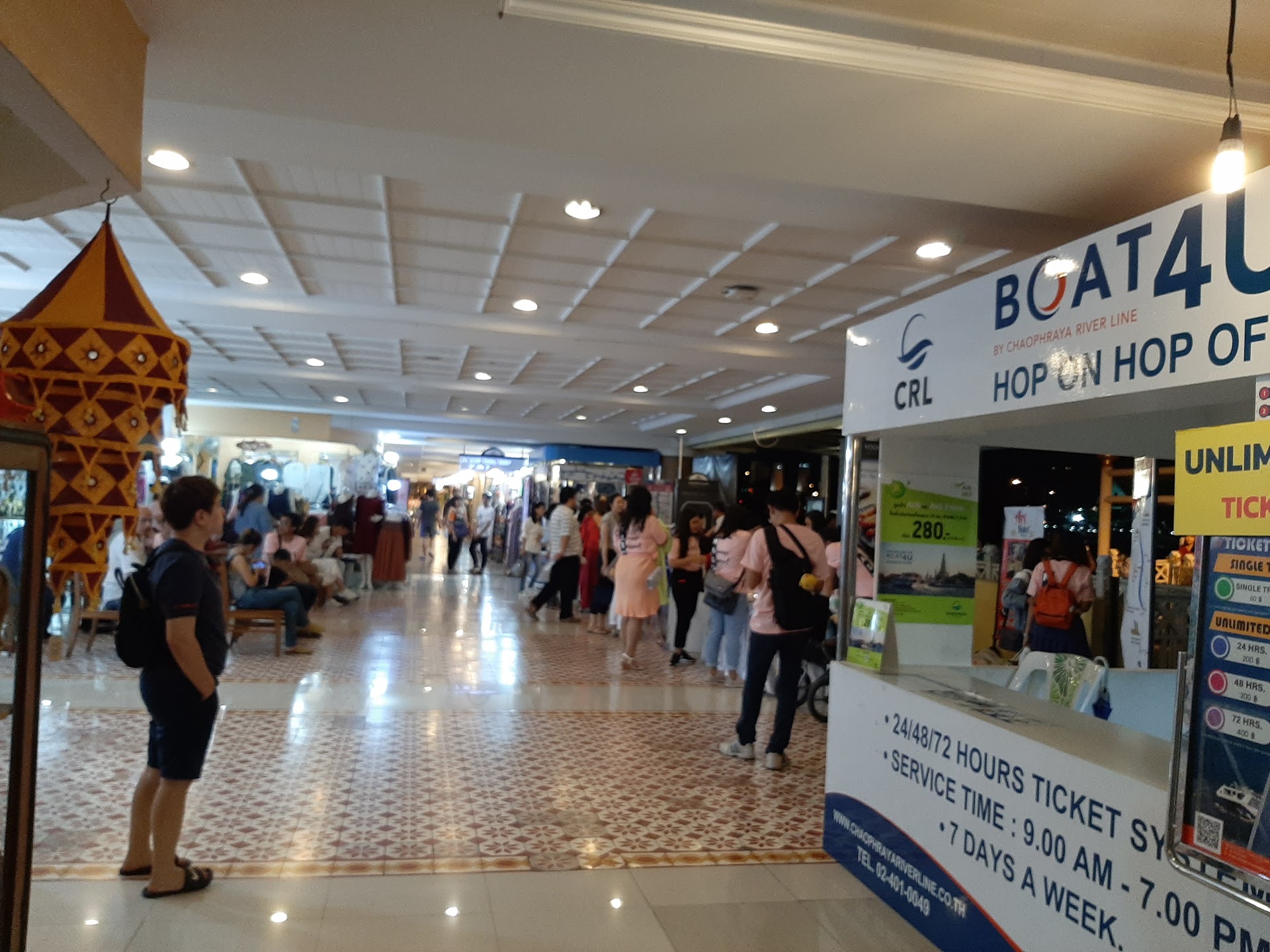
No advance booking required for any part of this outing — the market is public, the dock is public, the bridge is public.
| Item | Estimated Cost (THB) |
|---|---|
| Grab from central Bangkok (one way) | 80–150 THB |
| Jasmine garland (souvenir) | 20–40 THB |
| Pre-dawn street food (2 dishes) | 110–160 THB |
| Chao Phraya Express Boat (home) | 15–30 THB |
| Total |
Transport notes: At 3 AM, public transport is not running. Grab is the practical choice — surge pricing is minimal at this hour on weeknights. On weekends, book a few minutes early. The return trip via express boat (from Pak Khlong Talat Pier, code N6) starts around 6 AM and is the most scenic way back north.
Cash: Bring small bills (20s and 50s). Almost no vendor at this hour accepts cards or QR payment.
Must-Know Tips
- 💰 Bring cash in small denominations. 20 and 50 THB notes are what vendors need. Anything over 100 THB for a 30 THB item will cause a slow hunt for change.
- 👟 Wear closed shoes you don’t mind getting wet. The market floor near the river entrance is damp with flower water and occasionally has puddles. Sandals are a bad call at 4 AM on a wet concrete floor.
- 📸 Ask before photographing vendors closely. A nod and a smile go far — most vendors don’t mind, but pointing a camera directly at someone’s face without acknowledgment is poor form in any market.
- 🌡️ November–February visits: bring a light layer.** It’s not cold by most standards, but Bangkok at 4 AM in cool season can feel surprisingly brisk near the river (22–24°C). By 7 AM it’s warm.
- 🗣️ Thai phrase to know: “Tao rai?” (เท่าไร?) — “How much?” It signals respect and usually gets you the local price rather than the tourist price.
- ⛔ Don’t touch the blooms without buying. The marigold and lotus stock is pre-ordered and allocated. Vendors are friendly but protective of their merchandise — browse with your eyes.
Closing
Pak Khlong Talat at 4 AM is one of those places where a city reveals how it actually operates — not for visitors, not for cameras, but for itself. The jasmine garlands that will hang on spirit houses by 8 AM, the marigolds that will circle temple altars by noon: they all pass through this narrow stretch of riverbank in the dark, handled by workers who run their part of Bangkok on a schedule the rest of the city never sees. It’s not a spectacle. It’s work. And being present for it — quietly, without disrupting it — is the closest thing to understanding what makes this city run.
Set your alarm for 3 AM, book the Grab the night before, and bring small bills. The rest takes care of itself.
🏨 Where to Stay
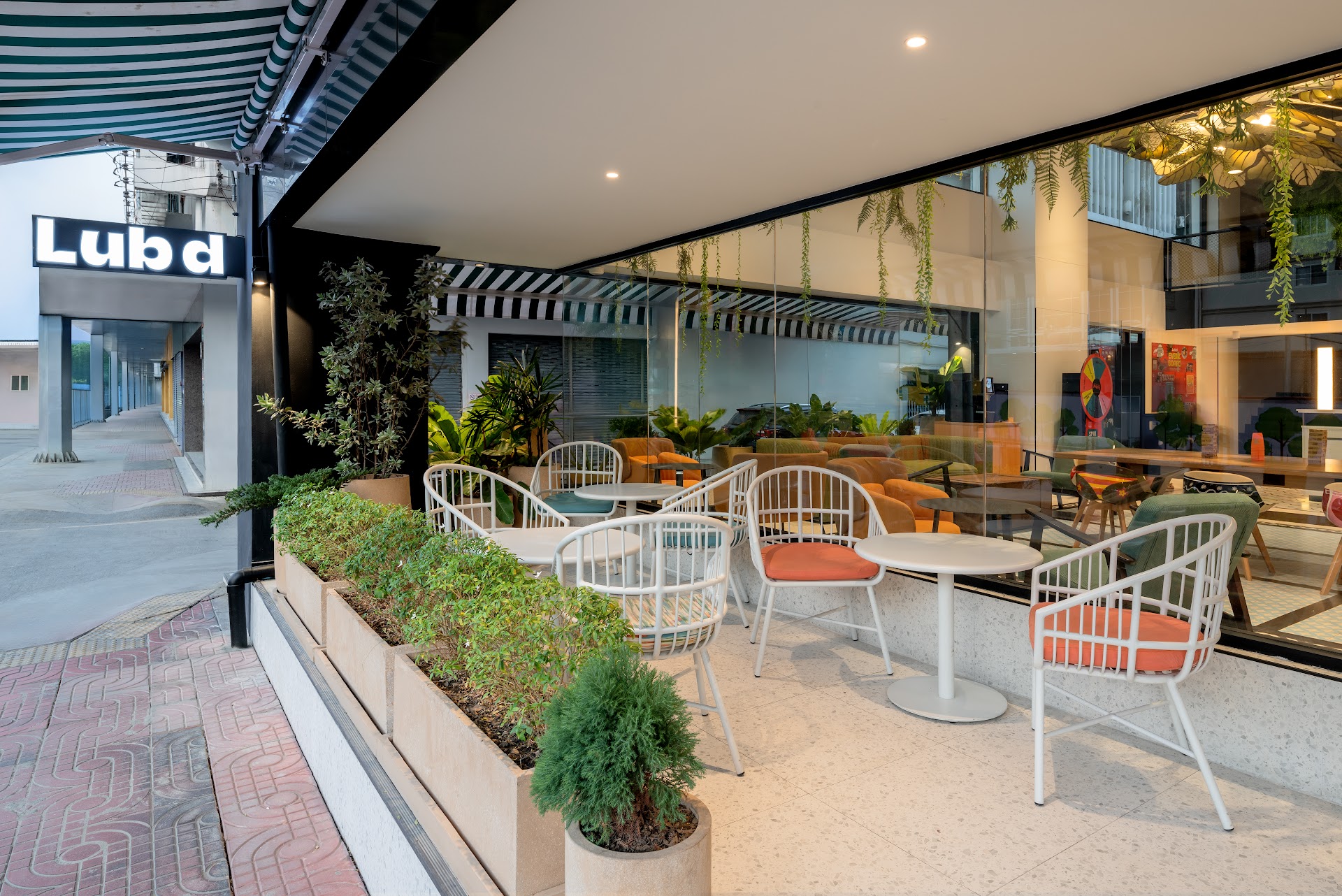
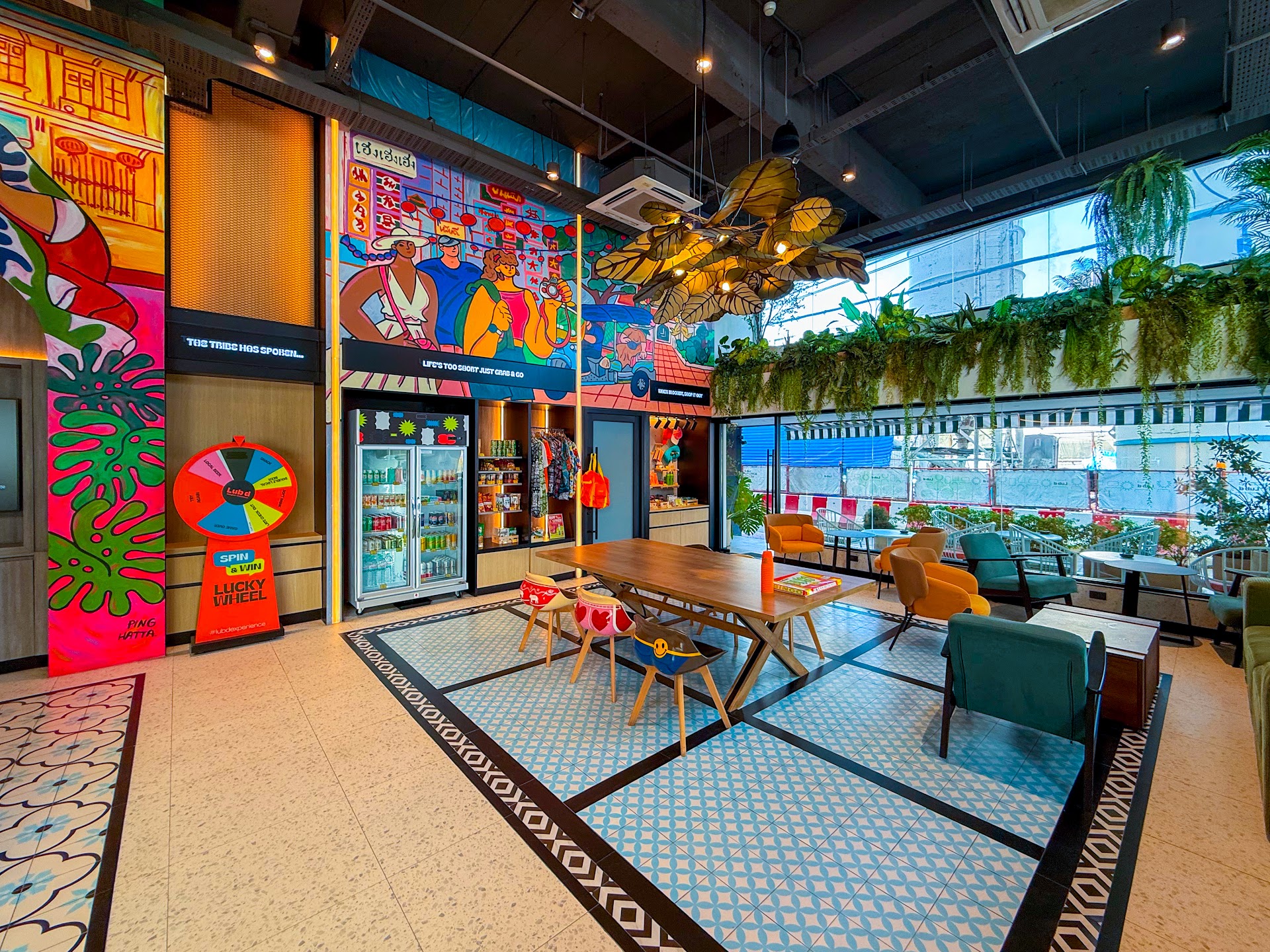
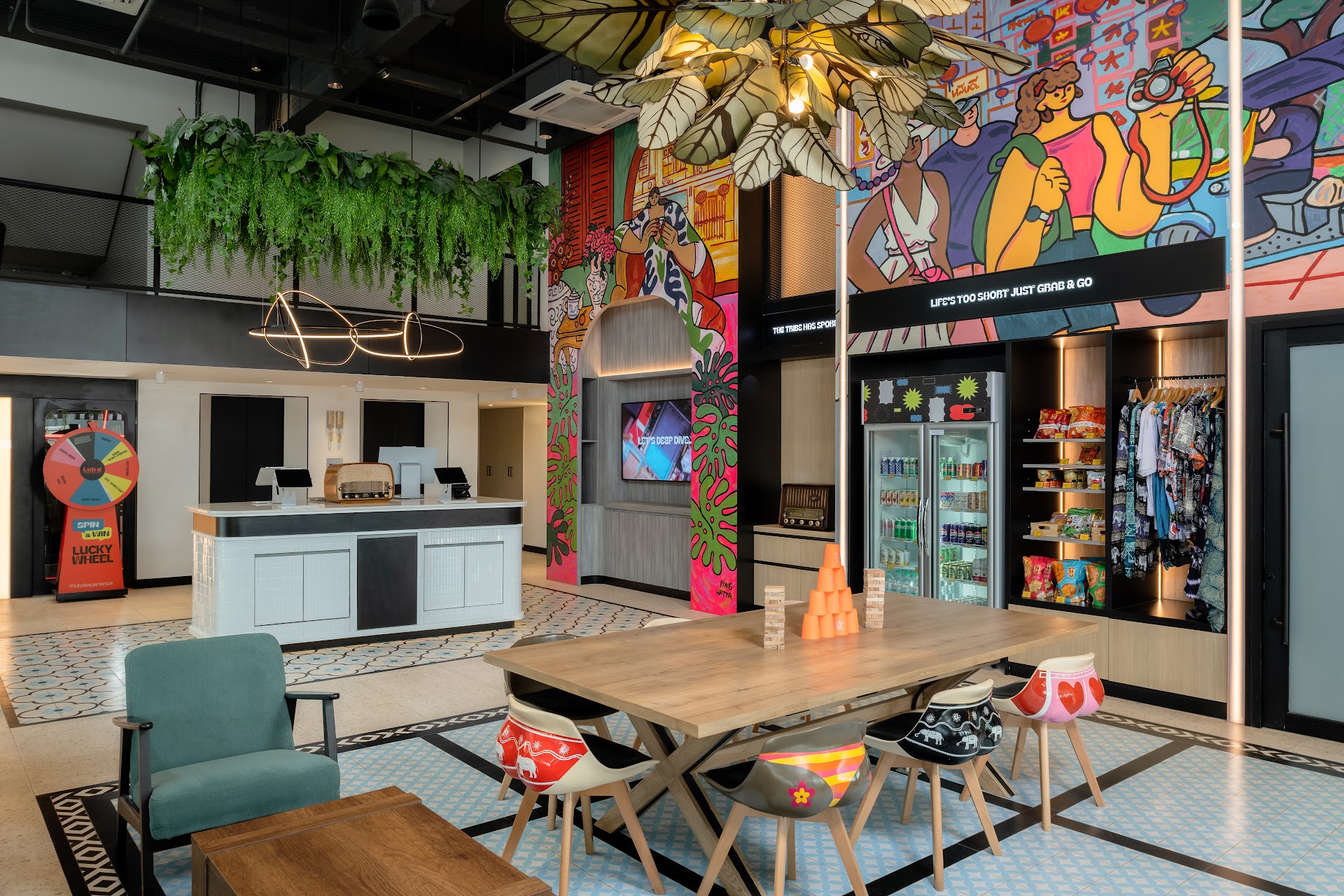 Lub d Bangkok Chinatown⭐ 3.0 · 9.2/10 (2,205) · $30 /night
 Khaosan Palace Hotel⭐ 3.5 · 7.6/10 (8,248) · $20 /night
 Rambuttri Village Hotel⭐ 3.0 · 8.0/10 (23,898) · $23 /night
Agoda affiliate link — clicks go to the price-comparison page.