Hue hides its best hours before most travelers set an alarm. By the time the first tour buses idle near the Citadel, Dong Ba Market has already been alive for two hours — steam rising off clay pots, charcoal fires lit, and the Perfume River barely visible through the morning mist. This is that Hue: working, quiet, entirely local.
Best Timing
The window that matters runs from 5:30 AM to 7:30 AM. That’s when the banh canh vendors fire up their largest pots, the bun bo stalls are at full boil, and the produce side of the market smells like wet earth and lemongrass rather than midday heat. Arrive at 8 AM and you’ve already missed the atmosphere that makes this place worth waking up for — the crowds thicken, the light flattens, and the sense of being somewhere local-only dissolves fast.
The best months to visit Hue fall between February and April: post-Tet calm, lower humidity, and morning temperatures cool enough to sit outside with a bowl of soup without sweating through your shirt. Avoid October and November if possible — Hue sits in one of Vietnam’s wettest corridors, and the market operates in partial rain gear during those months. That said, even a drizzly Dong Ba morning has a certain grey-silk mood to it.
Core Experiences
Banh Canh Cua — Hue’s Thick Noodle Soup
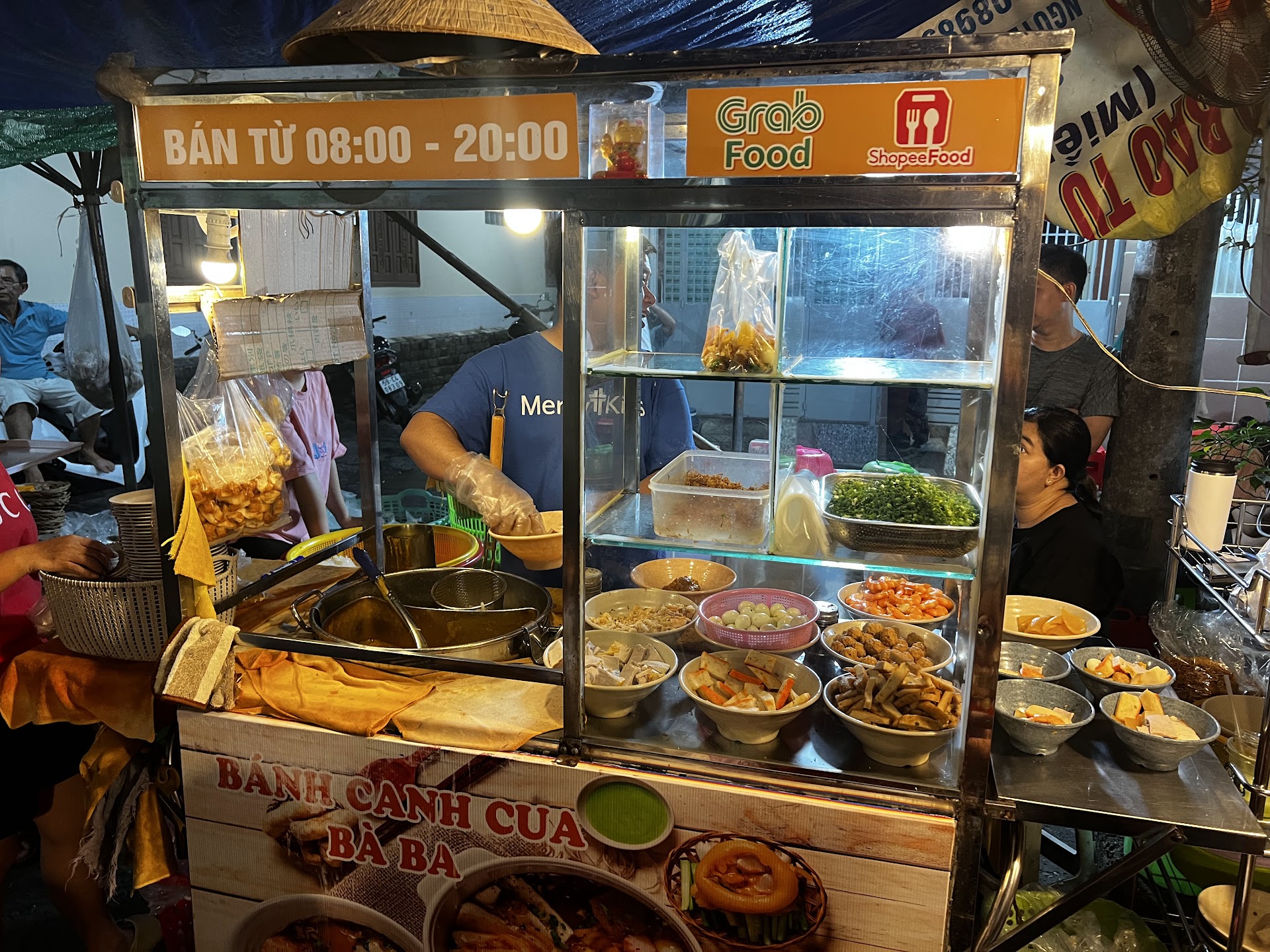
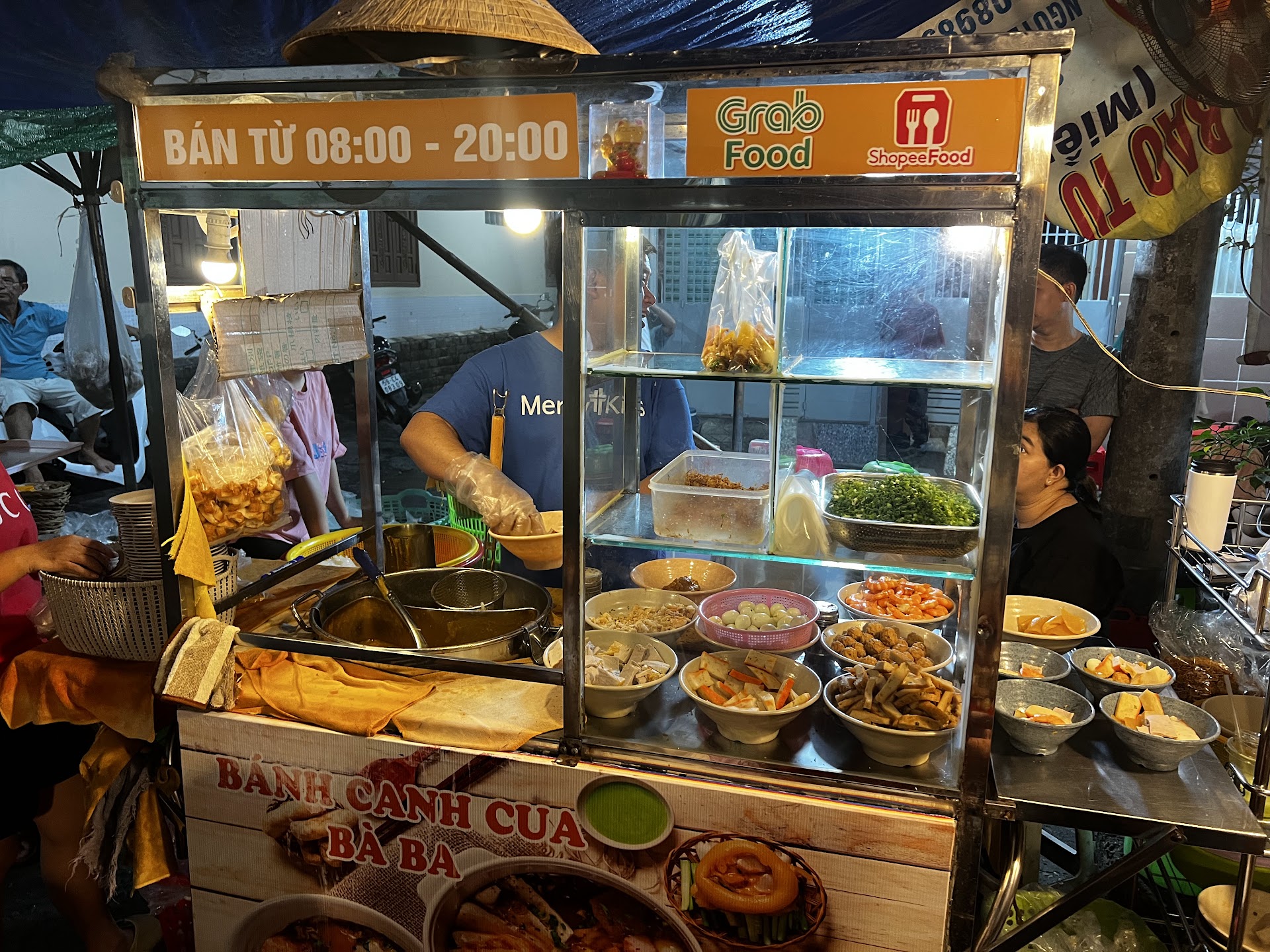
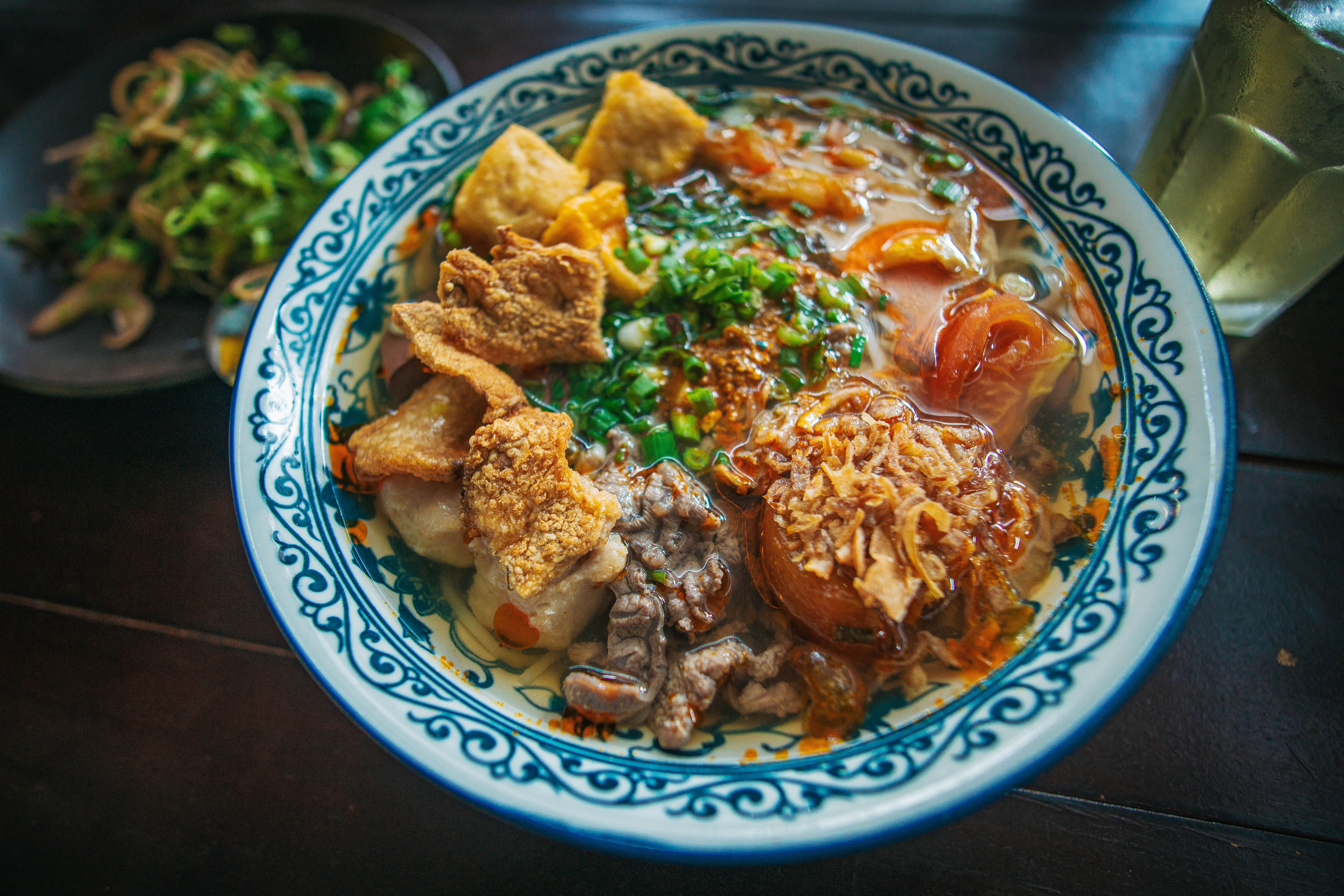
Of all the bowls available at Dong Ba before sunrise, banh canh cua is the one worth finding first. This is Hue’s version of a thick rice-noodle soup — the broth built from crab shells and pork bones, simmered overnight until it takes on a pale orange depth. The noodles are cut wide and soft, somewhere between udon and tapioca, and the crab claws arrive whole on top. The stalls that serve it line the northeastern interior of the market, identifiable by the orange-tinted broth visible in wide clay pots set on low charcoal burners. Vendors here have been working the same spot for decades; the recipe hasn’t needed updating.
- 📍 Northeast interior, Dong Ba Market, Tran Hung Dao St, Hue · 💰 25,000–35,000 VND (~$1–$1.50) · ⏰ 5:00 AM–8:30 AM · ⭐ 4.7
- Local tip: Ask for banh canh cua day — the thicker-cut noodle version — and add a squeeze of fresh calamansi, not the bottle of red chili sauce sitting on the table.
Bun Bo Hue — The Spicy Signature
Bun bo Hue is the city’s most exported dish, but what gets served in Western Vietnamese restaurants is a softened translation. At Dong Ba, the original is assertively funky, genuinely spicy, and topped with sliced pork hock and cubes of congealed pork blood that most tourists quietly move to the side of the bowl. The broth is lemongrass-forward with a deep fermented shrimp paste base — mam ruoc — that gives it a savory edge no other regional bowl quite replicates. Order it at one of the open-air plastic stool setups near the river-facing entrance, where the morning light comes in low and sideways.
- 📍 River-facing entrance section, Dong Ba Market · 💰 30,000–45,000 VND (~$1.20–$1.80) · ⏰ 5:30 AM–9:00 AM · ⭐ 4.8
- Local tip: The vendors who run out earliest are the ones worth finding — a sold-out bun bo stall by 7:30 AM is the only quality signal you need.
Dong Ba Riverside Produce Section
The produce wing of Dong Ba stretches along the riverbank side and operates on a different clock than the food stalls — suppliers begin unloading banana flower, rau muong, and fresh turmeric root as early as 4:30 AM, and the organized chaos of that handoff is worth watching even if you’re buying nothing. The colors here — deep purple banana blossom, waxy green jackfruit, orange turmeric — are what Hue’s cooking is built from, and seeing them assembled in crates before dawn gives the later market meals a different kind of context. Photography is generally welcomed; asking before pointing a camera at a vendor is always the right move.
- 📍 Riverside (east) wing, Dong Ba Market · 💰 Free to browse · ⏰ 4:30 AM–11:00 AM · ⭐ 4.5
- Local tip: The turmeric vendors near the center column sell fresh root by the small bunch for under 10,000 VND — pack some in a zip-lock if you’re cooking anywhere on your trip.
Banh It La Gai — Black Sticky Rice Cake
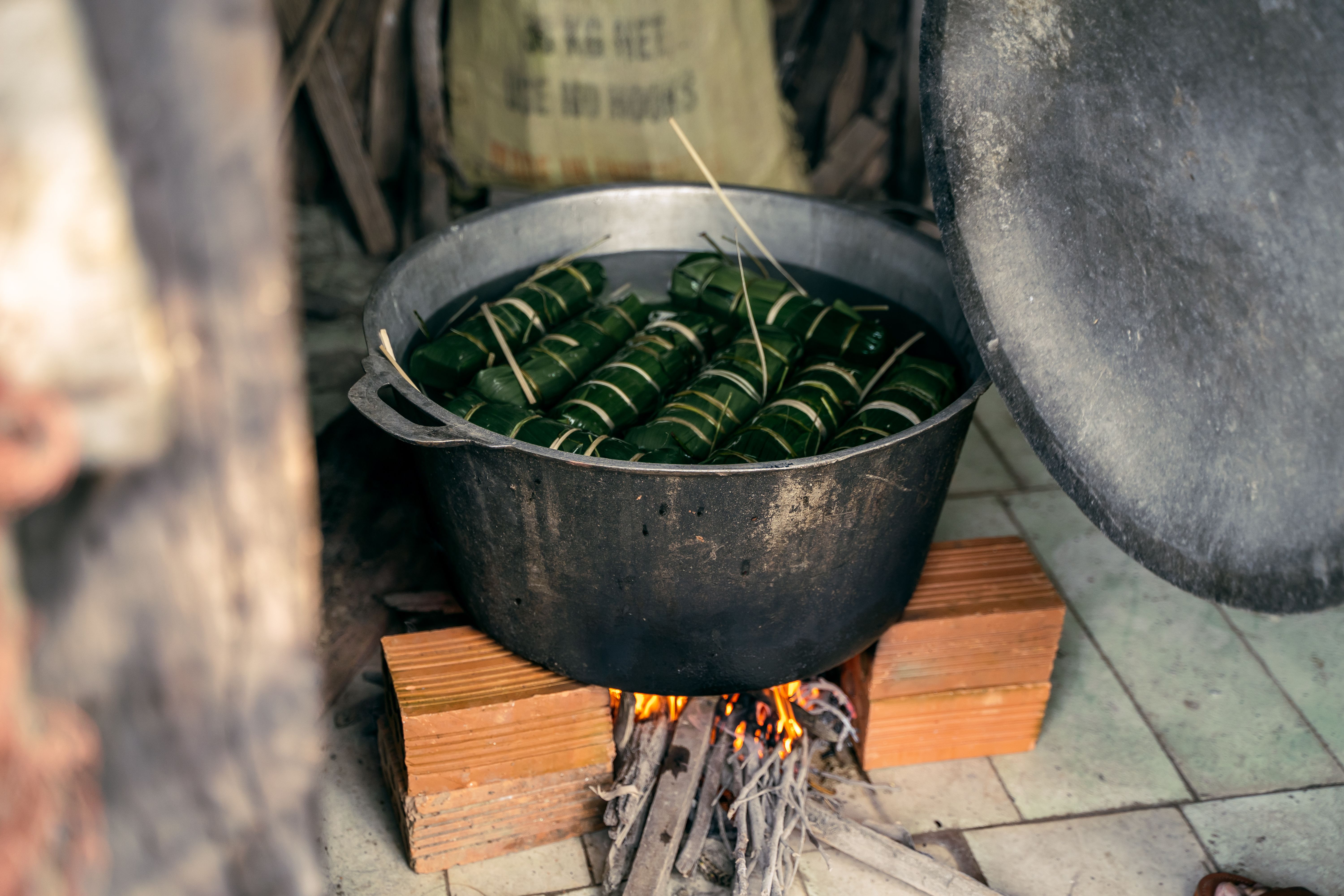
Banh it la gai doesn’t photograph dramatically, which is probably why it rarely makes travel content. It’s a small, dark, slightly sticky pyramid of glutinous rice dough colored black with pandan leaf extract, filled with sweetened mung bean paste and wrapped in banana leaf. Vendors sell them in clusters of four or six, assembled on low tables near the dry-goods section of the market. The texture is dense and chewy; the sweetness is restrained by Central Vietnamese standards. It’s a morning snack that locals eat with tea rather than a meal, and consuming one while standing near the banana leaf vendors is one of those quiet market rituals that doesn’t announce itself.
- 📍 Dry-goods section, central Dong Ba Market · 💰 5,000–10,000 VND per piece (~$0.20–$0.40) · ⏰ 5:00 AM–10:00 AM · ⭐ 4.6
- Local tip: Banh it la gai goes stale quickly in heat — buy and eat within the market, not as a takeaway for later.
Dong Ba Bridge & River Mist View
The Truong Tien Bridge sits a short walk from Dong Ba’s main entrance and offers the clearest view of the Perfume River mist at dawn — a pale grey-white layer sitting three feet above the water as the first wooden boats begin to move. It’s not a market stop, but the fifteen minutes spent here between the soup stalls and the produce section recalibrates the pace of the morning in a way that matters. The bridge’s iron lattice frames the Citadel towers in the distance; the light at 6:15 AM in spring is the kind that makes even a phone camera look considered. No entrance, no cost, and almost no one else there at that hour.
- 📍 Truong Tien Bridge, adjacent to Dong Ba Market entrance · 💰 Free · ⏰ Anytime, best 5:45–6:30 AM · ⭐ 4.9
- Local tip: Walk the bridge from the market side toward the south bank — the light direction at sunrise means you’ll be shooting with the sun, not into it.
Recommended Route
This is a half-day wander that runs itself out naturally by 8:30 AM, leaving the rest of the morning for the Citadel or simply going back to sleep.
- 5:30 AM — Arrive at Dong Ba Market via the Tran Hung Dao entrance. The market is already active; no orientation needed, just follow the steam.
- 5:35–6:15 AM — Head northeast for banh canh cua (40 min to eat, linger, watch the morning unfold).
- 6:15–6:30 AM — Walk to Truong Tien Bridge for the river mist view (8-min walk from the soup section).
- 6:30–7:00 AM — Return to the market’s river-facing entrance for bun bo Hue at one of the open-air stalls.
- 7:00–7:30 AM — Wander the riverside produce section; photograph banana blossom and turmeric crates.
- 7:30–8:00 AM — Loop into the dry-goods section for banh it la gai and tea.
- 8:00–8:30 AM — The market shifts to full tourist mode; a good natural exit point.
Total walking: under 1.5 km. Total food spend: under $5 USD.
Budget · Transport · Booking
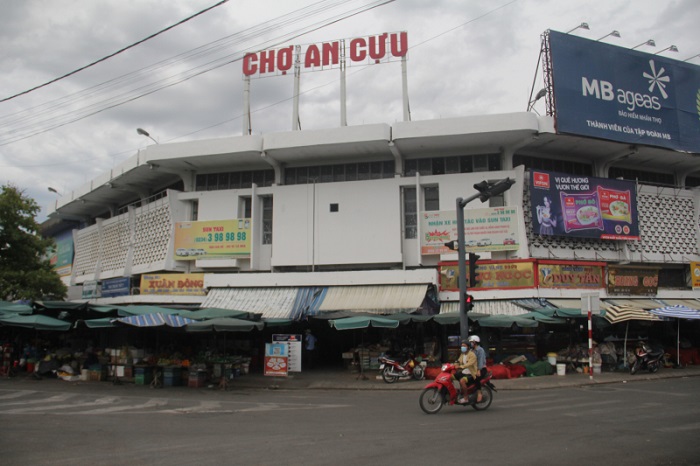
Getting there: Dong Ba Market sits in central Hue, about 1.2 km from the main hotel corridor on Le Loi Street. Walking takes 15 minutes from most central stays. A grab bike from farther accommodation costs 20,000–30,000 VND (~$1). There is no admission fee to enter the market.
Food costs: A full morning of eating — banh canh cua, bun bo Hue, banh it la gai, and tea — runs 100,000–150,000 VND total per person (~$4–$6). Budget travelers can eat well here for under $3.
Cash only: Every vendor in Dong Ba operates on cash. Bring small bills — 10,000 and 20,000 VND notes. ATMs are available on Le Loi Street, but withdraw the night before; early-morning banking is not a Hue thing.
No advance booking required for anything here. The market operates daily, including public holidays. No guided tour is necessary or particularly useful — the market is small enough to navigate by instinct.
Day budget estimate (food + transport): $6–$10 USD per person.
Must-Know Tips
- 🕔 Arrive before 6 AM if possible — the best bun bo and banh canh stalls sell out, not run out of ingredients but run out of the good batch made at 4 AM. The second boil is never quite the same.
- 💵 Small bills only — vendors at Dong Ba don’t make change for 200,000 VND notes at 6 AM. Carry 10,000s and 20,000s.
- 📷 Ask before shooting portraits — the produce vendors are generally open to being photographed, but a nod and a gesture goes a long way. The food stall aunties are busy; photograph the bowl, not the cook, unless you’ve been sitting for a while.
- 👟 Wear closed-toe shoes — the market floor is wet, occasionally slippery, and a mix of water, fish, and morning mop runoff. Sandals work; flip-flops don’t.
- 🌧️ If it rains, go anyway — Hue rain at dawn in the market is atmospheric in a way dry mornings aren’t. Pack a light packable rain shell and a zip-lock for your phone.
- 🗣️ Basic Vietnamese helps — Cho tôi một tô (one bowl for me) and cảm ơn (thank you) will carry most of the morning. Pointing at the clay pot you want works fine for the rest.
Closing
Dong Ba at dawn is not a hidden gem in the influencer sense — locals know it because it’s where they eat before work, not because it’s picturesque. The mist off the Perfume River, the charcoal fires, the clink of ceramic spoons against thick-noodle broth: these are incidental to the fact that someone needs breakfast at 5:30 AM and this is where it gets made. That’s what makes it worth the alarm.
If there’s one thing to take from this: go before 7 AM, eat what’s in the clay pots, and leave before the tour groups arrive. The city you find in that window is the one that actually exists.
🏨 Where to Stay
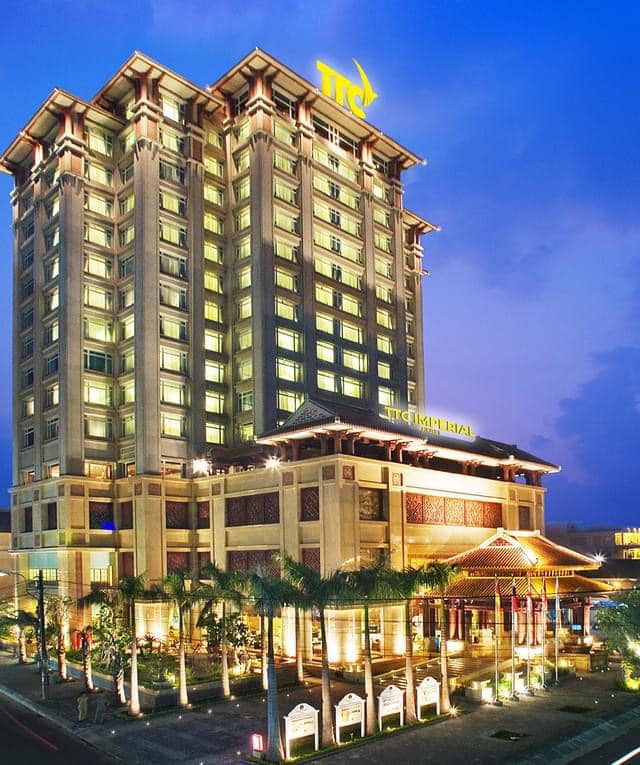
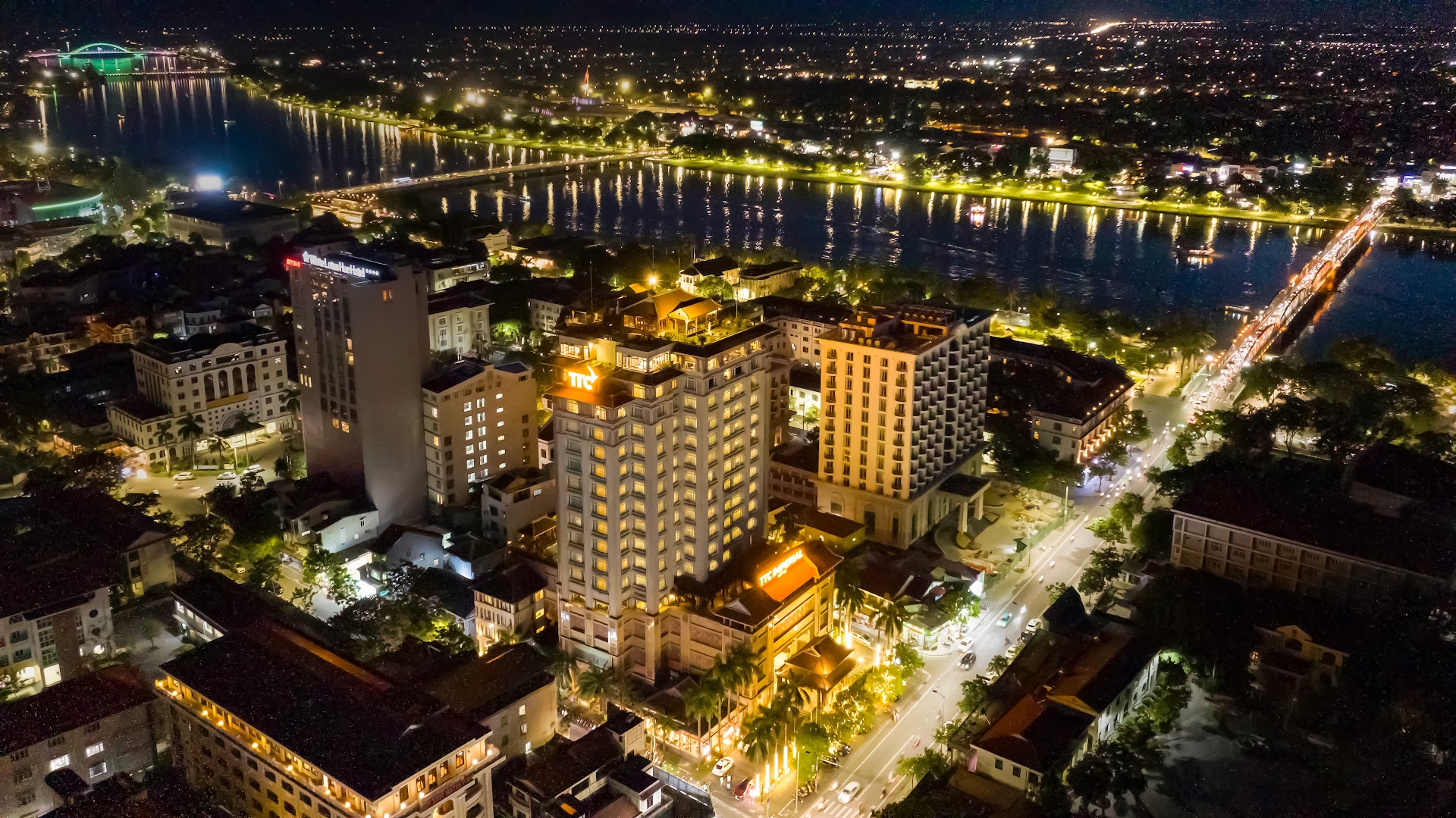 TTC Imperial Hotel⭐ 5.0 · 9.0/10 (4,096) · $60 /night
 Indochine Palace Hotel⭐ 5.0 · 9.2/10 (2,233) · $66 /night
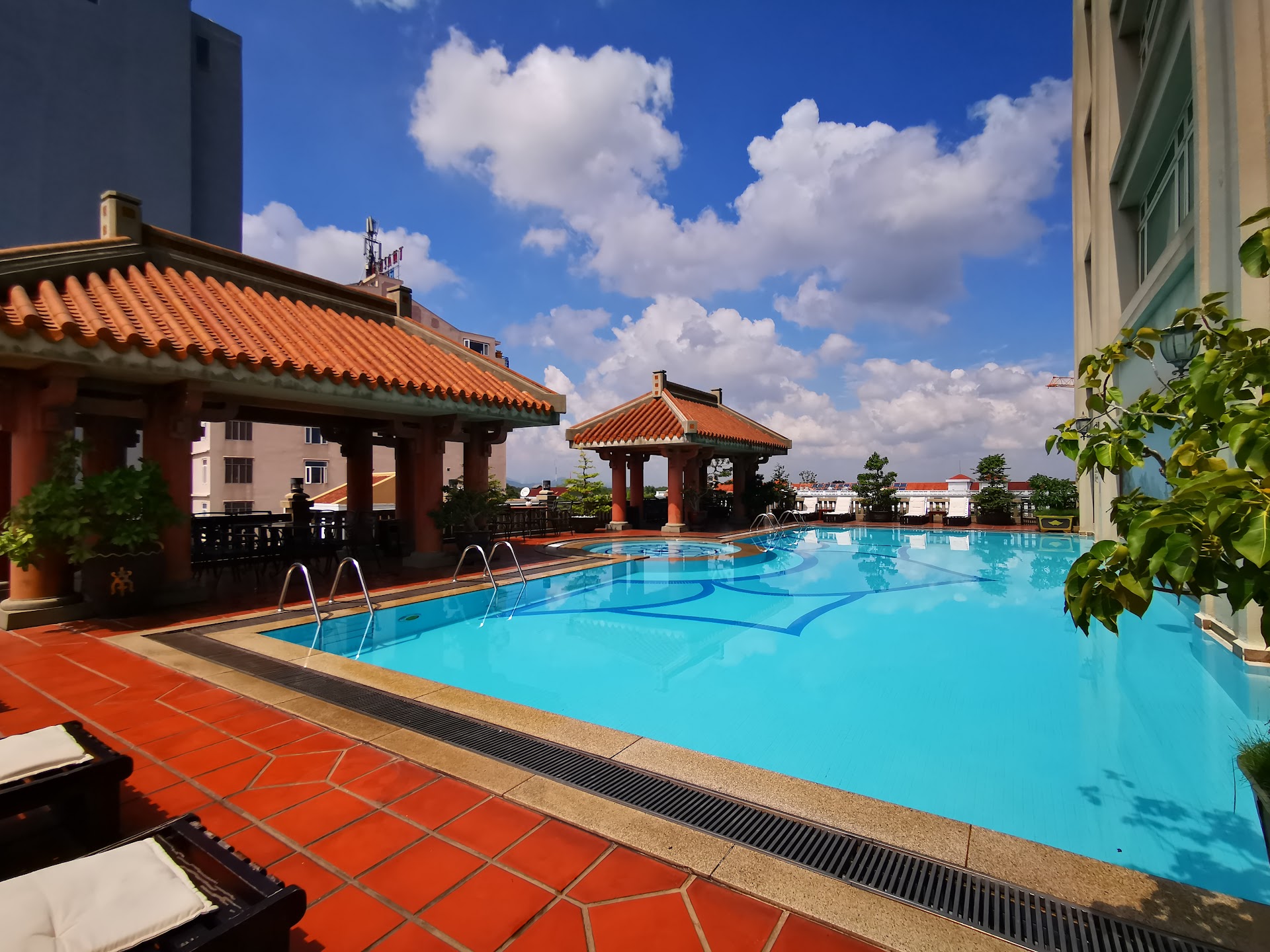 Spatel d'Annam - Imperial Boutique Spa & Hotel⭐ 4.0 · 9.2/10 (1,066) · $65 /night
Agoda affiliate link — clicks go to the price-comparison page.