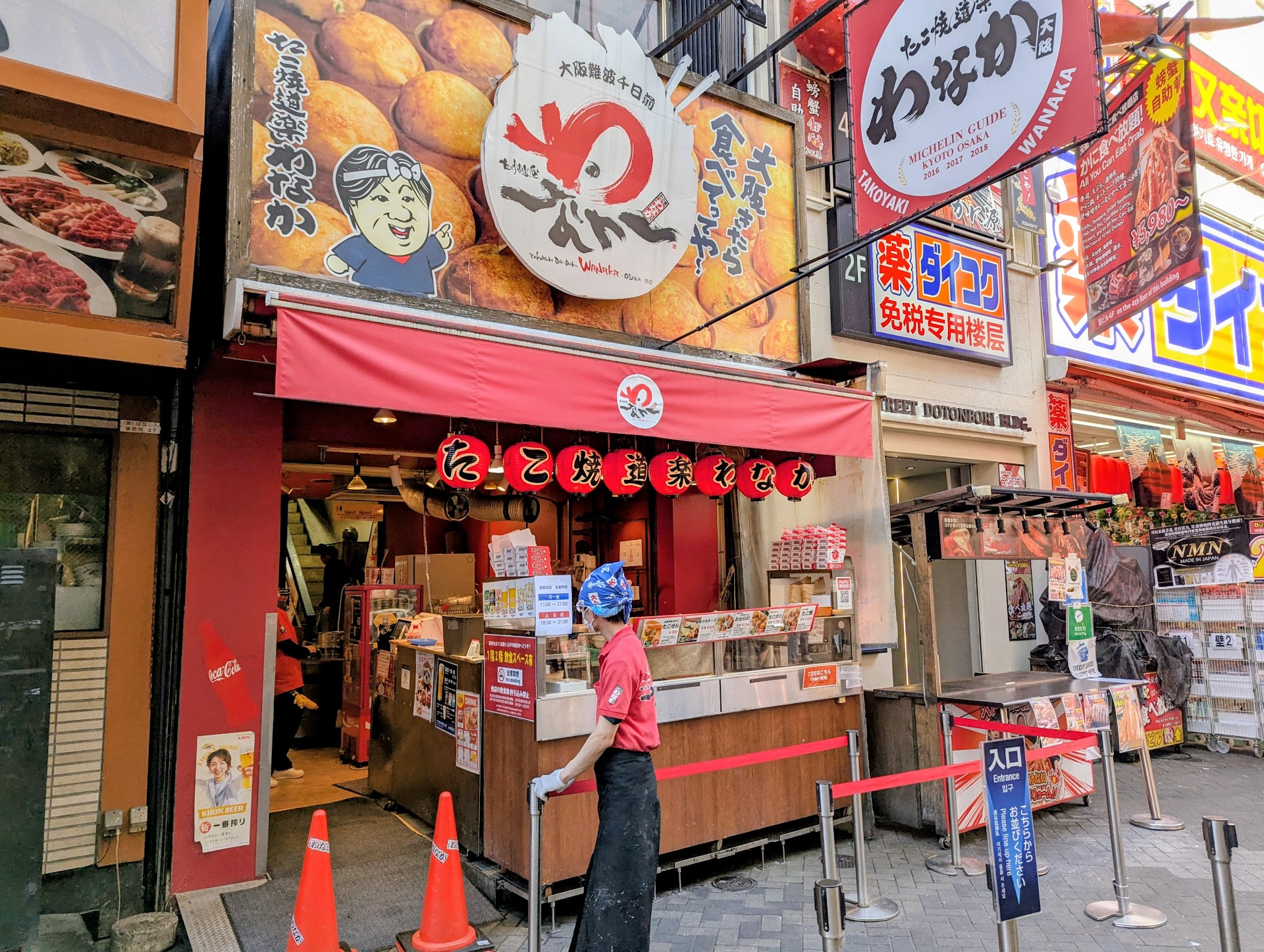
Dotonbori is Osaka’s loudest, hungriest neighborhood — a half-mile canal strip where neon signs blur into the water and the smell of frying batter follows you around every corner. This route maps seven stops across three hours, but we’ve built it around five anchor experiences worth planning your whole evening around. Prices are real, wait times are honest, and anything not worth your stomach space gets flagged.
Best Timing
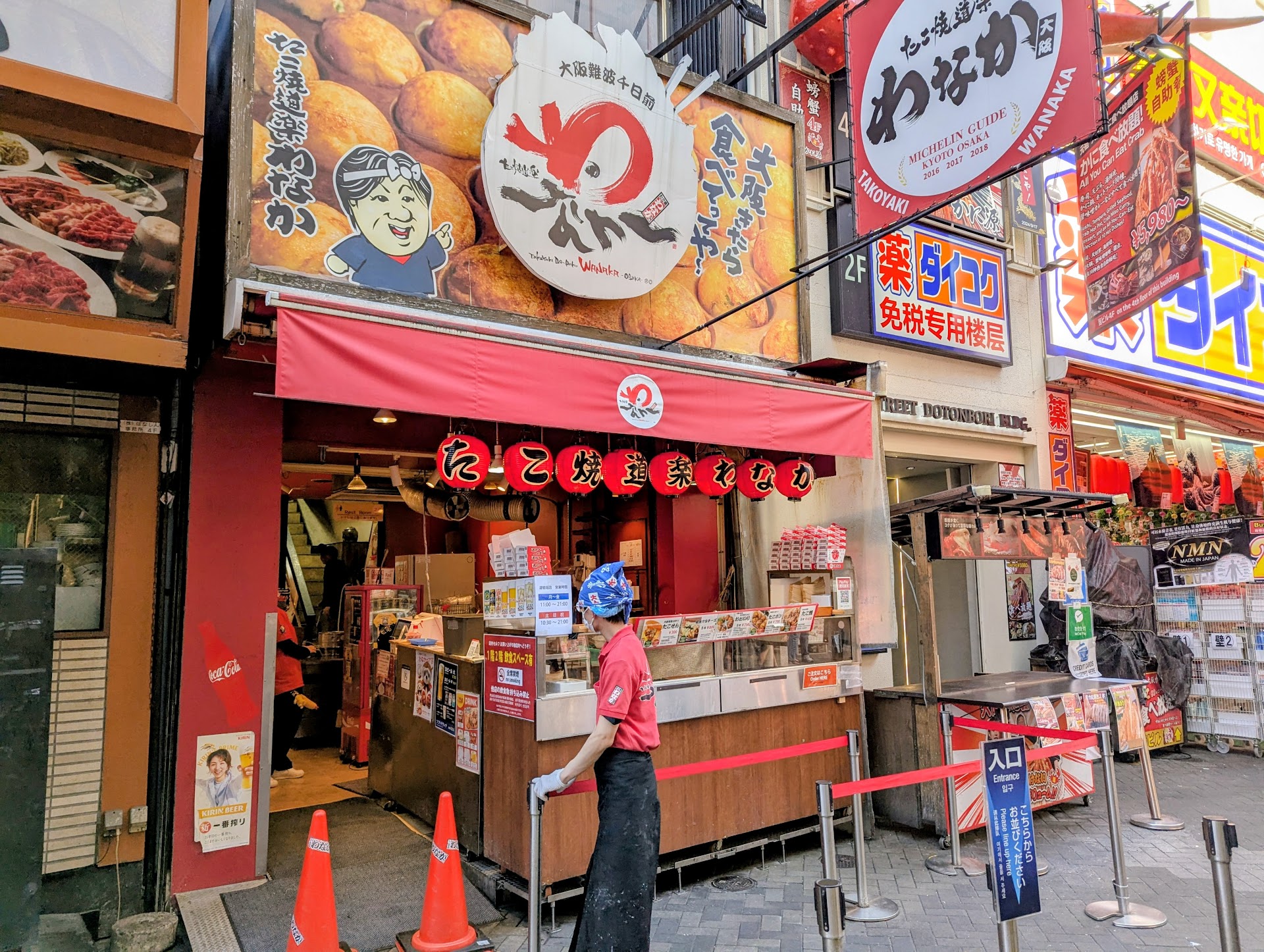
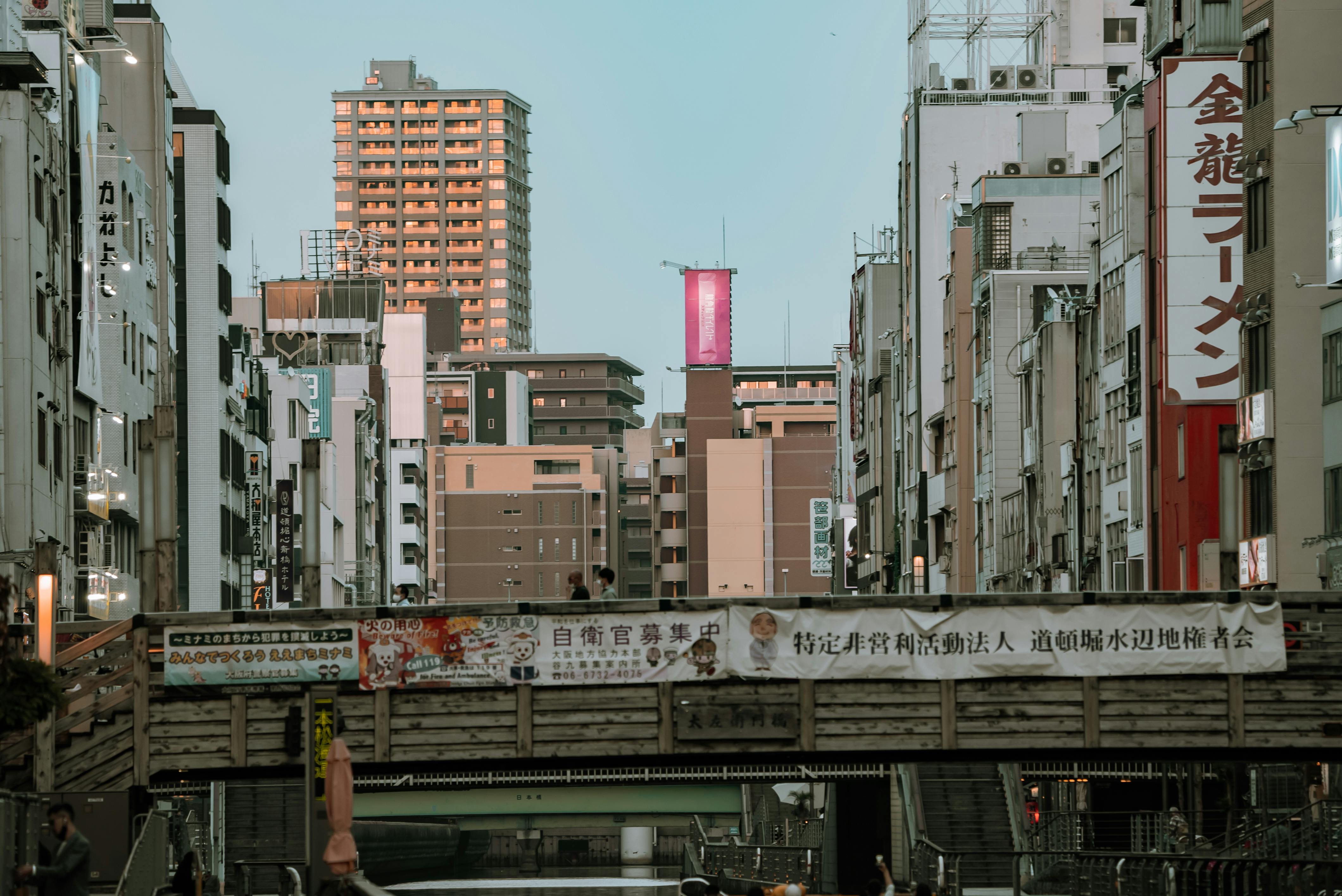
Dotonbori runs twenty-four hours, but the sweet spot for street food is 5:00 PM to 9:00 PM on weekdays. Crowds are manageable, stalls are fully stocked, and the canal lights start reflecting just after sunset — which makes the walk between stops genuinely good. Weekends push wait times at the most popular takoyaki counters past 25 minutes, so if you’re arriving Saturday or Sunday, front-load the route by starting at 4:30 PM. Avoid the dead hours of 2:00–4:00 PM; many stalls are restocking and the energy is flat.
In terms of months, March through May and October through November offer mild temperatures (15–22°C / 59–72°F) that make standing in a queue outside entirely comfortable. Summer (July–August) is humid and 34°C+, which accelerates how fast fried food cools and makes outdoor waits genuinely unpleasant. January and February are cold but crowd-light — a real trade-off worth considering if you hate lines more than you hate layers.
Core Experiences
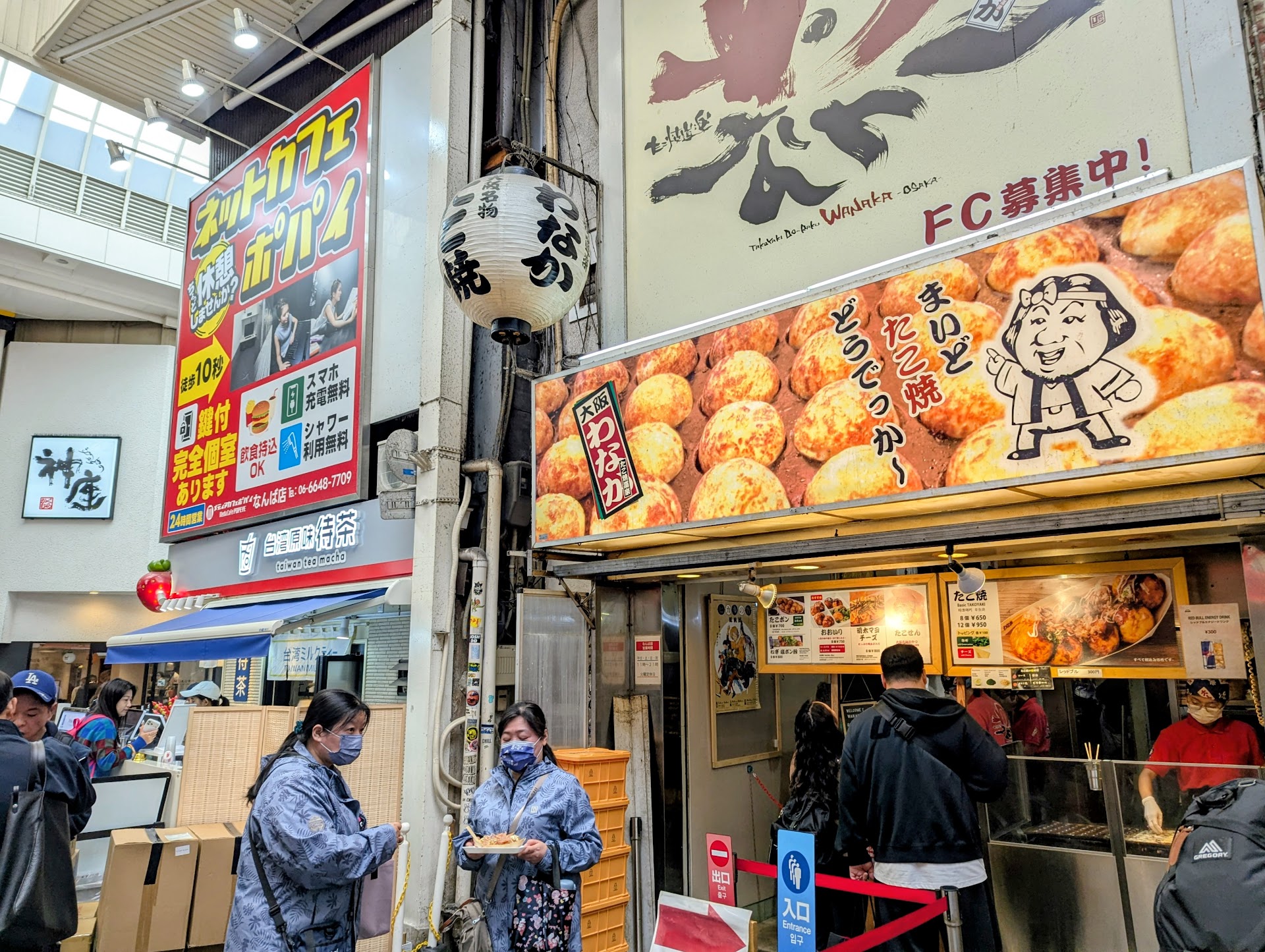
Wanaka Takoyaki
Takoyaki is Osaka’s signature street food, and this small stall near the Dotonbori main drag has been turning out golf-ball-sized octopus fritters for over two decades. The batter is thinner here than at tourist-facing competitors — more crisp at the edge, molten in the center — and the octopus pieces are full-size rather than the chopped scraps you’ll find at budget counters. Order the standard eight-piece with bonito flakes and mayo, watch the maker flip each ball with practiced speed, and eat them standing at the tiny counter shelf so you catch them at peak temperature.
- 📍 Dotonbori 1-chome, near Ebisu Bridge east side · 💰 ¥600 (~$4) for 8 pieces · ⏰ Daily 11:00 AM–11:00 PM · ⭐ 4.7
- Locals know: Ask for sosunaku (plain, no sauce) first so you taste the dashi in the batter before adding toppings.
Kinryu Ramen
The giant golden dragon clinging to the façade is the navigation landmark, but what’s inside earns its own reputation. Kinryu’s Dotonbori counter has served late-night ramen since 1986, and the tonkotsu-shoyu hybrid broth — cloudy, pork-forward, with a sharp soy edge — is the kind of thing that resets a food-heavy evening. Seating is counter-only, turnover is fast, and the kitchen doesn’t slow down between 10 PM and 2 AM, which makes this the ideal penultimate stop before the route ends. The kimchi bar on the counter is self-serve and free.
- 📍 Dotonbori 1-6-4, unmissable dragon signage · 💰 ¥750 (~$5) base bowl · ⏰ 24 hours · ⭐ 4.5
- Locals know: Add the spicy miso topping (+¥100) for a broth that holds up better through the full bowl.
Kushikatsu Daruma
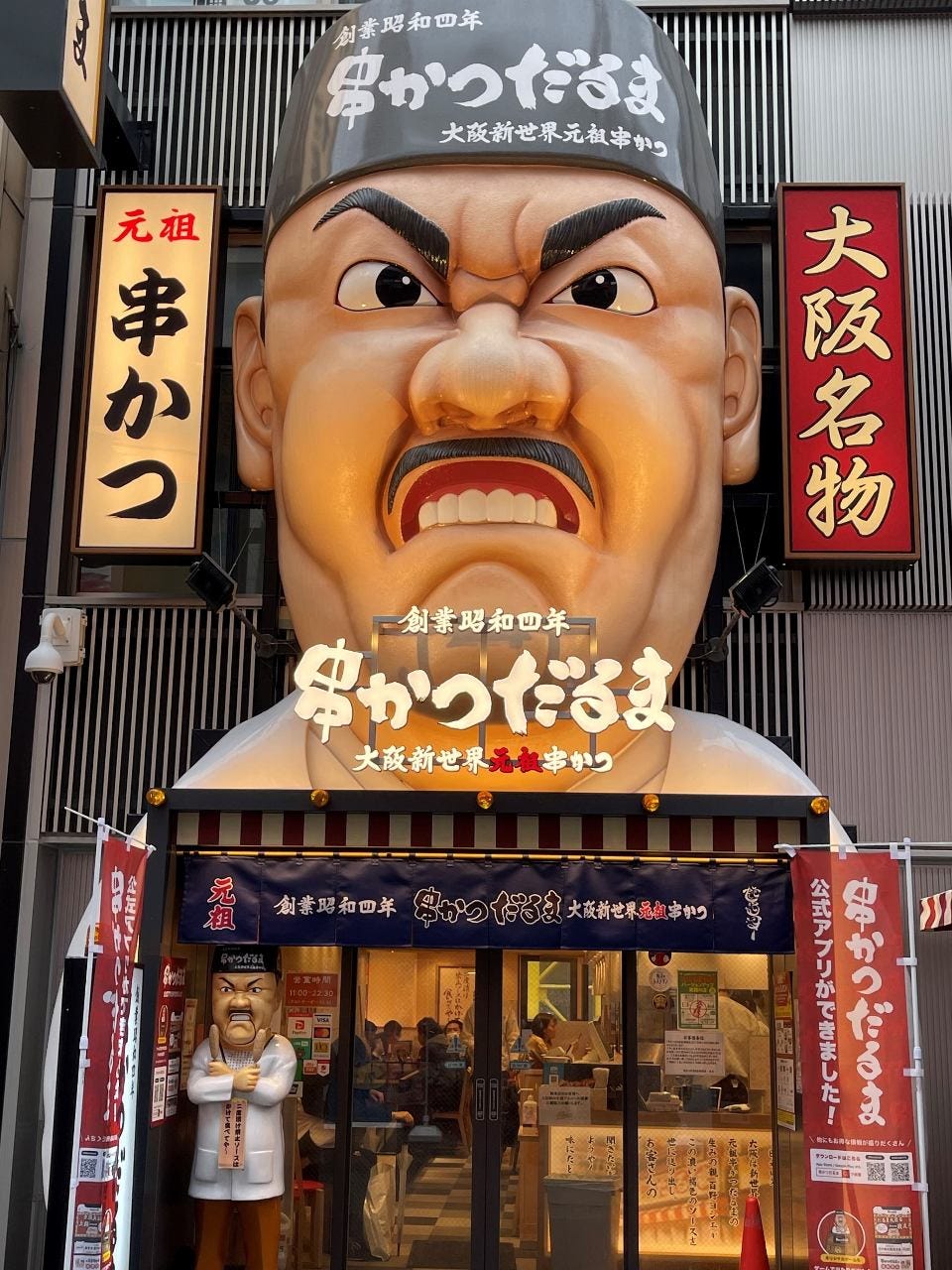
Kushikatsu — breaded, deep-fried skewers of meat, seafood, and vegetables — is the other food Osaka is evangelical about. Daruma is the chain that institutionalized it, and the Dotonbori branch is the right entry point: open kitchen, counter seating, and a strict no-double-dipping rule for the communal sauce that you’ll see enforced with cheerful aggression. Order a mix of shrimp, quail egg, lotus root, and pork — five to eight skewers is a reasonable portion for one person. Each skewer runs ¥120–¥180; there’s no minimum.
- 📍 Dotonbori 1-6-4, Shinsaibashi area · 💰 ¥120–¥180 (~$0.80–$1.20) per skewer · ⏰ 11:00 AM–10:30 PM daily · ⭐ 4.6
- Locals know: The free cabbage on the counter is there to scoop extra sauce — dip the cabbage leaf, not the skewer a second time.
Okonomiyaki Mizuno
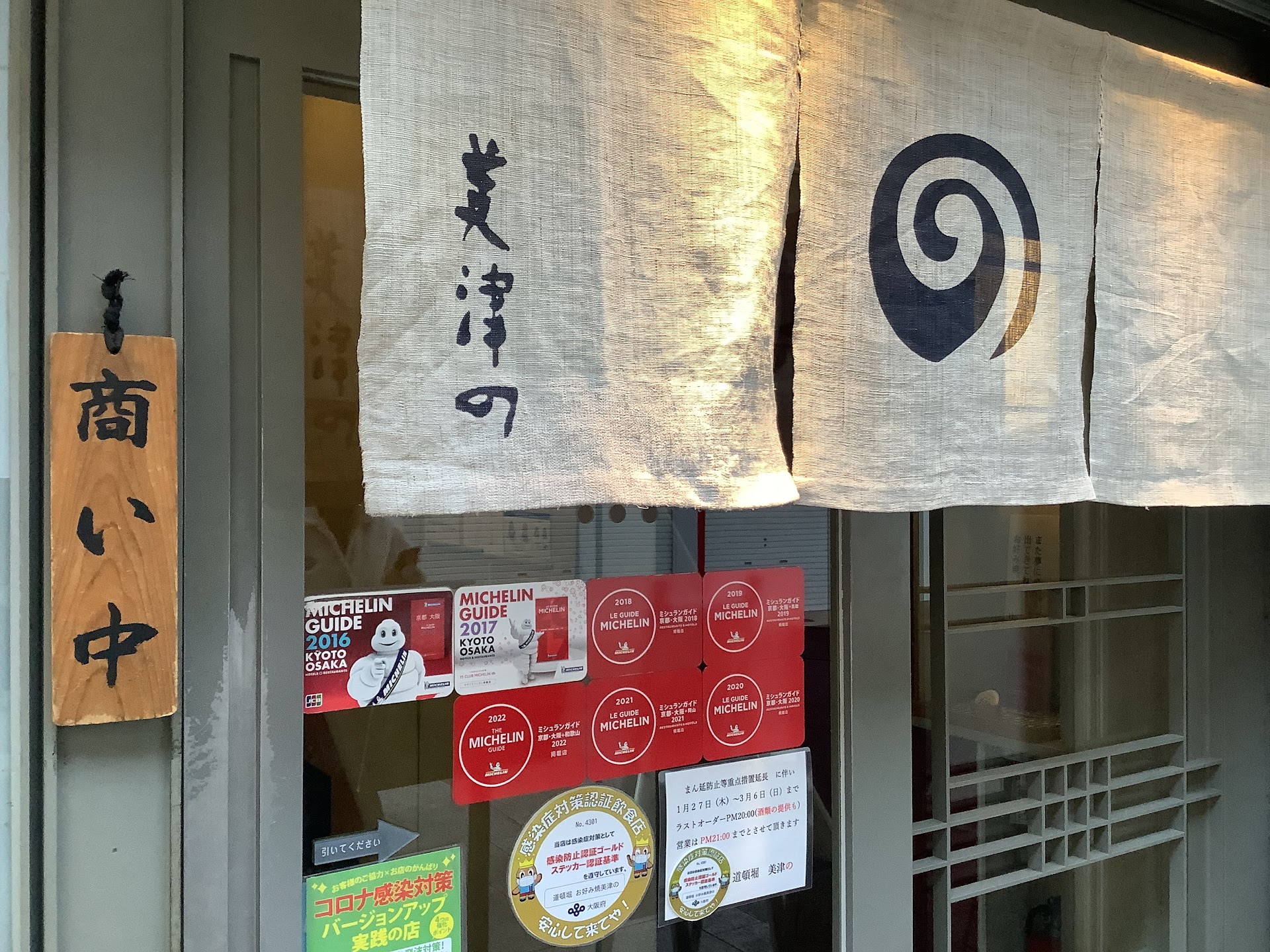
Okonomiyaki is Osaka-style savory pancake — cabbage, egg, pork belly, and a binding batter cooked on a flat iron griddle — and Mizuno has been making it on this corner since 1945. The Dotonbori flagship is a proper sit-down spot (queue outside for a counter seat or book ahead), and the Osaka-yaki here is cooked by staff rather than by you, which means consistent heat distribution and a proper crust. The signature is the yamaimo version, which uses mountain yam in the batter for an airier texture than the standard flour base. Block out 45 minutes including the queue.
- 📍 Dotonbori 1-4-15 · 💰 ¥1,200–¥1,800 (~$8–$12) per okonomiyaki · ⏰ 11:00 AM–9:30 PM, closed Tuesdays · ⭐ 4.8
- Locals know: The lunch window (11:30 AM–1:00 PM on weekdays) runs 30% shorter waits than dinner service.
Crêpe & Matcha Stand at Amerika-mura Edge
At the western end of the Dotonbori walk, near the Amerika-mura boundary, a cluster of dessert stands competes for the after-dinner crowd. The matcha soft-serve and rolled crêpe combo from this standing counter has built a repeat-visitor following among locals who live in Namba. The matcha is sourced from Uji (it says so on the board) and isn’t sweetened to the tourist baseline — it’s genuinely bitter-forward, balanced by a thin layer of red bean paste inside the crêpe. It costs less than a convenience store coffee and tastes better.
- 📍 Near Amerika-mura, Shinsaibashi-suji west exit · 💰 ¥400–¥500 (~$2.70–$3.40) · ⏰ 1:00 PM–11:00 PM daily · ⭐ 4.5
- Locals know: The soft-serve melts faster than you expect in summer — eat it before you walk, not while you walk.
Recommended Route
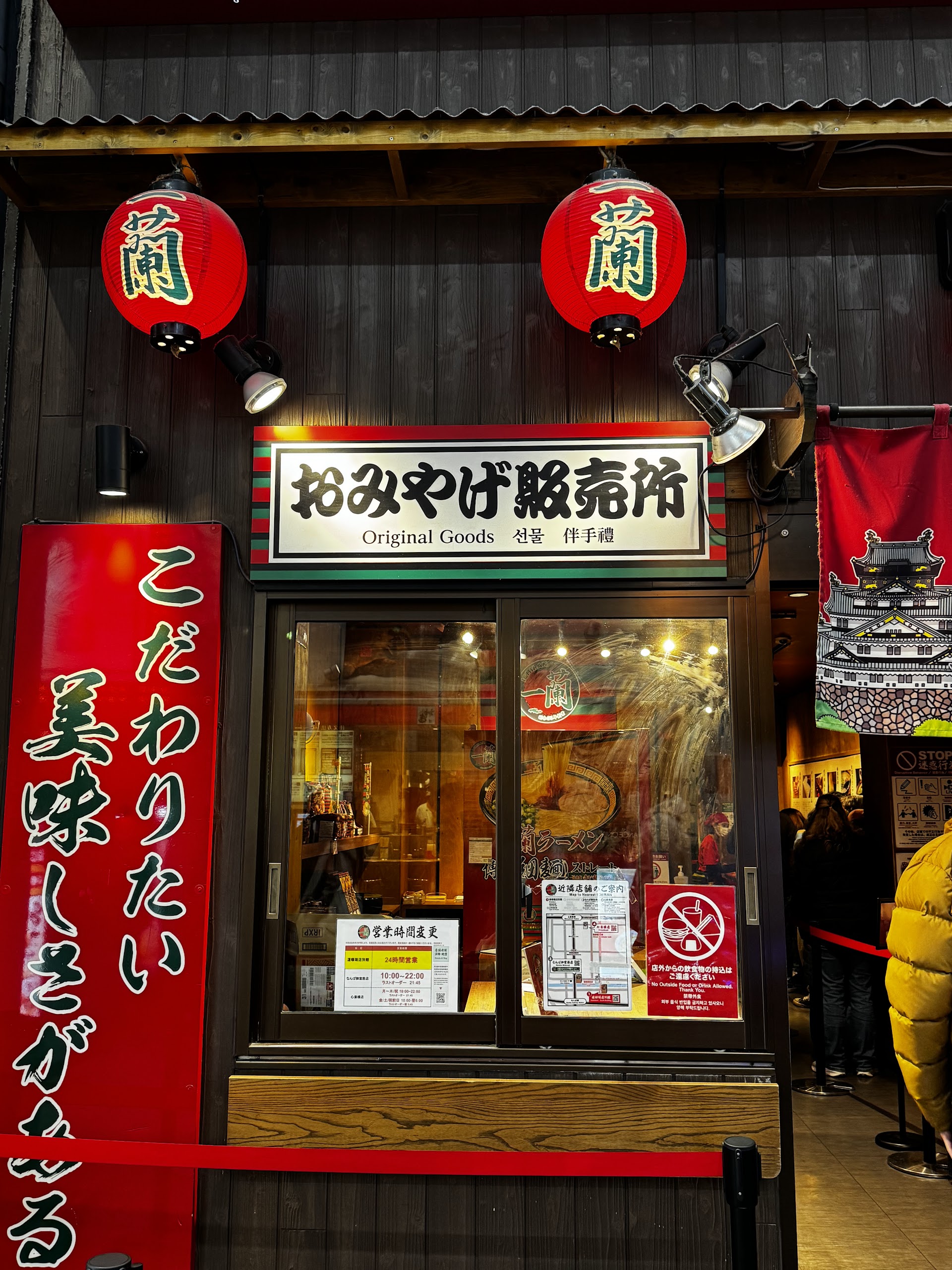
Here’s the route structured for a 5:00 PM start, which gets you through all five anchors before 9:00 PM with time to linger.
- 5:00 PM — Start at Wanaka Takoyaki (east side of Ebisu Bridge). Order eight pieces, eat at the counter. 15 minutes total.
- 5:20 PM — Walk west along the canal (~4 minutes) to Kushikatsu Daruma. Order six to eight skewers, take your time — this is the main savory anchor of the route. 35–40 minutes.
- 6:05 PM — Walk north two blocks (~6 minutes) to Okonomiyaki Mizuno. Queue is usually 15–20 minutes at this hour; the sit-down meal runs another 30 minutes. 45–50 minutes total.
- 7:00 PM — Walk back toward the canal (~5 minutes) to Kinryu Ramen. The golden dragon is visible from across the street. A bowl takes 15–20 minutes. This is a lighter stop — order the small size if you’re already full.
- 7:25 PM — Walk west along Dotonbori-suji toward Amerika-mura (~8 minutes) for the Crêpe & Matcha Stand. This is dessert and a natural endpoint. 15 minutes.
- 7:45 PM — Route complete. Total walking: roughly 1.2 km. Total food spend: ¥3,050–¥3,880 ($20–$26).
If you want to add the remaining two stops from the full seven-stop video (a grilled scallop stall near Hozenji Yokocho and a fresh crab claw counter near the Glico sign), insert them between Kushikatsu Daruma and Okonomiyaki Mizuno. Add 30 minutes.
Budget · Transport · Booking
Total food budget for the five-stop route: ¥3,050–¥3,880 (~$20–$26 USD) per person. Add ¥500–¥800 if you extend to the full seven stops.
Getting there: Take the Osaka Metro Midosuji Line to Namba Station (Exit 14 or B14 brings you up directly onto Dotonbori). From Shin-Osaka Shinkansen station, that’s a 10-minute metro ride, ¥230 each way. From Osaka/Umeda, it’s 7 minutes, ¥230. Day pass for the Metro is ¥800 and worth it if you’re covering multiple neighborhoods.
Cash vs. card: Most street stalls are cash only. Bring at least ¥5,000 in small bills. 7-Eleven and Lawson ATMs on Dotonbori accept foreign cards and dispense yen with no drama. Okonomiyaki Mizuno accepts IC cards (Suica/ICOCA); Kinryu Ramen accepts cash only.
Advance booking: Okonomiyaki Mizuno accepts reservations via their website for dinner service — book 3–5 days ahead for weekend evenings. All other stops on this route are walk-up only; no reservations possible or needed.
Tipping: Zero. Tipping in Japan is not a practice and can cause confusion at a counter. Don’t.
Must-Know Tips
- 🍴 Eat in order of heat sensitivity. Takoyaki and kushikatsu lose texture as they cool — prioritize these early. Ramen and crêpes hold better later.
- 💰 The ¥100 markup at tourist-facing stalls is real. If a takoyaki counter has English menus plastered on every surface and a staff member actively gesturing at passersby, check the price board. The same eight pieces can cost ¥800 vs. ¥600 one stall over.
- 📍 Ebisu Bridge is a navigation anchor, not a destination. Use it to orient. The best stalls are on the smaller perpendicular alleys (yokocho) running off the main canal strip — not on the canal-facing façade row.
- ⏰ Okonomiyaki Mizuno closes Tuesdays. Check before you plan the route around it. The closest quality alternative on the route on Tuesdays is Fukutaro, five minutes north in Namba.
- 📷 Photography is fine everywhere on this route — it’s a public street. Inside Okonomiyaki Mizuno, keep it brief and don’t obstruct the counter for a shot. No flash at the ramen counter (lighting is already low and dramatic; it ruins both).
- 🚇 The last Metro from Namba toward Shin-Osaka runs just before midnight. If the route runs long and you’re heading north, check the departure board — don’t rely on apps, which sometimes show bus alternatives as primary.
Closing
Dotonbori is one of those streets that rewards a plan. Without one, it’s easy to spend two hours wandering, eat one mediocre thing near the Glico sign, and leave with a vague sense that it should have been better. With a route, it’s three hours that actually map Osaka’s food identity — the textured crunch of kushikatsu, the umami depth of a properly made okonomiyaki, the bitter-clean finish of Uji matcha. The neighborhood hands you a lot; knowing what to reach for makes all the difference.
Actionable takeaway: Save this route, book Mizuno 3–4 days out if you’re going on a weekend, and start at Wanaka Takoyaki no later than 5:00 PM to clear all five stops before the evening crowd peaks.
🏨 Where to Stay
 Hotel Hankyu GRAN RESPIRE OSAKA⭐ 5.0 · 8.8/10 (4,375) · $102 /night
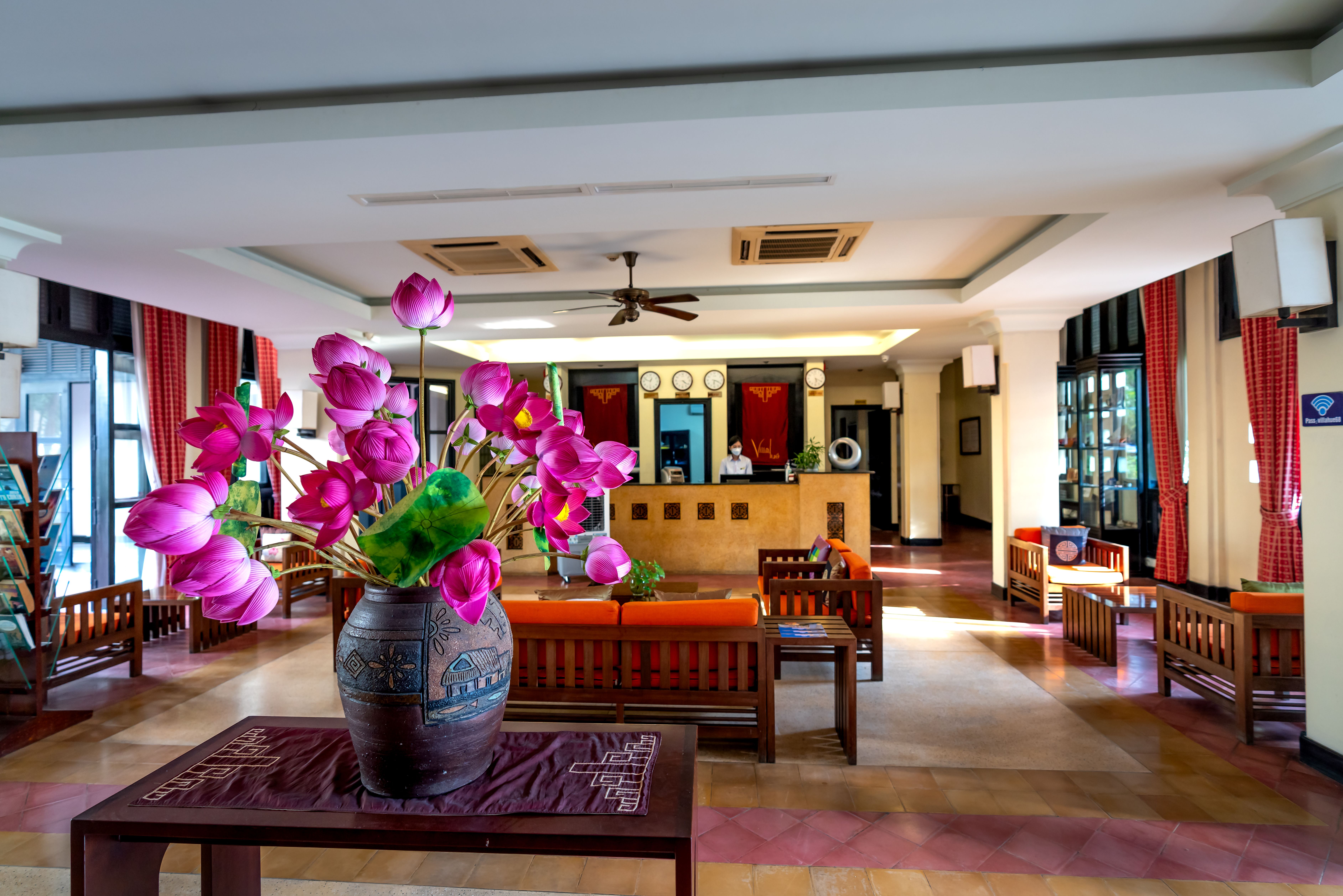 APA Hotel & Resort Osaka Umeda Eki Tower⭐ 3.0 · 8.5/10 (32,447) · $63 /night
 Hotel Villa Fontaine Grand Osaka Umeda⭐ 4.0 · 9.0/10 (6,364) · $91 /night
Agoda affiliate link — clicks go to the price-comparison page.