Tokyo’s Tsukiji Outer Market: The Breakfast Route Worth the 7 AM Crowd
Tsukiji Outer Market is one of Tokyo’s most honest food experiences — no theater, no Michelin signage, just vendors who’ve been opening shutters before dawn for decades. This route maps a timed, three-hour breakfast walk through the market’s best stalls, covering tamagoyaki, fresh uni, grilled skewers, and more, with real prices, real hours, and a straight answer on whether the line is worth your morning.
Best Timing
The Outer Market operates every day except Wednesdays and occasional irregular closures — always check stall-specific hours before going. Arrive between 7:00 and 8:00 AM for the best combination of freshness, manageable crowds, and daylight. By 10:30 AM, the main alleys become genuinely difficult to navigate and several popular stalls sell out of premium items entirely. Weekday mornings are noticeably calmer than weekends; if your schedule allows, Tuesday or Thursday visits are ideal.
Weather-wise, October through early December and March through early May are the most comfortable months for an outdoor market walk. Tokyo summers are humid enough that standing in a tamagoyaki line at 8 AM in August feels like a workout. Winter visits (January–February) are cold but rewarding — stalls are quieter and vendors have more time to talk. Bring an umbrella year-round; the covered alleys handle light rain, but the open ends of the market do not.
Core Experiences
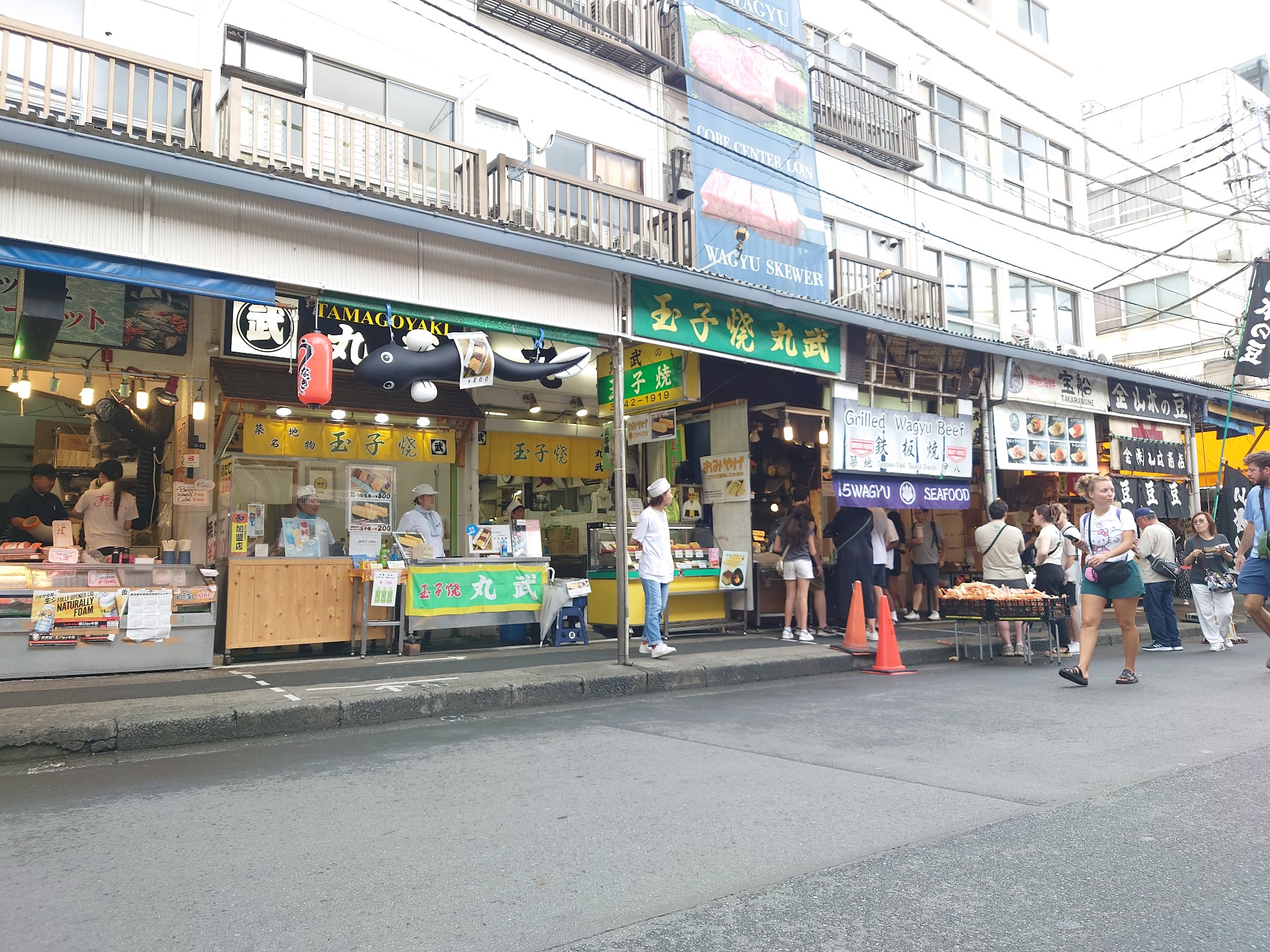
Tamagoyaki at Marutake Eggs
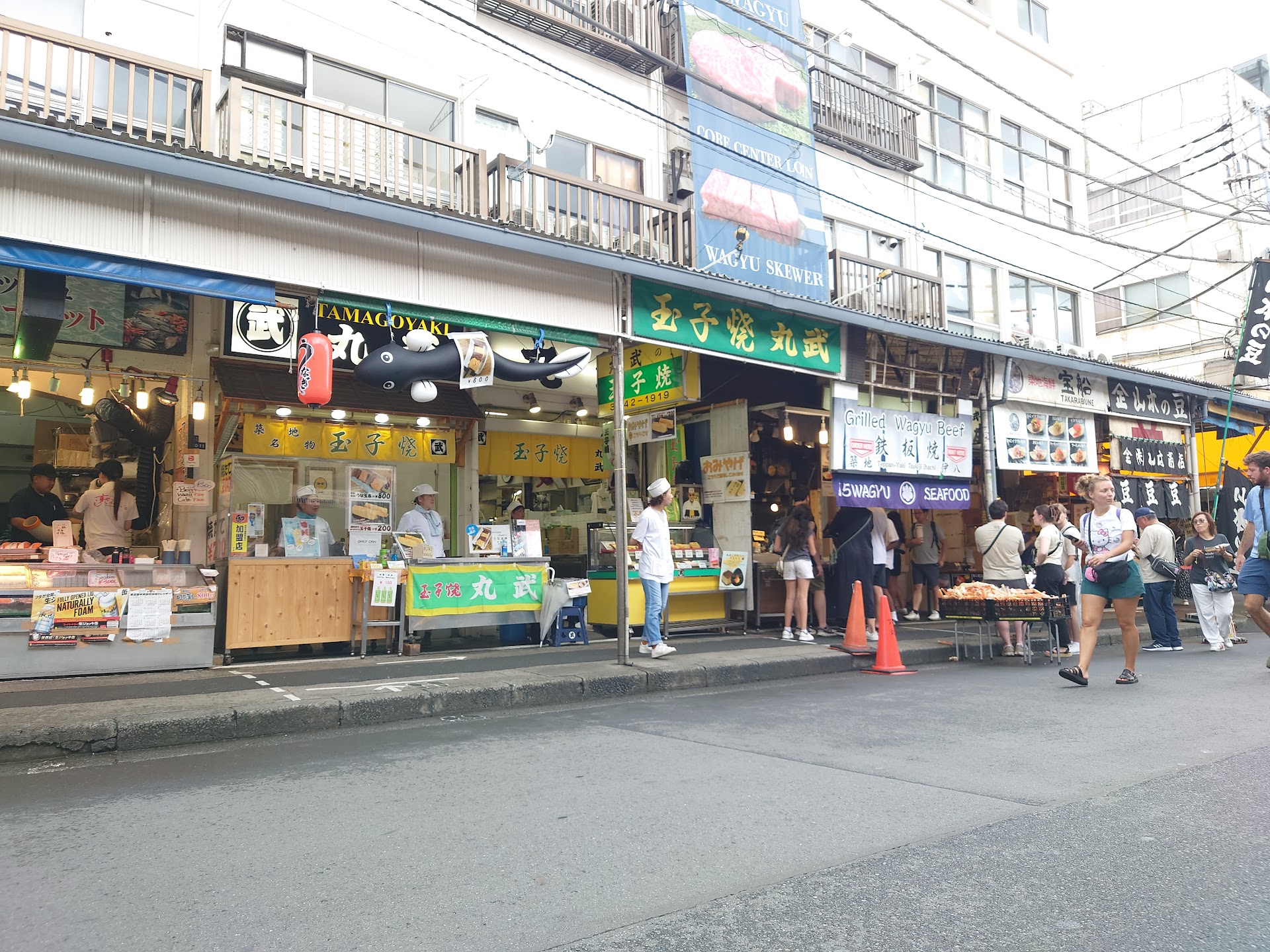
Tamagoyaki — Japan’s sweet rolled omelette — is Tsukiji’s most photographed snack, and Marutake has been making it over open flame in the narrow alleys since the market’s wholesale days. The version here leans slightly sweet, with a soft, custard-like interior and a charred edge from the square copper pan. It’s served on a bamboo skewer, still warm enough to steam in your hand on a cold morning. The stall is small, the line moves fast, and the product is consistent in a way that takes decades of repetition to achieve.
- 📍 Tsukiji Outer Market Alley 4, Chuo City, Tokyo · 💰 ~$3–4 USD per skewer · ⏰ Opens 7:00 AM, sells out by ~10:30 AM · ⭐ 4.8
- What locals know: Order the plain version before the sesame or seaweed variant — the base tamagoyaki is where the craft is clearest.
Fresh Uni at Yamayuki
Sea urchin (uni) from Hokkaido sits in small wooden trays at Yamayuki, and the rule here is simple: eat it on-site, immediately. The stall offers uni served over a small bed of rice, letting the brine and creaminess of the roe speak without interference. Uni quality fluctuates with season — May through August brings the best Hokkaido murasaki uni — but the stall curates its sourcing carefully and will tell you honestly if the day’s stock isn’t at its best. At roughly $12–18 USD for a proper serving, this is the highest-cost stop on the route but also the hardest to replicate outside Japan.
- 📍 Tsukiji Outer Market, near the Shin-Ohashi-dori entrance · 💰 ~$12–18 USD · ⏰ 6:30 AM – 2:00 PM (closed Wed) · ⭐ 4.7
- What locals know: Point to the tray and ask “kyō no osusume?” (今日のおすすめ?) — vendors will indicate which tray was restocked most recently.
Grilled Scallops at Nihonbashi Tamai
If tamagoyaki is Tsukiji’s breakfast snack and uni is its luxury hit, grilled scallops are its crowd-pleaser. Nihonbashi Tamai grills large Hokkaido hotate over charcoal, finishing them in the shell with a dab of soy and butter. The smell alone pulls foot traffic from two alleys over. Each scallop takes about four minutes to grill, so there’s always a small wait — but it’s one of those waits where the anticipation is part of the experience. Pair this stop with a small cup of miso soup from the adjacent counter for a near-complete breakfast in two items.
- 📍 Tsukiji Outer Market, central alleys near Kaikaya-dori · 💰 ~$5–7 USD per scallop · ⏰ 7:00 AM – 1:00 PM · ⭐ 4.6
- What locals know: The butter-soy version is the default; ask for “shio” if you want plain salt — it’s the cleaner way to taste the scallop itself.
Tuna Sashimi Breakfast at Sushi Dai (Outer Market Annex)
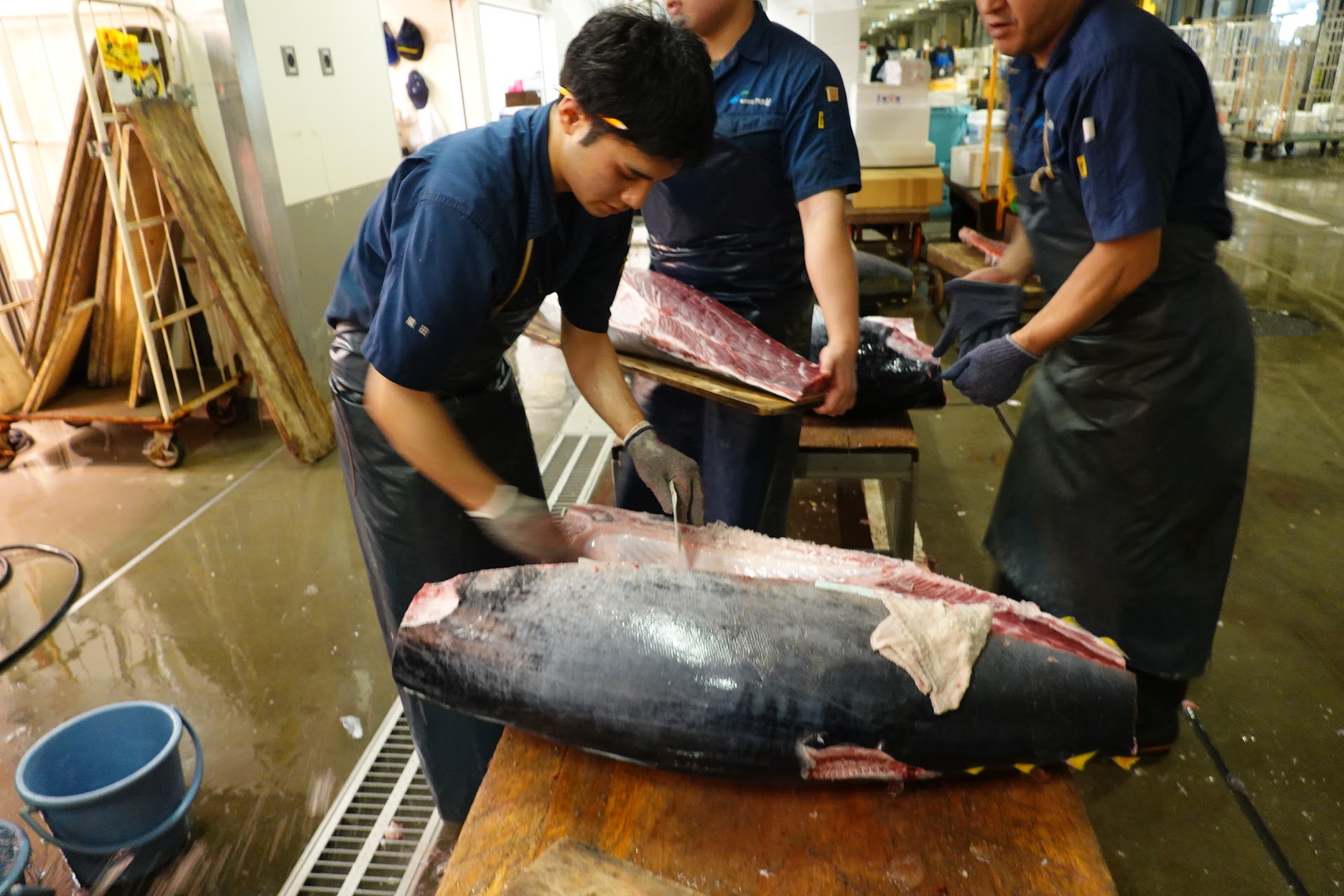
The original Sushi Dai moved from the now-closed wholesale market, but its Outer Market annex keeps the same philosophy: counter seating, chef-selected omakase, and tuna that was swimming 18 hours ago. A tuna-forward sashimi set at the annex runs roughly $20–28 USD and includes two to three cuts — akami (lean), chūtoro (medium fatty), and occasionally ōtoro (fatty belly) depending on the morning’s delivery. The counter holds only eight seats, so the wait can stretch to 40 minutes on weekend mornings. Block out the time; it’s worth the sit.
- 📍 Tsukiji Outer Market Annex, 4-chome alleys · 💰 ~$20–28 USD for tuna set · ⏰ 6:30 AM – sell-out (often by 11:00 AM) · ⭐ 4.9
- What locals know: Go on a weekday and arrive by 7:15 AM — the wait is often under 20 minutes and the fish quality is identical to weekend stock.
Oysters and Seafood Skewers at Tsukiji Itadori
Tsukiji Itadori is the market’s most versatile standing-eat counter — a rack of chilled oysters from Hiroshima and Miyagi alongside rotating skewers of shrimp, squid, and scallop. Oysters are shucked to order and served with a wedge of lemon and a small dish of ponzu. The price is transparent: a small chalkboard outside lists each item in yen with an approximate USD equivalent. This is a good final stop on the route — lighter than a sit-down sushi set, affordable enough to try two or three items, and positioned near the market’s southern exit for an easy onward walk toward Hamarikyu Gardens.
- 📍 Tsukiji Outer Market, southern section near exit toward Hamarikyu · 💰 ~$3–6 USD per item · ⏰ 7:30 AM – 2:30 PM · ⭐ 4.5
- What locals know: The Hiroshima oysters are creamier and slightly larger; the Miyagi ones are brinier and cleaner. Ask which prefecture the day’s stock came from.
Recommended Route
This route is designed for a 3-hour morning window, starting at 7:00 AM. Comfortable walking shoes are essential — the alleys are paved but uneven in sections.
- 7:00 AM — Enter via the Harumi-dori side entrance. Head immediately to Marutake Eggs for tamagoyaki on a skewer. Eat while walking. (~10 min)
- 7:15 AM — Walk two alleys north to Yamayuki for the uni-over-rice. This is a stand-and-eat stop; no seating needed. (~15 min including wait)
- 7:35 AM — Cut through the central alley to Nihonbashi Tamai for grilled scallops. Wait at the grill and watch the process — that’s part of it. (~20 min)
- 8:00 AM — This is the window to join the Sushi Dai Annex queue. Weekday arrivals at 8:00 AM typically wait 20–30 min; use the time to browse the fresh fish displays nearby. (~50 min total with wait + meal)
- 9:00 AM — Walk south through the remaining stalls, grazing as interest dictates, toward Tsukiji Itadori for oysters or a final skewer. (~30 min)
- 9:30 AM — Exit toward Hamarikyu Gardens (7-min walk) for a post-breakfast walk along the water, or double back to Tsukijishijo Station for onward travel.
Total route: approximately 2.5 km of walking, almost entirely within the market’s alleys.
Budget · Transport · Booking
Realistic per-person budget for this route:
- Tamagoyaki: ~$3–4
- Uni serving: ~$12–18
- Grilled scallop: ~$5–7
- Tuna sashimi set: ~$20–28
- Oysters/skewers: ~$6–10
- Total: ~$46–67 USD per person, depending on selections
Cash is strongly preferred. Most Tsukiji Outer Market stalls are cash-only. Bring at least ¥8,000–10,000 in small bills. 7-Eleven and Lawson ATMs near Tsukijishijo Station accept international cards.
Getting there:
- 🚇 Toei Oedo Line → Tsukijishijo Station (Exit A1): 1-minute walk to the market’s north entrance. Best option from most central Tokyo locations.
- 🚇 Tokyo Metro Hibiya Line → Tsukiji Station (Exit 1): 5-minute walk. Useful if coming from Ginza or Roppongi.
- Taxi drop-off: Ask for “Tsukiji Jogai Shijo” (築地場外市場). The Harumi-dori side has the most reliable drop-off space.
No advance booking is required for any stall on this route. The Sushi Dai Annex does not take reservations — it’s first-come, first-served.
Must-Know Tips
- 💰 Bring cash in ¥1,000 notes. Most stalls don’t make change for ¥10,000 bills before 9 AM; smaller denominations keep the line moving.
- ⏰ Arrive before 7:30 AM for the full selection. Uni trays and oyster stock are finite — by 9:30 AM, the premium items are often gone.
- 📸 Photography is generally fine at stalls, but ask before pointing a camera at a vendor’s face. A slight bow and “shashin ii desu ka?” (写真いいですか?) goes a long way and is always appreciated.
- 🗣️ Basic Japanese phrases open doors. “Kore wa nan desu ka?” (これは何ですか? — “What is this?”) and a genuine curious expression will often result in a free taste.
- 🚫 Avoid large rolling suitcases. The alleys are narrow and shared with delivery carts and other visitors; it creates real congestion and vendors notice. Store luggage at the station coin lockers.
- 🌧️ The market is mostly outdoor. A compact umbrella is worth the pocket space from May through September when afternoon rain is common, even if mornings start clear.
Closing
Tsukiji Outer Market doesn’t need a brand story — the vendors have been doing this since before Instagram existed, and they’ll be doing it long after. What makes a 7 AM walk through these alleys worthwhile isn’t a single dish or a single stall; it’s the accumulation of small, precise decisions: the right cut of tuna, the right temperature on a scallop, a bowl of uni eaten standing in an alley at half past seven with nowhere else to be.
The actionable takeaway: Lock in a weekday morning between October and May, arrive at 7:00 AM sharp, bring ¥10,000 in cash, and follow this route in order. The whole thing fits inside three hours and costs under $70. Few breakfast experiences in Tokyo — at any price point — give you more to work with.
🏨 Where to Stay
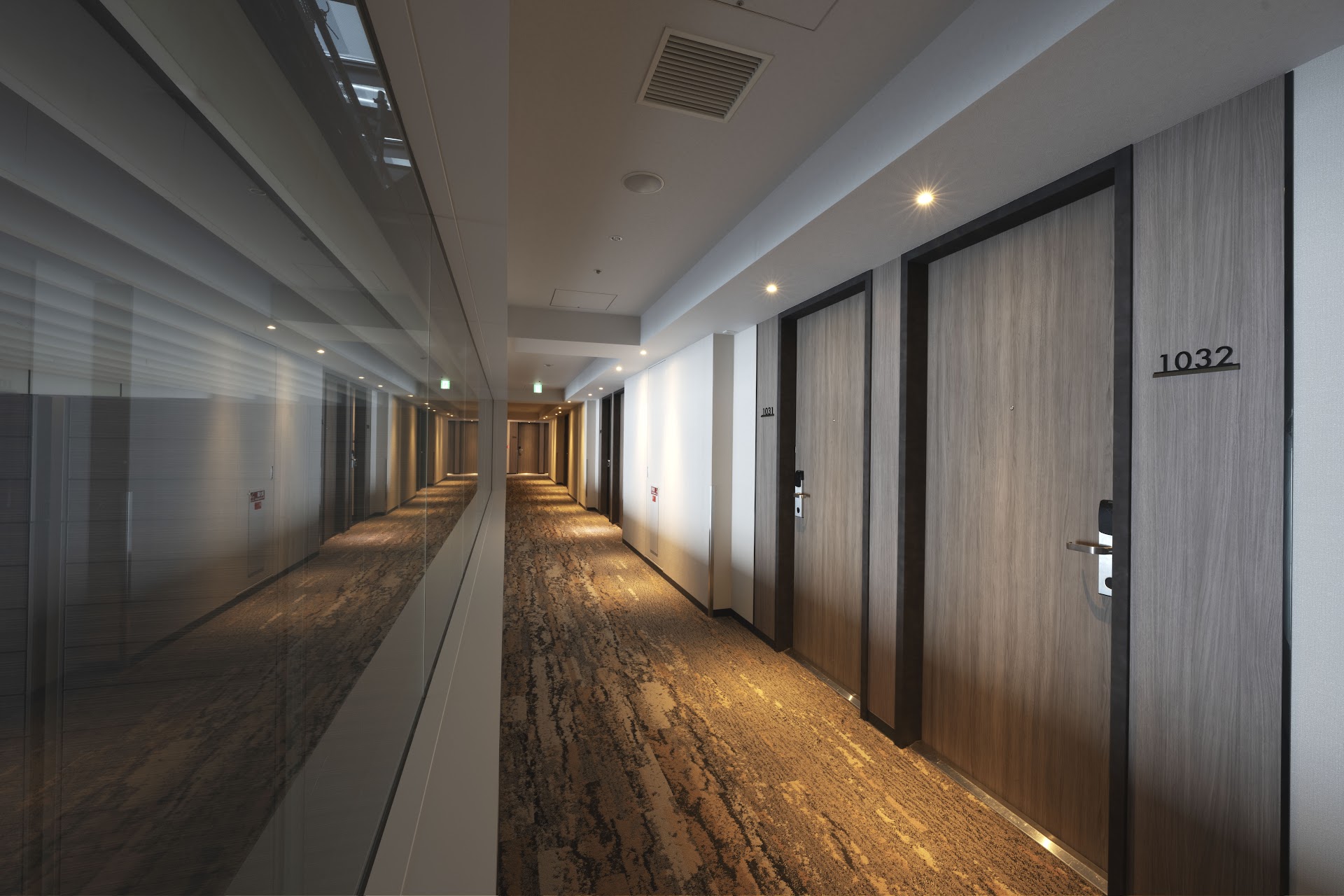
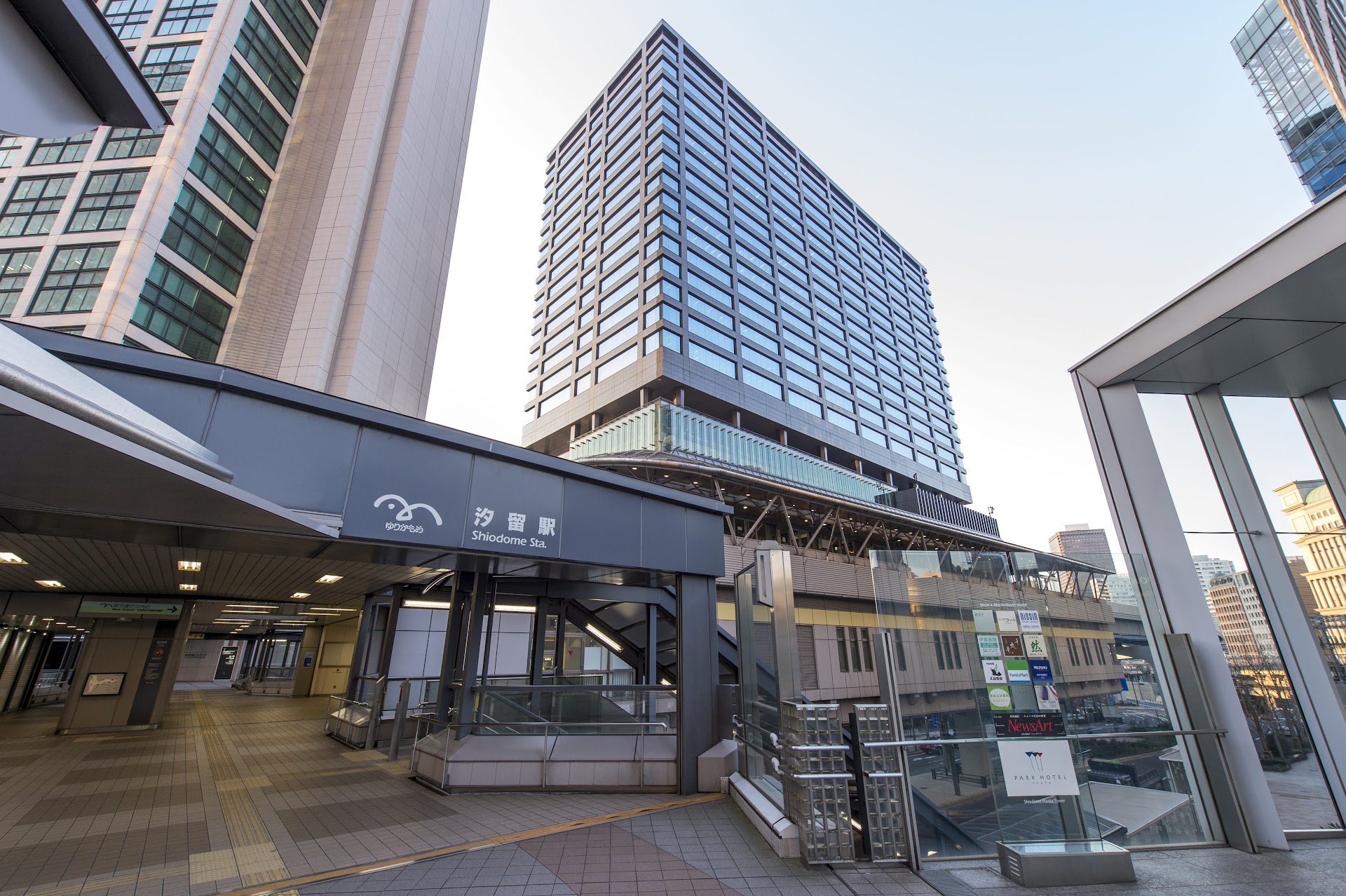
Hotel Villa Fontaine Grand Tokyo-Shiodome⭐ 4.0 · 8.7/10 (14,998) · $125 /night
APA Hotel Ginza Shintomicho Ekimae Kita⭐ 3.5 · 8.4/10 (2,402) · $67 /night
Mitsui Garden Hotel Ginza Tsukiji⭐ 4.0 · 9.0/10 (1,081) · $244 /night
Agoda affiliate link — clicks go to the price-comparison page.