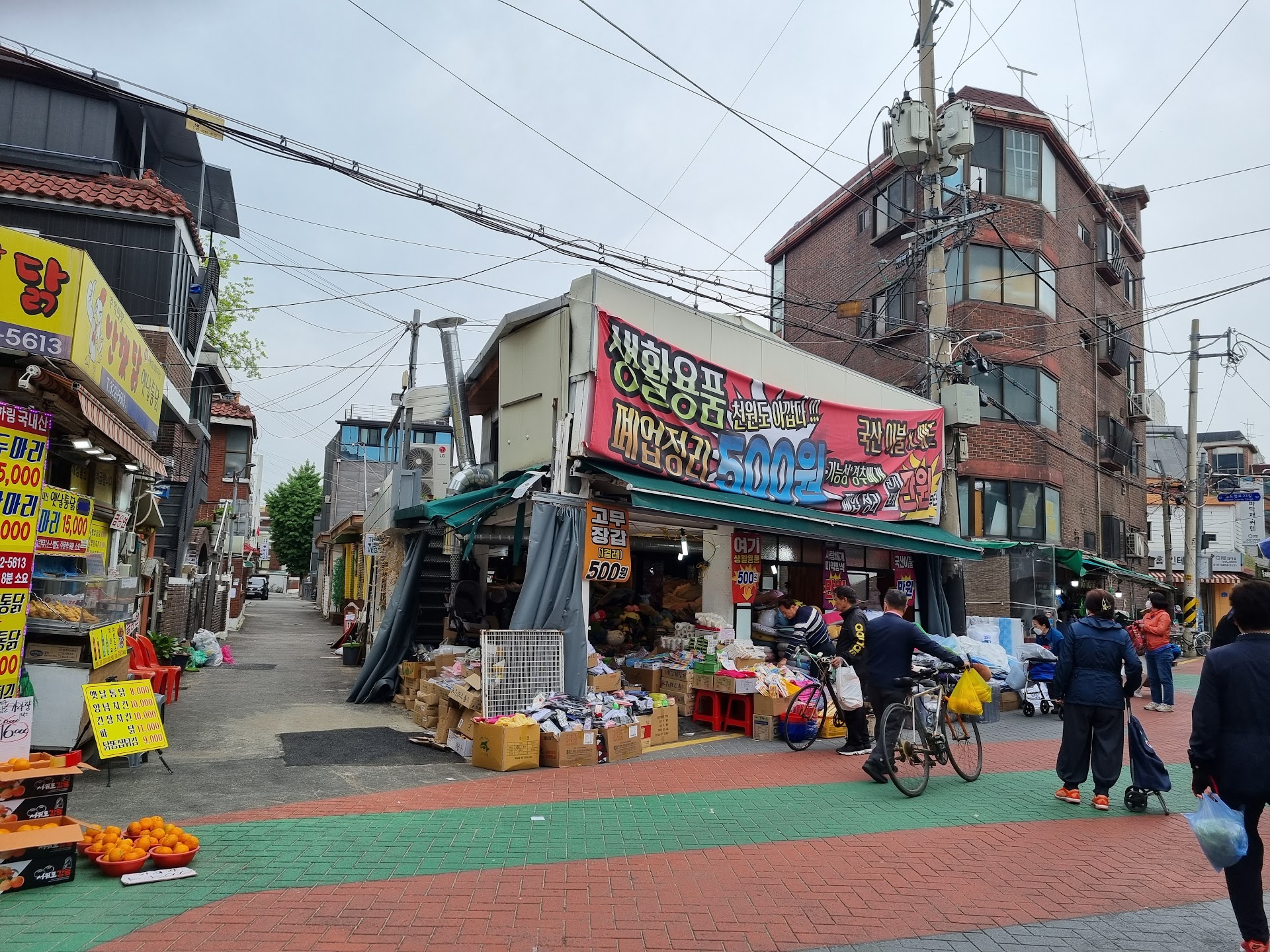
Seoul doesn’t hand you its best mornings — you have to show up for them. Mangwon Market, tucked into a residential bend of the Mapo district, is the kind of place that rewards early risers with sesame-scented air, griddle smoke, and the unhurried rhythm of a neighborhood that hasn’t rebranded itself for tourists. Here’s the morning food route locals actually walk.
Best Timing
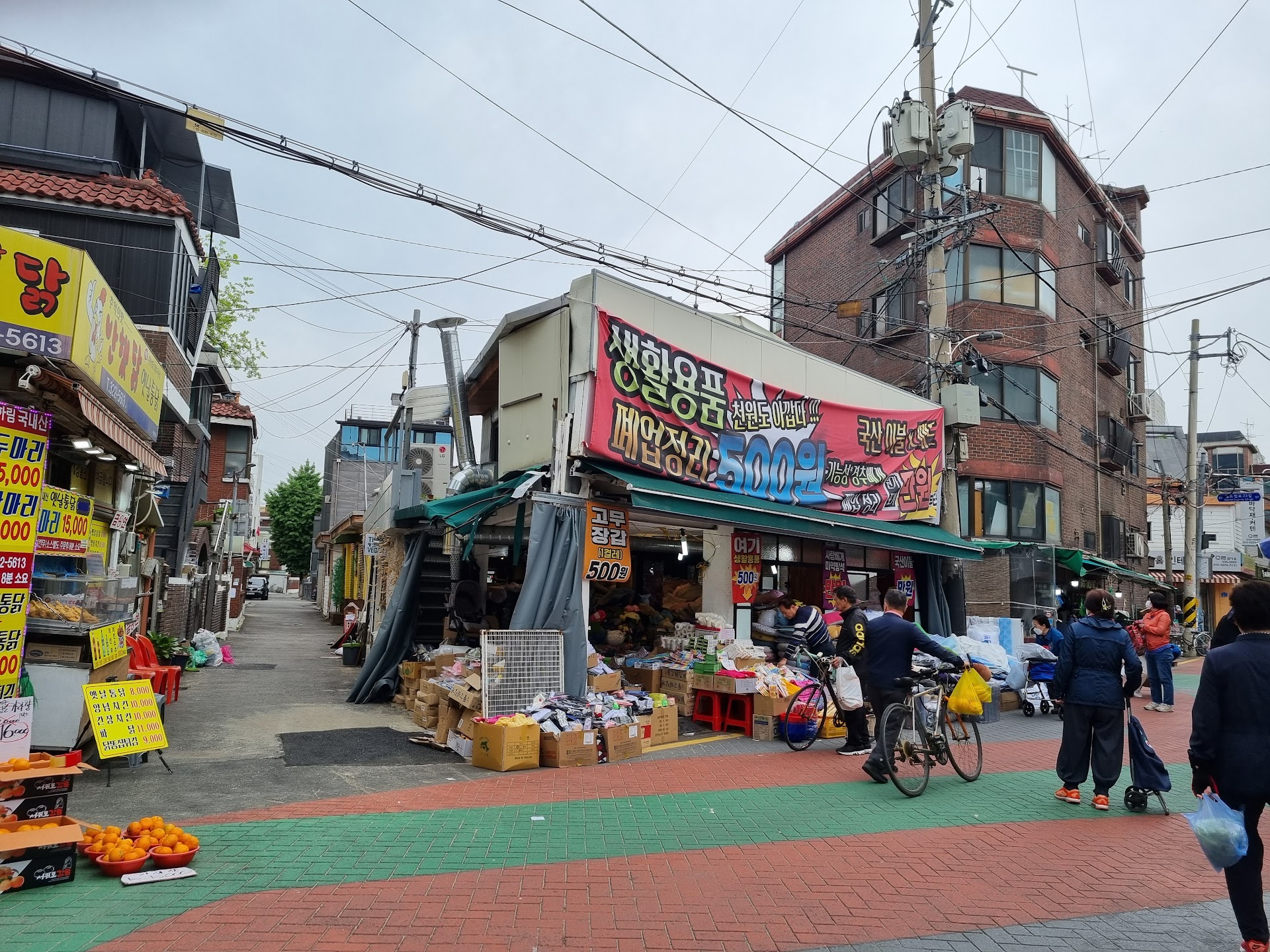
Mangwon Market runs seven days a week, but Tuesday through Sunday between 7:00 AM and 10:00 AM is the window that matters. Stalls reach full setup by 7:30, the crowds are still local, and the freshest batches of hotteok and grilled rice cakes come off the griddle before 9. Arrive after 10 and you’re competing with late-morning foot traffic; arrive after noon and several of the smaller specialty vendors have already sold out.
Seasonally, April–May and September–October are the sweet spots. Spring and early autumn bring mild temperatures that make outdoor eating pleasant, and the golden morning light filtering through the market’s corrugated roof sections makes for genuinely beautiful B-roll. Summer (July–August) is hot and humid — doable, but go even earlier (7:00 sharp) before the heat sets in. Winter visits work well too; the warm foods hit differently when it’s cold, and the market is noticeably less crowded on weekday mornings.
Core Experiences
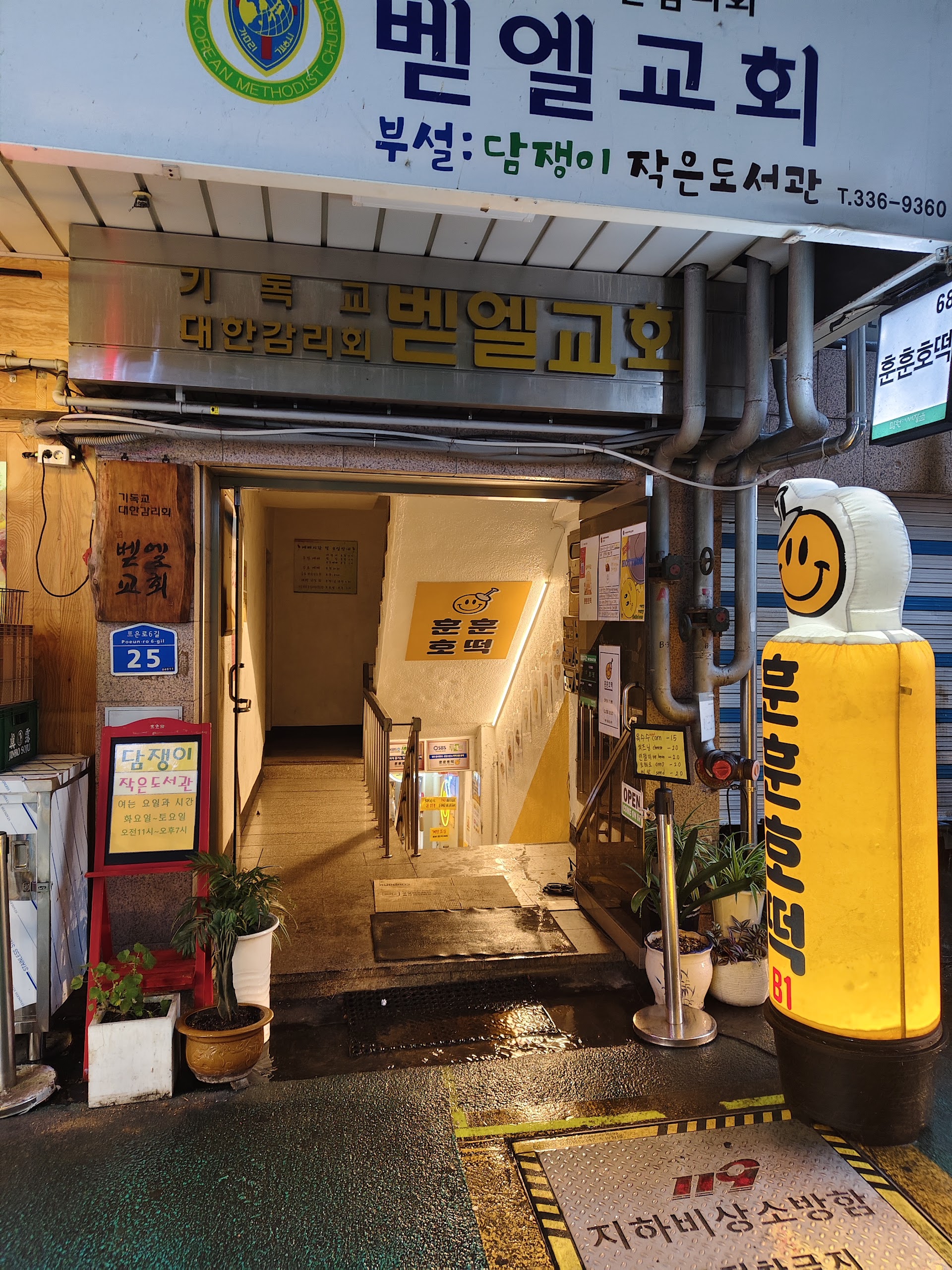
Mangwon Market Hotteok Stall
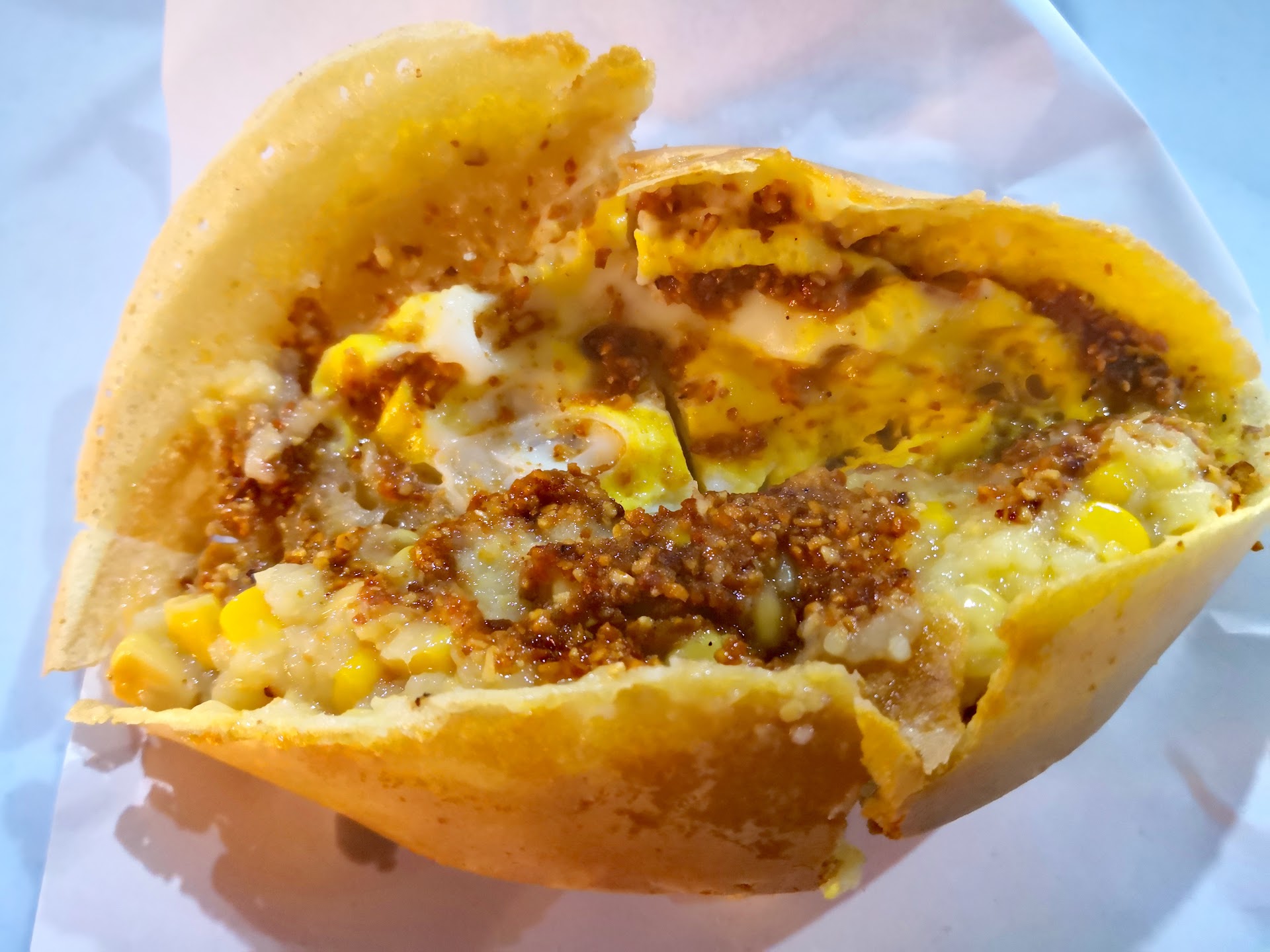
Step into the covered lane off the main entrance and the smell finds you before the stall does — brown sugar caramelizing on cast iron, a faint char at the edges, the kind of scent that’s basically Pavlovian at this point if you’ve spent any time in Korean markets. Mangwon’s hotteok vendors press their cakes thick, filling them with a mixture of brown sugar, crushed peanuts, and cinnamon. The exterior crisps properly rather than going soft the way pre-made versions do. One hotteok is roughly the size of your palm and costs less than a dollar. This is the right way to open a market morning.
- 📍 Main covered lane, Mangwon Market (망원시장), Mapo-gu, Seoul · 💰 ₩800–₩1,000 (~$0.60–$0.75) · ⏰ 7:00 AM – sell-out (usually by 10:30) · ⭐ 4.7
- Locals’ tip: The stall with the longest queue of ajummas in aprons is almost always the better of the two competing vendors near the entrance. Join that line.
Sesame Oil Press (Chamgireum Jip)
One of the few remaining hand-press sesame oil operations in Seoul’s traditional markets, this small shop does something you can smell from ten meters away: raw sesame seeds roasting in a drum, then cold-pressed on-site into oil that bears almost no resemblance to the supermarket variety. Bottles are filled to order. Watching the press run is a slow, satisfying thing — the oil comes out a deep amber, almost molasses-colored, and the aroma is nutty in a way that feels more like a kitchen than a condiment. Buying a small bottle (150ml) to bring home is one of the most practical souvenirs available in this market.
- 📍 Inner market row, Mangwon Market, Mapo-gu · 💰 ₩6,000–₩12,000 (~$4.40–$8.80) per bottle depending on size · ⏰ 8:00 AM – 6:00 PM, closed Mondays · ⭐ 4.8
- Locals’ tip: Ask for 볶음참기름 (roasted sesame oil) vs 생참기름 (raw-pressed) — roasted is richer and more aromatic, the one most Korean home cooks actually use.
Grilled Tteok (Rice Cake) Cart
Not all tteok is eaten cold. The grilled rice cake cart near the market’s mid-section serves cylindrical garae-tteok skewered and charred over a small gas grill, brushed with a soy-based glaze that goes sticky and slightly sweet at the edges. The texture contrast — chewy interior, lightly crisped exterior — is something that doesn’t translate through a description; it needs to be eaten standing up, slightly too hot, with the skewer in one hand. Two or three skewers make a solid second course after the hotteok. The vendor typically sets up by 7:30 and packs down by early afternoon.
- 📍 Center aisle, Mangwon Market · 💰 ₩1,000–₩1,500 (~$0.75–$1.10) per skewer · ⏰ 7:30 AM – 1:00 PM (varies) · ⭐ 4.5
- Locals’ tip: The glazed version (양념 떡구이) outsells the plain one — point to it on the cart if the language barrier is a factor, it’s the shiny, darker-colored skewers.
Haemul Pajeon (Seafood Scallion Pancake) Shop
By the time you’ve eaten hotteok and tteok, you’re ready for something savory and substantial. The haemul pajeon shop inside the market’s permanent stall section does one thing and does it well: a wide, flat pancake loaded with squid, shrimp, and a generous ratio of green onion, cooked until the edges are lacy and crisp while the center stays dense and yielding. It comes out of the pan sectioned into squares and served with a vinegar-soy dipping sauce. A half-order feeds one person comfortably as a market snack; a full order feeds two. This is one of the most consistently well-executed versions of this dish available in a traditional market setting in Seoul.
- 📍 Permanent stall section (내부 상설 구역), Mangwon Market · 💰 Half ₩6,000 / Full ₩10,000 (~$4.40 / $7.30) · ⏰ 8:00 AM – 3:00 PM · ⭐ 4.6
- Locals’ tip: Eat it at the counter immediately — pajeon loses its texture fast. Don’t take it to go unless you’re eating within five minutes.
Dalgona Coffee & Snack Corner
Near the market’s street-facing exit sits a small counter that has become a low-key morning ritual for younger locals in the Mangwon neighborhood: hand-whipped dalgona coffee served over iced milk, alongside a rotating selection of Korean street snacks — fish-shaped bread (붕어빵) in winter, yakgwa (honey cookies) year-round, and occasionally mini chapssal donuts. It’s the natural endpoint of the route, where you slow down, sit on a low stool if one’s available, and decompress before heading back into the city. The coffee is sweet and strong; the iced version is the better call in warmer months.
- 📍 Street-facing exit area, Mangwon Market, Mangwon-dong, Mapo-gu · 💰 ₩3,500–₩5,000 (~$2.50–$3.70) · ⏰ 7:30 AM – noon · ⭐ 4.4
- Locals’ tip: Weekday mornings have seating; weekends it’s standing-only by 9 AM. Go Tuesday or Wednesday if you want a calm finish to the route.
Recommended Route
Block out 2.5 to 3 hours for this route. It’s compact — the market itself is walkable end-to-end in under ten minutes — but the point is to slow down at each stop.
- 7:00 AM — Arrive at Mangwon Market main entrance. The neighborhood is quiet, vendors are just opening, and you get first-batch hotteok. Start at the Hotteok Stall (10–15 min).
- 7:20 AM — Walk the covered lane toward the inner market. Stop at the Sesame Oil Press to watch a batch run and pick up a bottle if you’re buying. (15–20 min)
- 7:45 AM — Cut through to the center aisle for the Grilled Tteok Cart — two or three skewers, eaten standing. (10 min)
- 8:00 AM — Head into the permanent stall section for a sit-down half-order of Haemul Pajeon. Eat at the counter. (20–25 min)
- 8:30 AM — Walk toward the street-facing exit for the Dalgona Coffee & Snack Corner. This is the endpoint — coffee, a snack, and 20 minutes of doing nothing in particular. (20 min)
- 9:00 AM — Done. The neighborhood opens up: Mangwon Hangang Park is a 12-minute walk down to the river if you want to extend the morning.
Total walking distance inside the market: approximately 400–500 meters. All stops are within the single market block.
Budget · Transport · Booking
Total food spend for this route: ₩17,000–₩24,000 per person (~$12–$18 USD), including all five stops with one item each. Add ₩6,000–₩12,000 if purchasing sesame oil to take home.
Getting there:
- 🚇 Seoul Metro Line 6, Mangwon Station (망원역), Exit 2. Walk straight approximately 350 meters — the market entrance is visible from the exit.
- From Hongdae (Hongik University Station): 2 stops on Line 6, ~4 minutes.
- From central Seoul (City Hall area): approximately 30–35 minutes by metro with one transfer.
- Taxi from Hongdae:
₩4,500–₩6,000 ($3.30–$4.40) depending on traffic.
No advance booking required for any stop on this route. Everything is walk-up. Cash is preferred at most stalls — bring small bills (₩1,000 and ₩5,000 denominations). A few of the permanent stalls accept card; the street vendors almost universally do not.
Day budget estimate (transport + food + optional souvenir oil): $20–$28 USD per person.
Must-Know Tips
- 💰 Bring cash in small denominations. Most vendors at Mangwon operate cash-only. Nearby ATMs include one inside the GS25 convenience store approximately 100 meters from the main entrance.
- ⏰ 7:00–8:30 AM is the local window. After 9:30, foot traffic increases significantly and queue times at the hotteok stall can triple. Go early.
- 📍 Mangwon Market ≠ Mangwon Hangang Park. Maps sometimes conflate the two. The market address is Mangwon-dong, Mapo-gu — search 망원시장 directly in Naver Maps or Kakao Maps for the most accurate pin.
- 🍴 Eat immediately. Street foods like pajeon, tteok skewers, and hotteok degrade fast. Don’t bag them for later — eat at or near the stall.
- 📸 Photography is generally fine at food stalls — a quick nod to the vendor before shooting is standard courtesy and almost always appreciated. Avoid photographing individual vendors’ faces without acknowledgment.
- 🗣️ Basic Korean helps but isn’t required. Pointing, holding up fingers for quantity, and having the Korean name (망원시장) on your phone is enough to navigate. Google Translate’s camera mode works on most handwritten menu signs.
Closing
Mangwon Market is the version of Seoul that doesn’t need to perform for you — it’s just running its morning the way it always has, and you’re welcome to walk through it. There’s something grounding about a place where the most interesting thing on offer is a well-made pancake or a bottle of oil pressed while you watch. This route takes three hours, costs less than twenty dollars, and leaves you with a better read on how the city actually eats than most full-day food tours manage.
The actionable takeaway: set your alarm for 6:45, take Line 6 to Mangwon Station Exit 2, and start with the hotteok. The rest of the route follows naturally.
🏨 Where to Stay
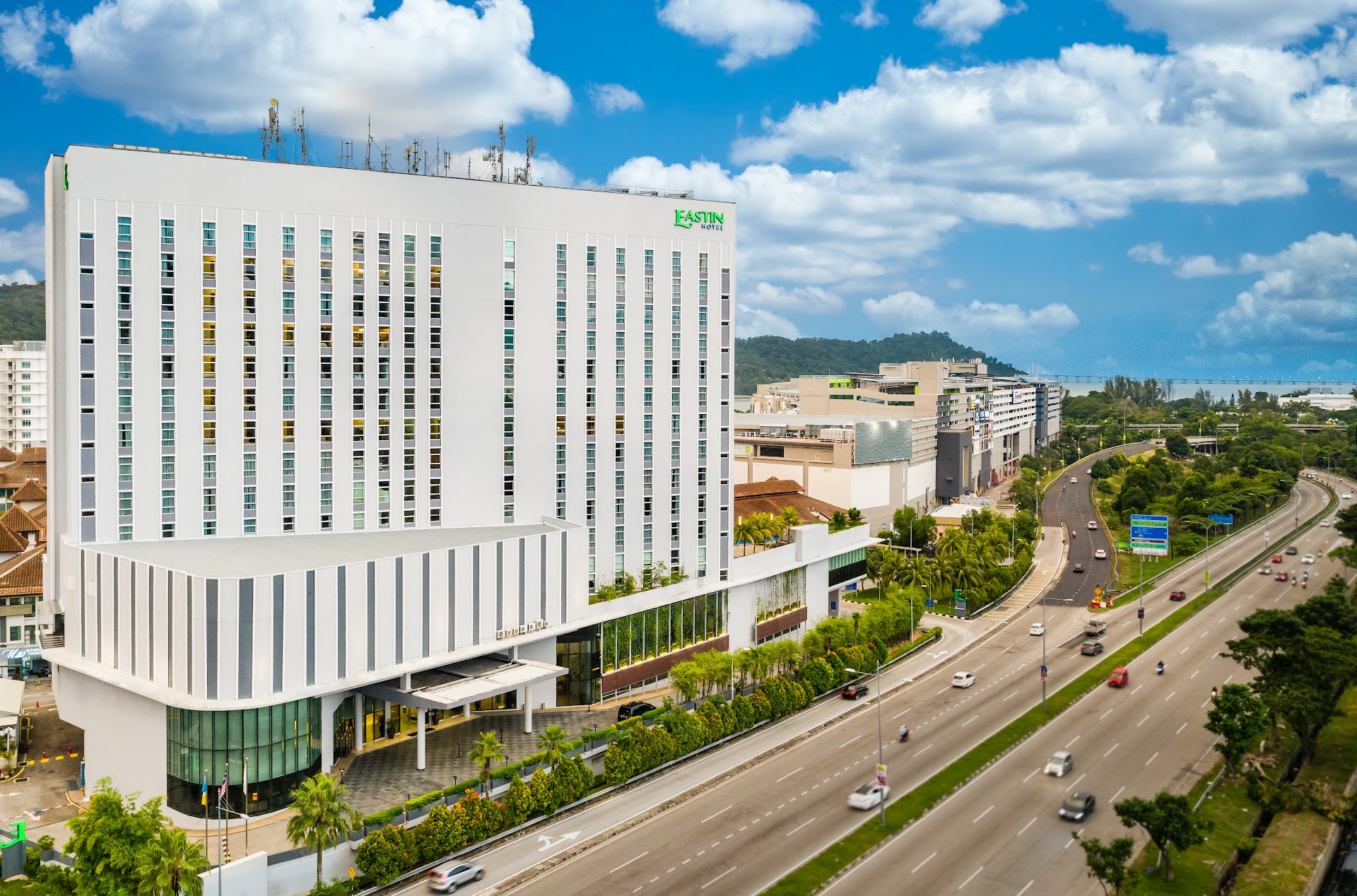
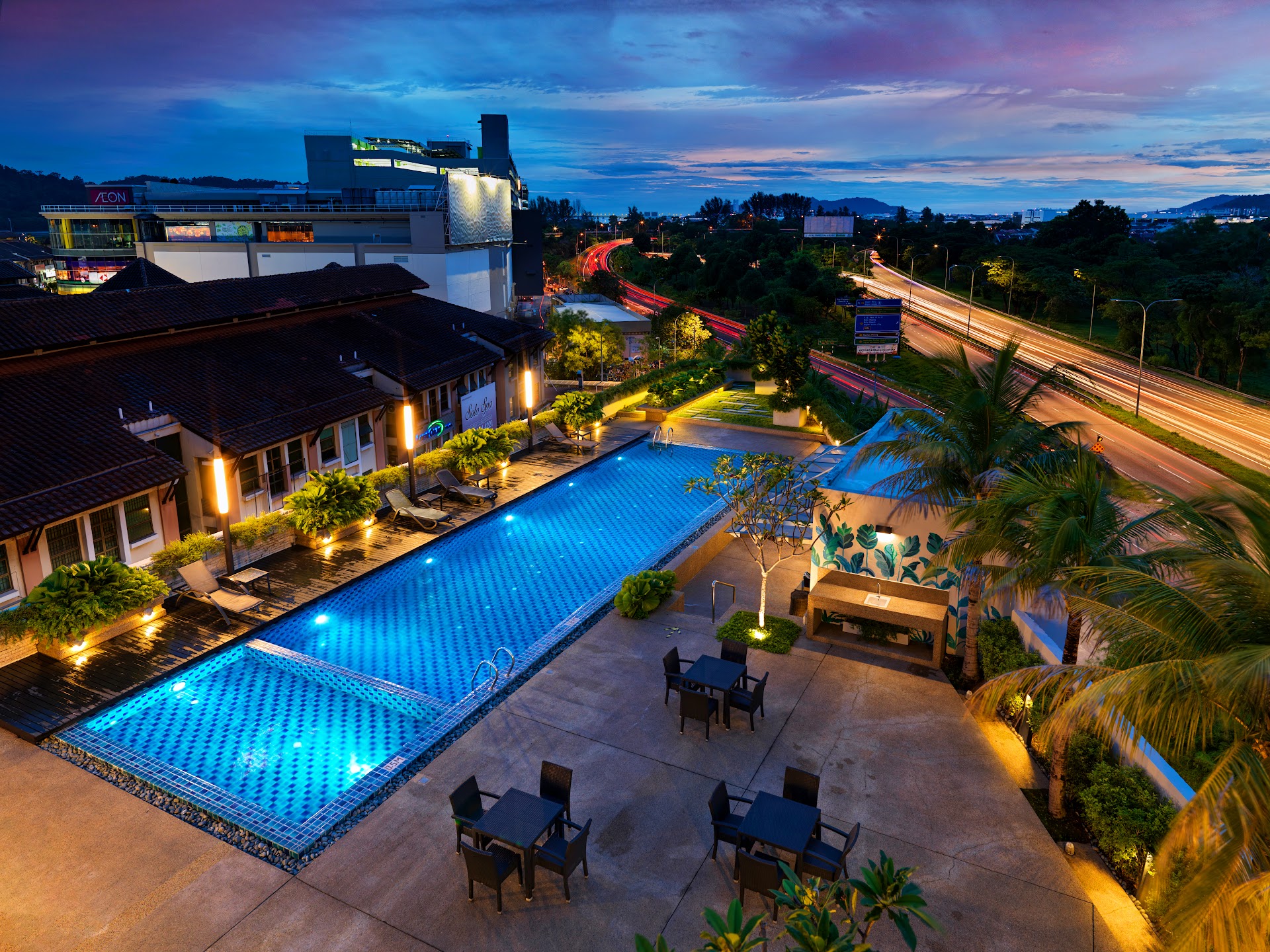 Eastin Hotel Penang⭐ 4.0 · 8.3/10 (9,444) · $100 /night
 Sho Hotel Penang⭐ 5.0 · 8.6/10 (1,054) · $62 /night
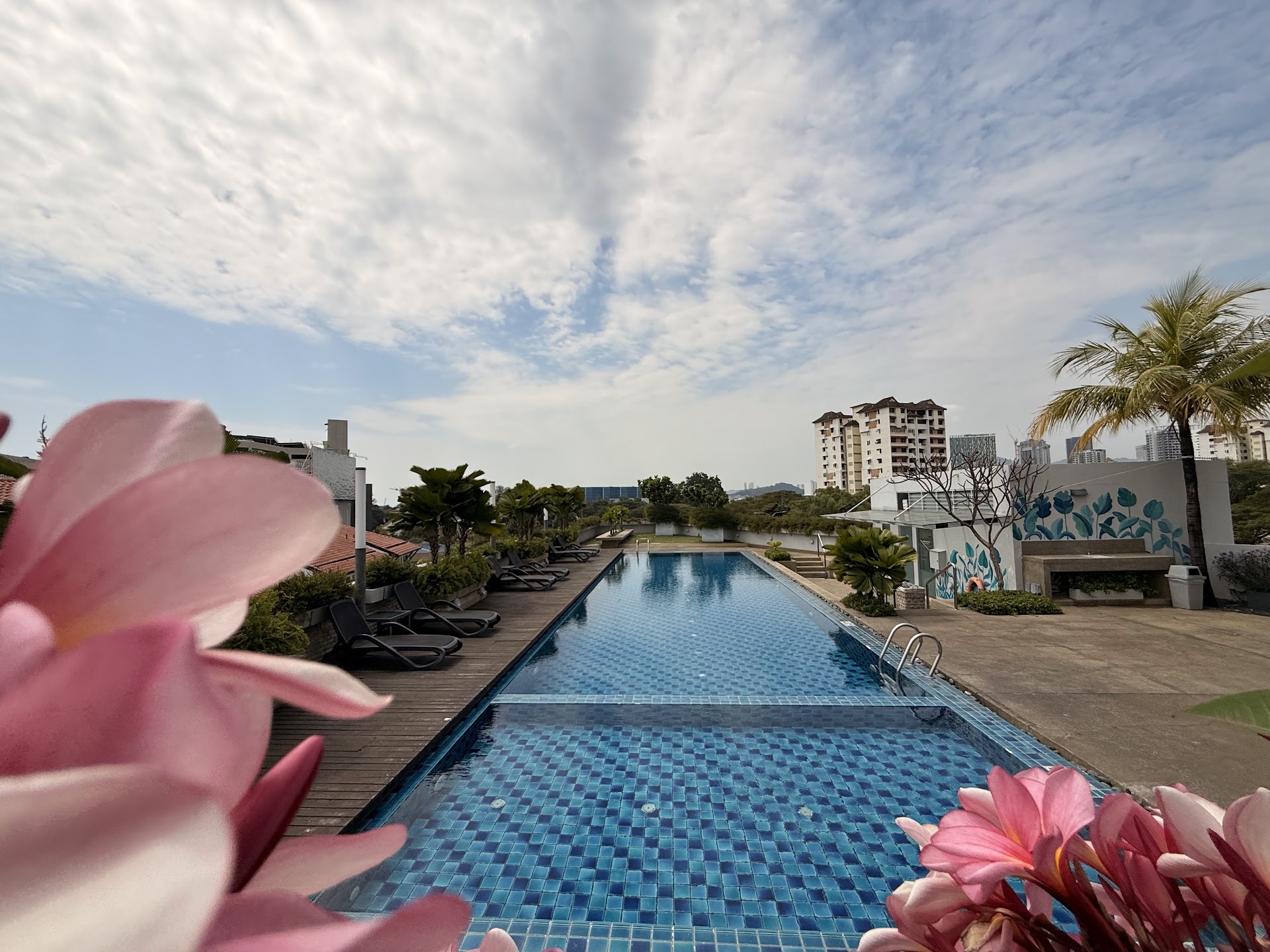 Iconic Regency Service Residences, managed by Iconic Hotel⭐ 4.0 · 9.1/10 (1,205) · $72 /night
Agoda affiliate link — clicks go to the price-comparison page.