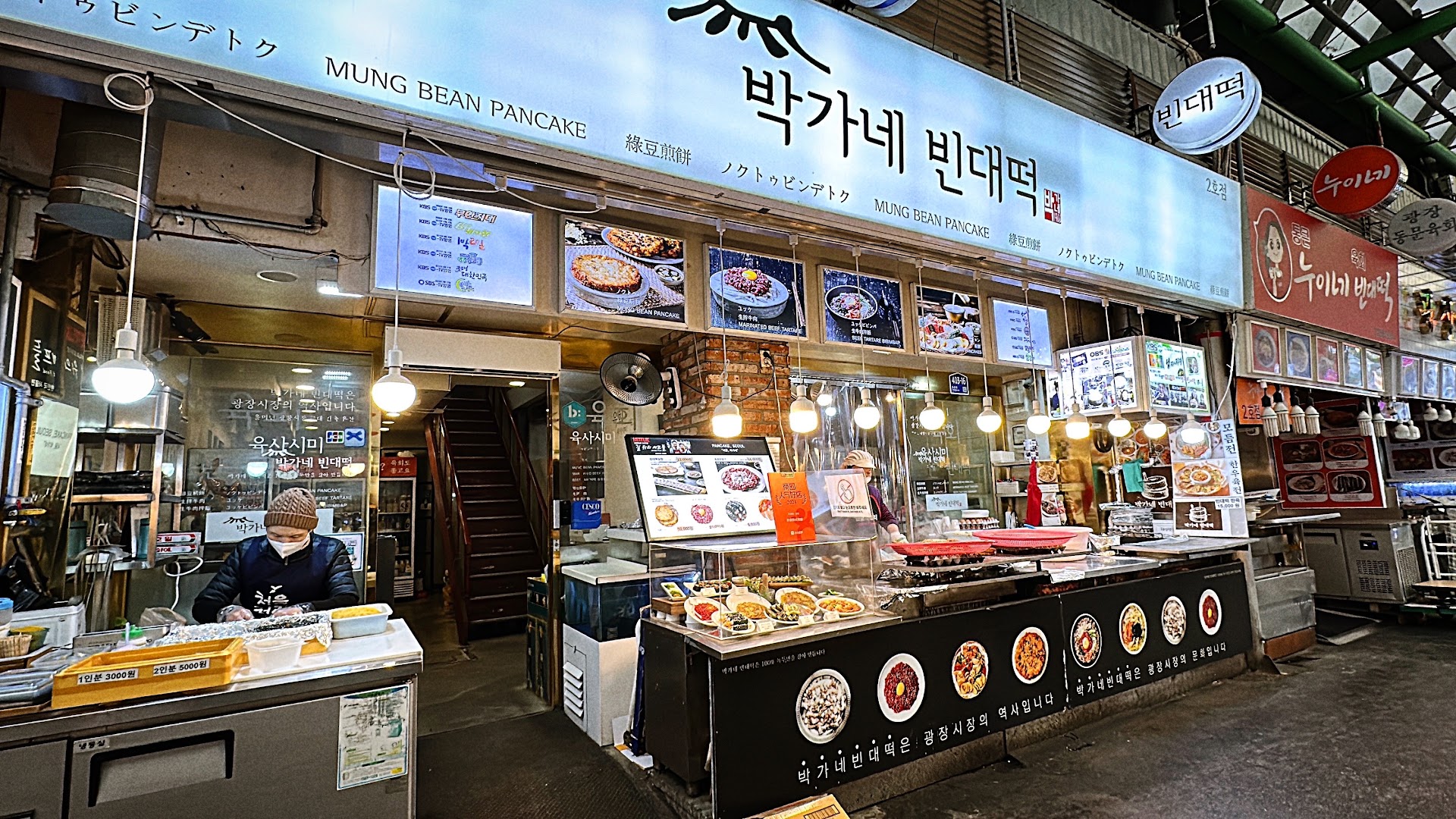
Gwangjang Market has fed Seoul since 1905, and on any given morning, its covered alleys hum with the kind of organized chaos that no food hall can replicate. This is a timed walking route through the market’s best stalls — six worth lining up for, two you can confidently skip, and everything you need to arrive with a plan instead of a question mark.
Best Timing
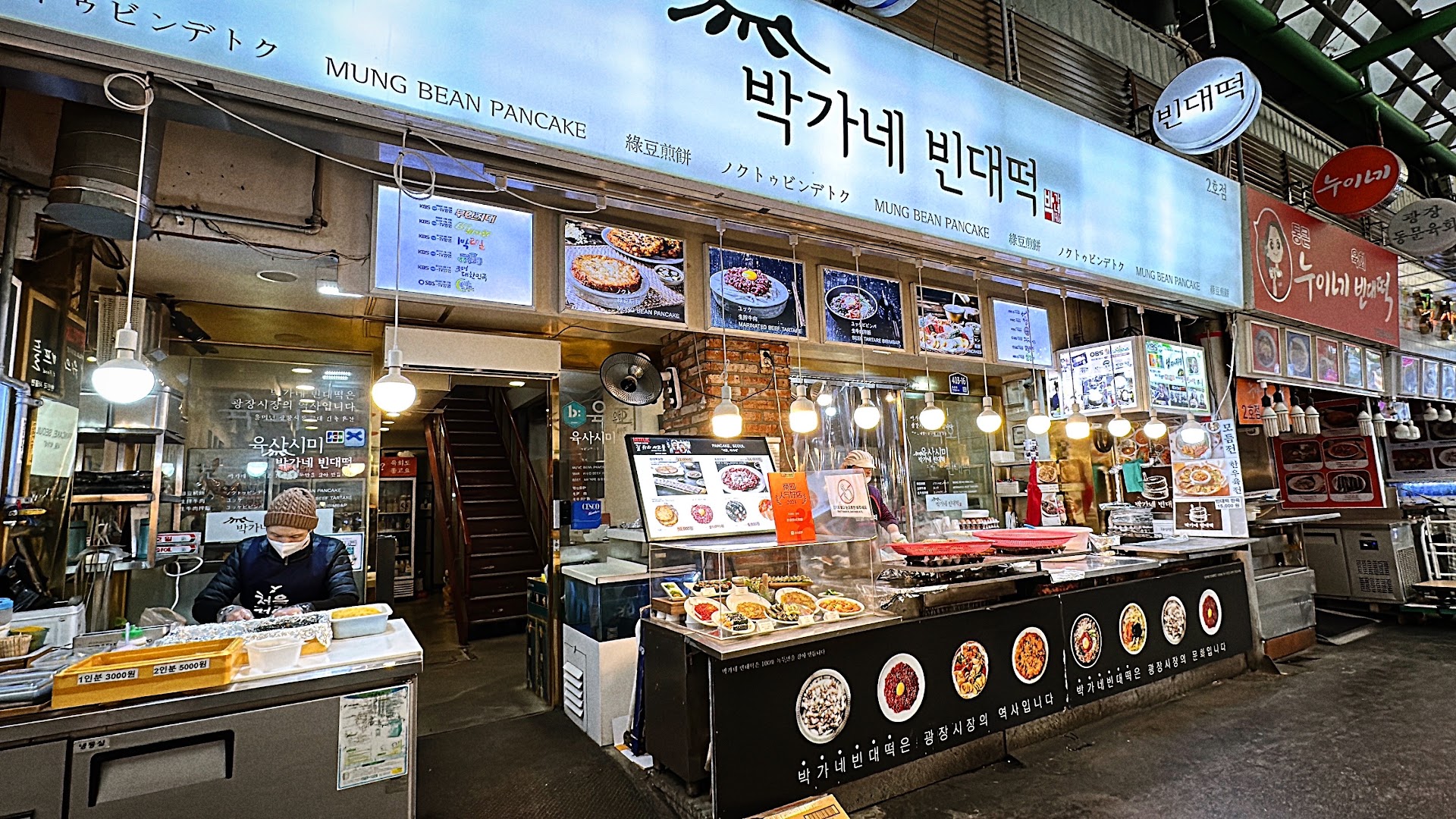
The single best window to visit Gwangjang is weekdays between 9:00 AM and 11:30 AM. The bindaetteok griddles are freshest, the mayak gimbap vendors haven’t sold out yet, and the raw yukhoe is prepped with the morning’s delivery. By noon on weekends, every main alley is shoulder-to-shoulder, wait times double, and the best stalls post “sold out” signs before 1:00 PM.
Seasonally, March through June and September through November offer the most comfortable eating conditions — Gwangjang’s covered halls trap heat in summer and amplify cold in winter, though the market operates year-round. Spring mornings in particular pair well with an early start: light crowds, cool air, and vendors who have time to actually talk you through the menu.
Core Experiences
Bindaetteok (Mung Bean Pancake)
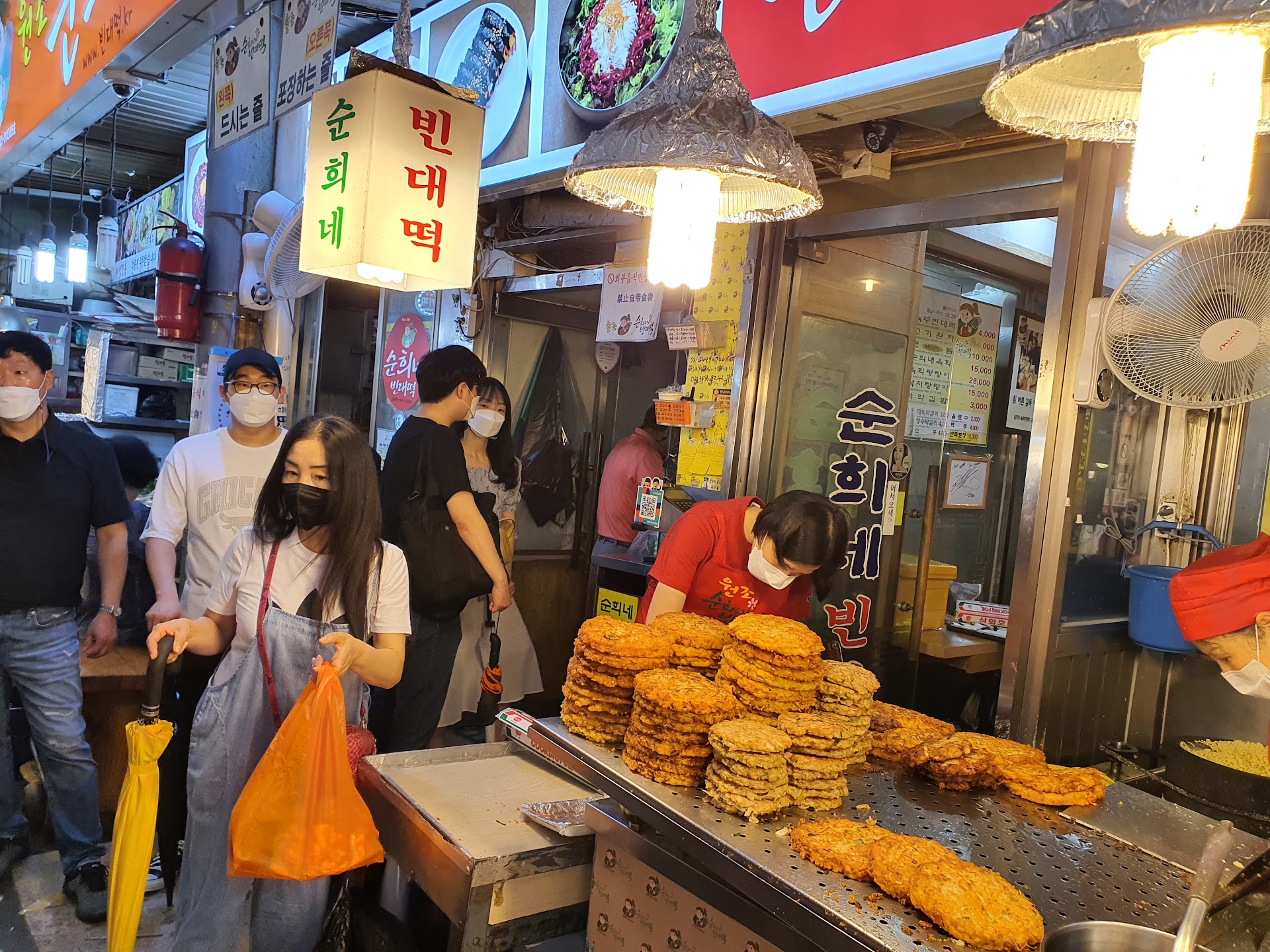
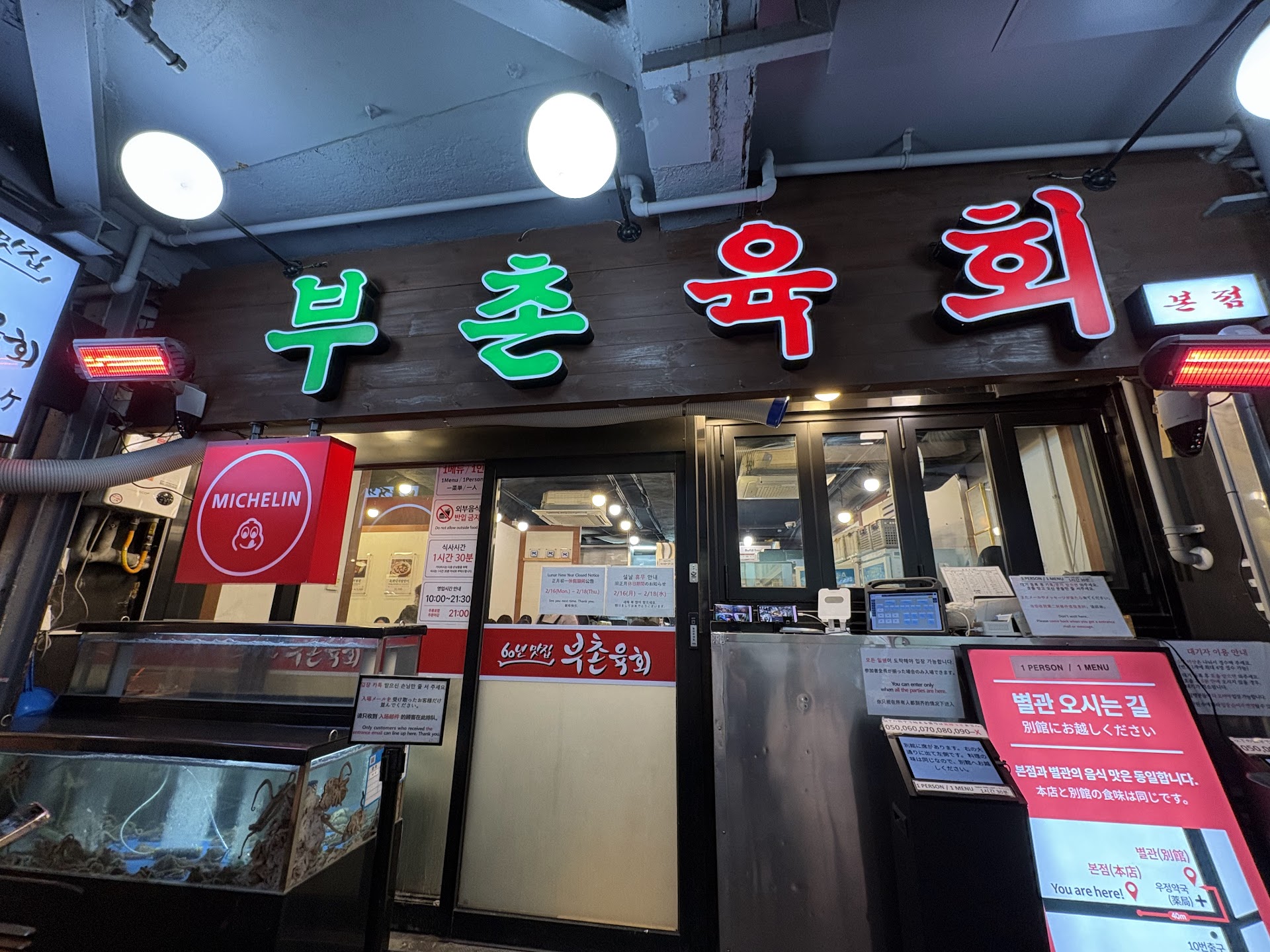
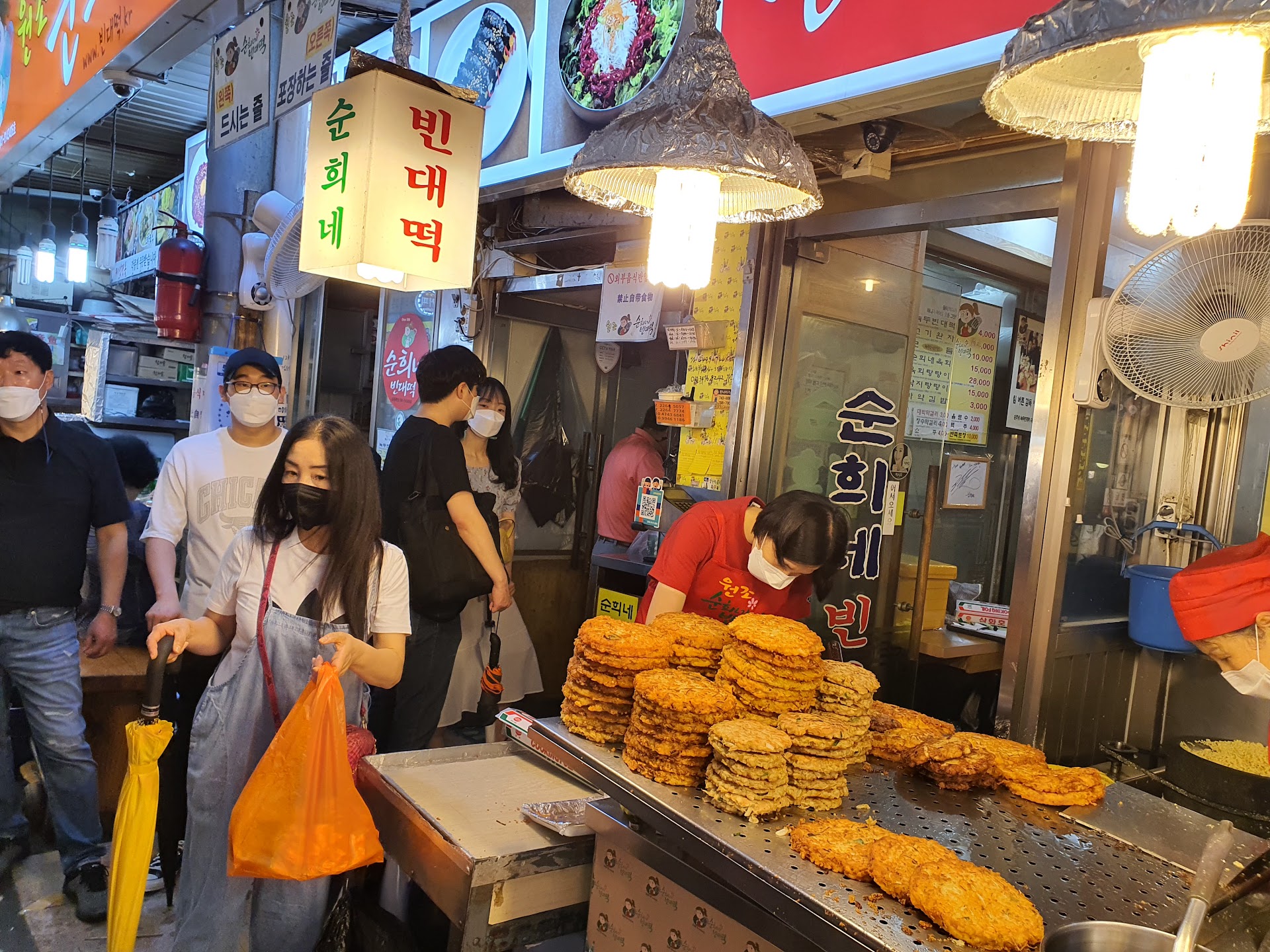
The smell hits before the stall does — oil, batter, and something faintly smoky from the cast-iron griddles that haven’t cooled since dawn. Bindaetteok is Gwangjang’s signature dish, and the best versions here are dense with whole mung beans, pork, and kimchi, pressed flat and fried until the edges crisp into something close to lace. A single pancake runs large enough to share, and most vendors slice it tableside. This is the dish that defined the market’s reputation, and skipping it would be a genuine miss.
- 📍 Main covered alley (Jongno 4-ga entrance, center row) · 💰 $3–$4 per pancake · ⏰ 8:30 AM–9:00 PM · ⭐ 4.8
- Local tip: Ask for it straight off the griddle — vendors will sometimes hold a half-cooked pancake if you’re waiting. Avoid the pre-cut stacks sitting on the counter.
Mayak Gimbap (Addictive Mini Rice Rolls)
The name means “narcotic gimbap,” and regulars will tell you that’s barely an exaggeration. These bite-sized rolls — barely two inches long — are tightly packed with rice, pickled radish, carrot, and spinach, then served with a sesame-soy dipping sauce that makes the whole thing loop into something compulsively snackable. The portions come in trays of 10 or 20, and the price-to-satisfaction ratio is the best in the market. Several vendors cluster near the northeastern section of the main hall; the one with the longest queue of locals before 10 AM is reliably the best.
- 📍 Northeast corridor, Gwangjang Market main hall · 💰 $2–$4 per tray (10–20 pieces) · ⏰ 7:00 AM–8:00 PM · ⭐ 4.7
- Local tip: Dip fully — the mustard-laced sesame sauce is half the dish. If the tray arrives with extra sauce cups, use them all.
Yukhoe (Korean Raw Beef)
Yukhoe is the dish that most first-time visitors hesitate at and most return visitors plan their whole morning around. Thinly sliced raw beef, seasoned with soy, sesame oil, garlic, and Asian pear, arrives topped with a raw egg yolk and a scatter of pine nuts. The texture is silky and cold, the flavor clean and mineral. Gwangjang’s yukhoe vendors source daily from nearby butchers, and the freshness here is genuinely different from restaurant versions. This is not a dish to eat at the end of a warm afternoon — go early, go to a stall with visible turnover, and eat it immediately.
- 📍 Interior stalls, central-south section of main hall · 💰 $8–$14 per portion · ⏰ 9:00 AM–8:00 PM · ⭐ 4.6
- Local tip: Order the small portion first — it’s substantial. If the beef looks dry or the egg yolk is broken pre-service, move to the next stall.
Sundae (Blood Sausage)
Sundae — Korean blood sausage — is less photographed than the other dishes here, but it has one of the most loyal followings in the market. The Gwangjang version is steamed rather than fried, packed with glass noodles, pork, and barley, then served with a side of salted fermented shrimp and sliced liver. It reads as heavy on paper but eats lighter than expected, especially in the morning. The vendors who’ve held the same stall for decades serve it on metal trays with no frills and zero English menus — point at the tray the person next to you is eating, and you’ll be fine.
- 📍 Western inner alley, near fabric section entrance · 💰 $4–$6 per plate · ⏰ 8:00 AM–7:00 PM · ⭐ 4.5
- Local tip: Ask for makgeolli (rice wine, ~$2) alongside — it’s the traditional pairing and cuts the richness of the sausage cleanly.
Nokdujeon (Mung Bean Fritters, Vegetarian)
Nokdujeon is the vegetarian counterpart to bindaetteok — smaller, lighter, and often overlooked by visitors who head straight for the meat-heavy options. These pan-fried mung bean fritters arrive plain or stuffed with kimchi, and they’re the right call if the bindaetteok line is long or if the group has mixed dietary needs. A few stalls in the southern row specialize exclusively in nokdujeon and have perfected the batter ratio over decades. They’re also the fastest stall in the market — order, pay, eat, done in under five minutes.
- 📍 Southern row, near Cheonggyecheon-side entrance · 💰 $2–$3 per order · ⏰ 9:00 AM–6:00 PM · ⭐ 4.4
- Local tip: The kimchi-stuffed version is spicier than it looks. If heat tolerance is a concern, ask for the plain version (sogogi eopsi, meaning without meat/kimchi).
Recommended Route
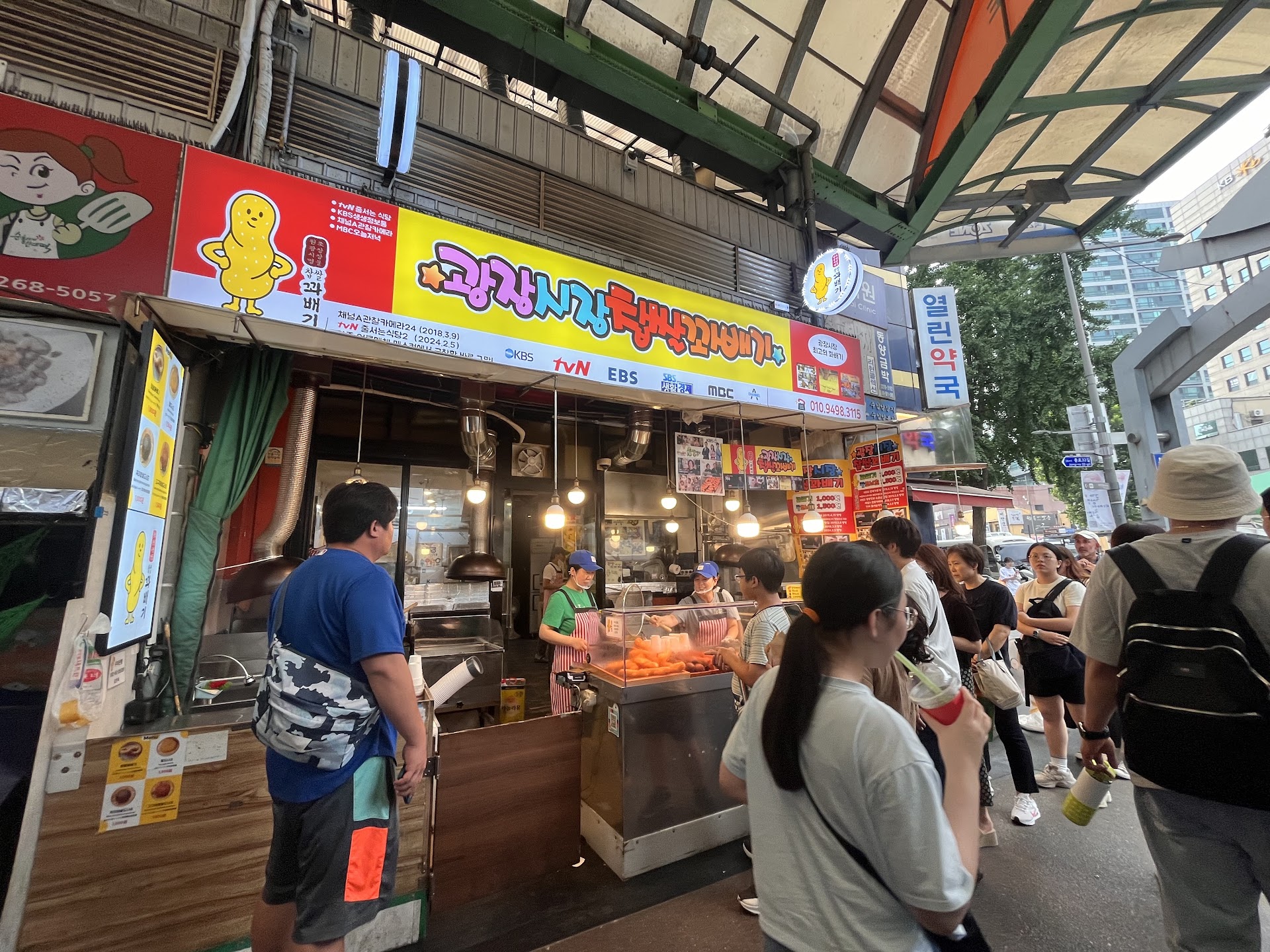
Block out 3 to 3.5 hours for this route. It covers the full market circuit without backtracking.
9:00 AM — Enter via the Jongno 4-ga (Exit 4) entrance from Jongno 4-ga subway station. The covered main alley is immediately ahead. Head to the center row for bindaetteok — this is where the griddles are busiest in the morning. (Stop 1 · 20–25 min)
9:30 AM — Walk northeast (roughly 4 min) toward the gimbap cluster for mayak gimbap. Buy a tray of 20 and eat standing — there are counter stools along the wall. (Stop 2 · 15–20 min)
10:00 AM — Loop south toward the central interior stalls (~5 min walk) for yukhoe. This is the most time-sensitive stop — eat it here, not as a takeaway. (Stop 3 · 20–25 min)
10:30 AM — Continue west (~6 min walk) into the inner alley near the fabric section for sundae. Order the makgeolli pairing. (Stop 4 · 20 min)
11:00 AM — Exit toward the southern Cheonggyecheon-side entrance (~5 min) for nokdujeon as a lighter final bite before leaving. (Stop 5 · 15 min)
11:20 AM — Exit the market and walk 8 minutes east along Cheonggyecheon stream for a post-meal stroll before catching the subway back.
Budget · Transport · Booking
Total food budget: $18–$30 per person covers all five stops with room for a drink. The market skews extremely affordable — nothing on this route tops $14.
Getting there:
- 🚇 Subway: Jongno 4-ga Station (Line 1), Exit 4. The market entrance is 2 minutes on foot. This is the cleanest approach.
- Taxi from Myeongdong: approximately $4–$6, 10–15 min depending on traffic.
- There is no parking worth attempting on a weekday morning.
Cash vs. card: Bring cash (Korean won). Most stalls do not accept cards, and the one ATM inside the market runs out on weekends. The nearest CU or GS25 convenience store ATM is a 3-minute walk from the main entrance.
Advance booking: None required — Gwangjang Market is walk-in only. No reservations, no ticketing, no queuing apps. First come, first served.
Skip list: The haemul pajeon (seafood pancake) stalls near the main entrance are the most photographed and the most tourist-priced ($10–$15 for a portion that costs half as much two streets over). The tteokbokki carts at the south entrance are also mediocre by Seoul standards — save that for Tongin Market.
Must-Know Tips
- 💰 ATM before you enter. Gwangjang is 90% cash-only. Withdraw at a 7-Eleven or CU before the Jongno 4-ga entrance.
- ⏰ Arrive before 10:30 AM on weekdays, before 9:30 AM on weekends. Yukhoe and mayak gimbap both sell out — this is not a figure of speech.
- 🍴 Share portions across stops. Each dish is sized for 1–2 people. A group of four can comfortably split all five stops and still feel full without ordering doubles.
- 📸 Photography is fine at the stalls — ask before filming vendors directly. Most are accommodating; a quick gesture and a smile go a long way. Video content filming (tripods, large rigs) is technically restricted in the interior alleys.
- 🗣️ Basic Korean phrases pay off. Hana juseyo (one, please) and igeo eolmayeyo? (how much is this?) will get genuine smiles and, occasionally, a slightly better portion. English menus exist at roughly 30% of food stalls.
- 🧥 Dress practically. The covered alleys hold cooking smells exceptionally well. Wearing something you’d rather not smell like bindaetteok oil for the rest of the day is a common regret.
Closing
Gwangjang doesn’t need a sales pitch — it’s been filling bowls since before most cities had food halls. What it rewards is a little preparation: knowing which stalls to walk past, which dishes to eat immediately, and how early is actually early. Walk this route on a Tuesday or Wednesday morning and the market feels less like a tourist circuit and more like what it actually is — a working neighborhood kitchen that happens to be open to anyone willing to show up on time.
The actionable takeaway: Save this route, set your alarm for 8:45 AM, take Line 1 to Jongno 4-ga, and start with the bindaetteok while the oil is still crackling. Everything else follows.
🏨 Where to Stay
 LOTTE CITY HOTEL MYEONGDONG⭐ 4.0 · 8.7/10 (9,445) · $223 /night
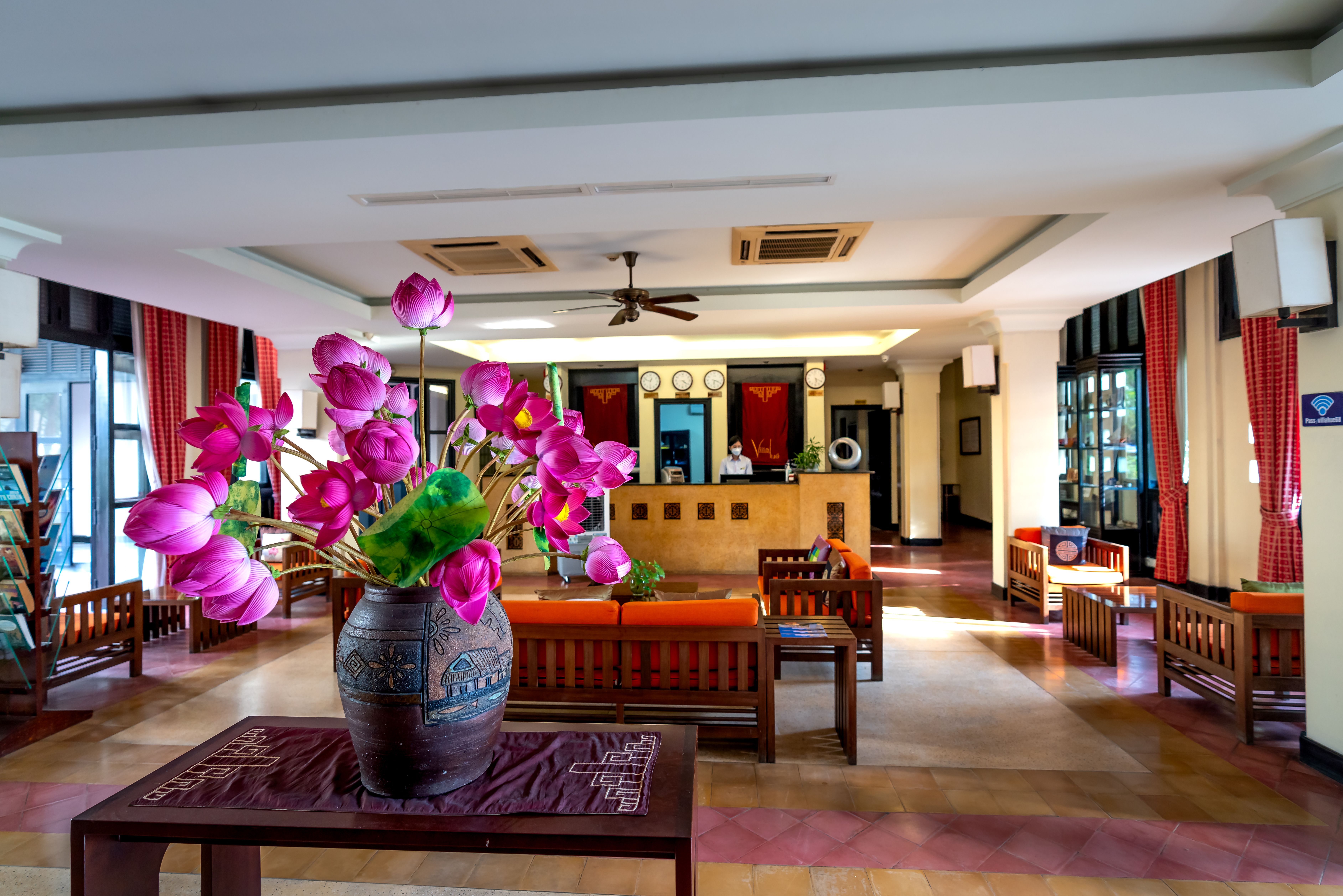 Mohenic Hotel Seoul Myeongdong⭐ 3.0 · 7.9/10 (7,945) · $147 /night
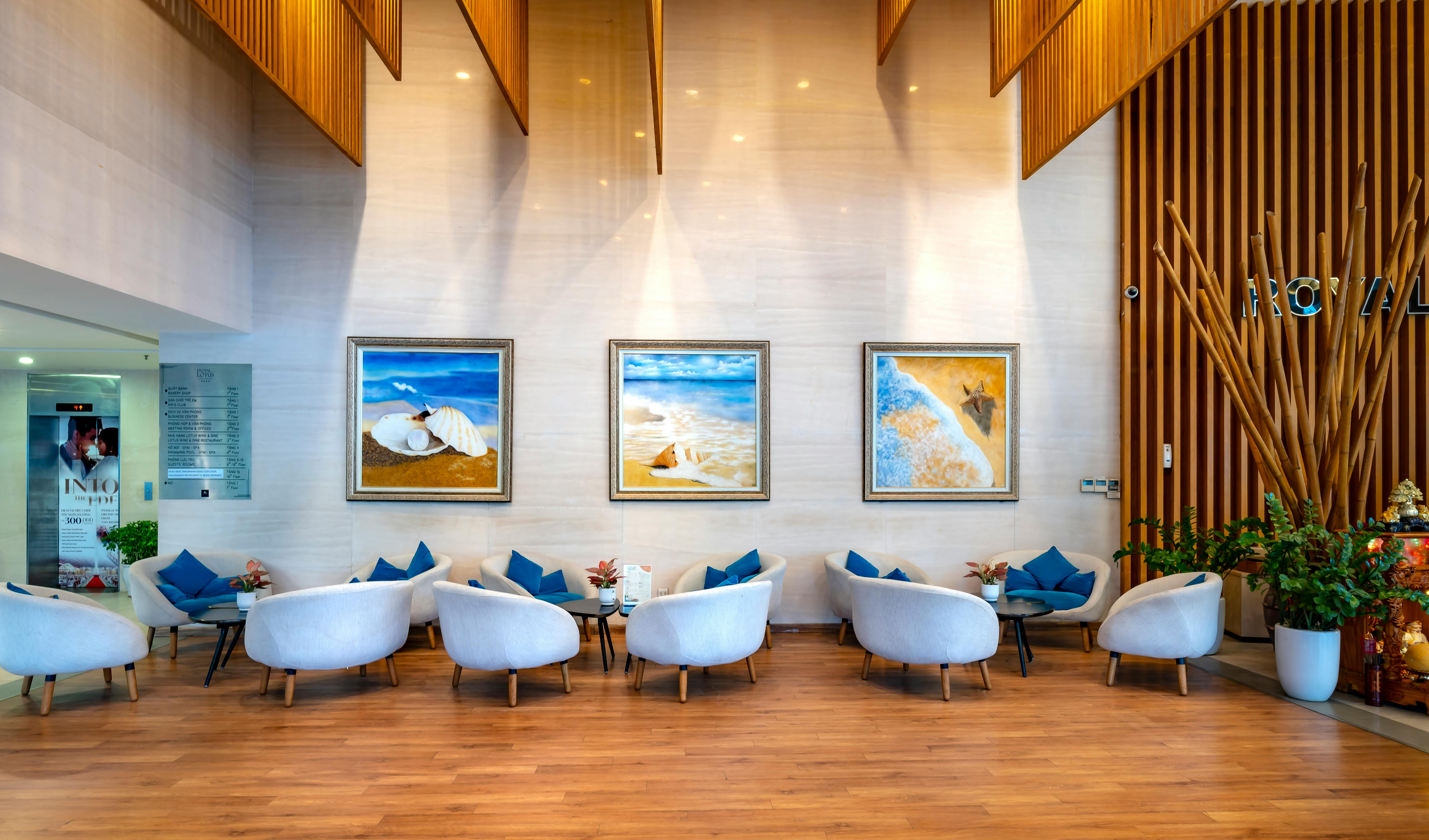 Hotel MANU⭐ 3.0 · 8.4/10 (4,279) · $182 /night
Agoda affiliate link — clicks go to the price-comparison page.